Written by Zhangs Flocking Material Team
This article is based on Zhangs’ experience in flocking fiber manufacturing and textile application development. Through long-term involvement in flocking material production and application support, Zhangs helps apparel manufacturers, textile companies, and brands select suitable materials and processes for different flocking requirements.
Flock printing is a better choice for apparel products that require a raised texture, soft touch, and premium appearance, while screen printing is generally more suitable for large-volume production with complex graphics and multiple colors.
However, there is no universal answer to which method is better. The right choice depends on the purpose of the garment, production quantity, design requirements, fabric characteristics, and the final product positioning.
For apparel brands and manufacturers, choosing between flock printing and screen printing is not simply a decision between two printing technologies. It is a decision about the final customer experience. Screen printing focuses on efficient graphic reproduction, while flock printing adds a physical fiber surface that creates a different visual and tactile effect.
A promotional T-shirt project requiring thousands of identical pieces may prioritize production efficiency and cost control, making screen printing a practical option. In contrast, a premium hoodie collection or fashion garment that needs a distinctive texture may benefit more from flock printing because of its velvet-like surface and three-dimensional appearance.
Understanding these differences helps manufacturers select the right solution before production and create apparel products that better match their target market.
Quick Decision Guide: Choosing Between Flock Printing and Screen Printing
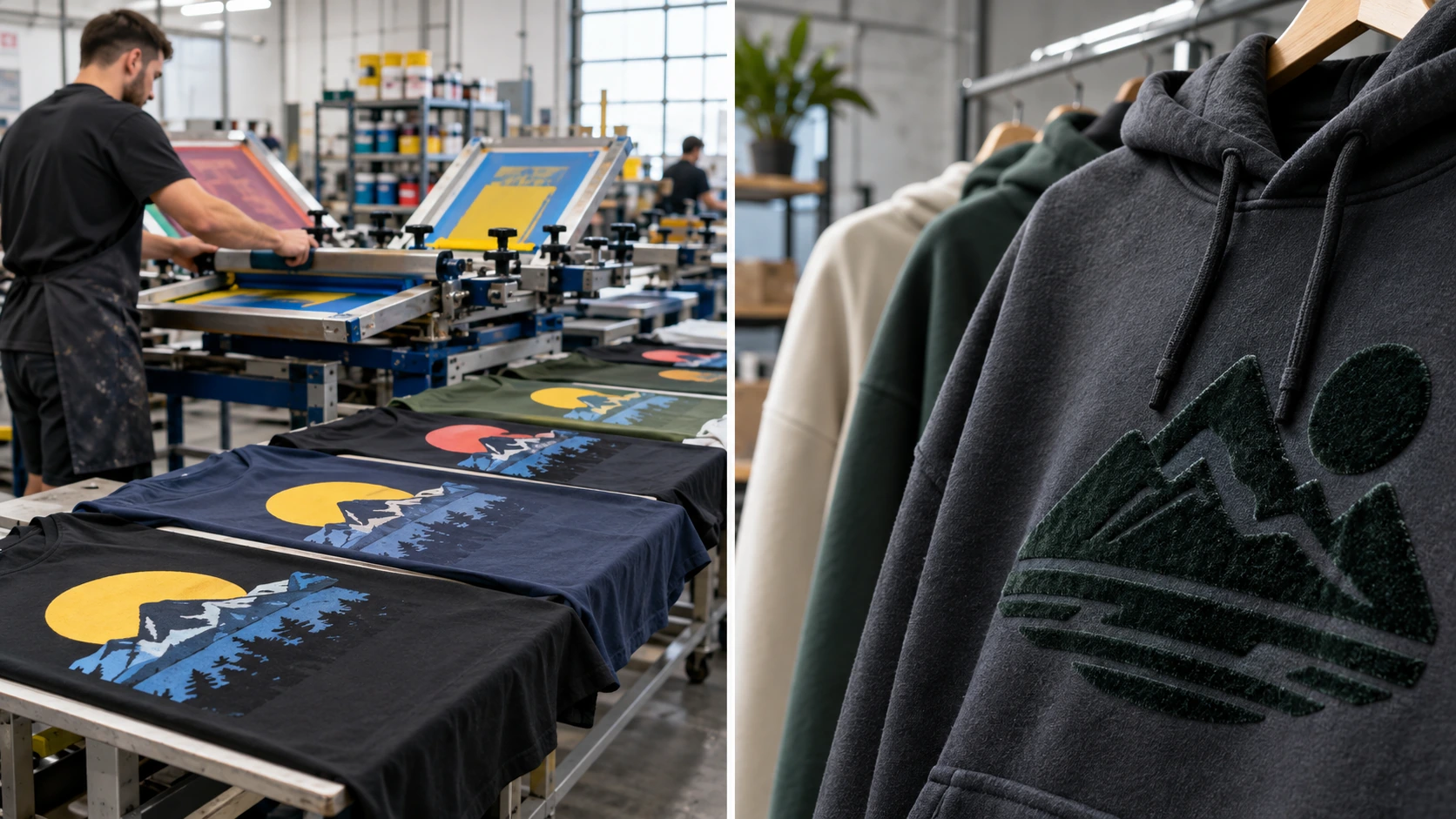
Before selecting a printing method, apparel manufacturers should first consider the purpose of the product.
The following comparison provides a quick overview:
| Product Requirement | More Suitable Method | Reason |
|---|---|---|
| Large-volume basic apparel | Screen printing | Efficient for repeated designs and mass production |
| Premium fashion garments | Flock printing | Creates a soft-touch and raised surface effect |
| Complex multi-color artwork | Screen printing | Better for detailed graphic reproduction |
| Raised logos or lettering | Flock printing | Provides three-dimensional texture |
| Brand differentiation | Flock printing | Creates a more distinctive product experience |
| Cost-focused promotional products | Screen printing | More suitable for high-volume orders |
In practical production, many manufacturers evaluate four main factors before making a decision: design complexity, order quantity, required surface effect, and product positioning.
If the priority is efficiency and scalability, screen printing usually provides advantages. If the priority is creating a premium appearance and tactile experience, flock printing can provide additional value.
What Is Flock Printing?
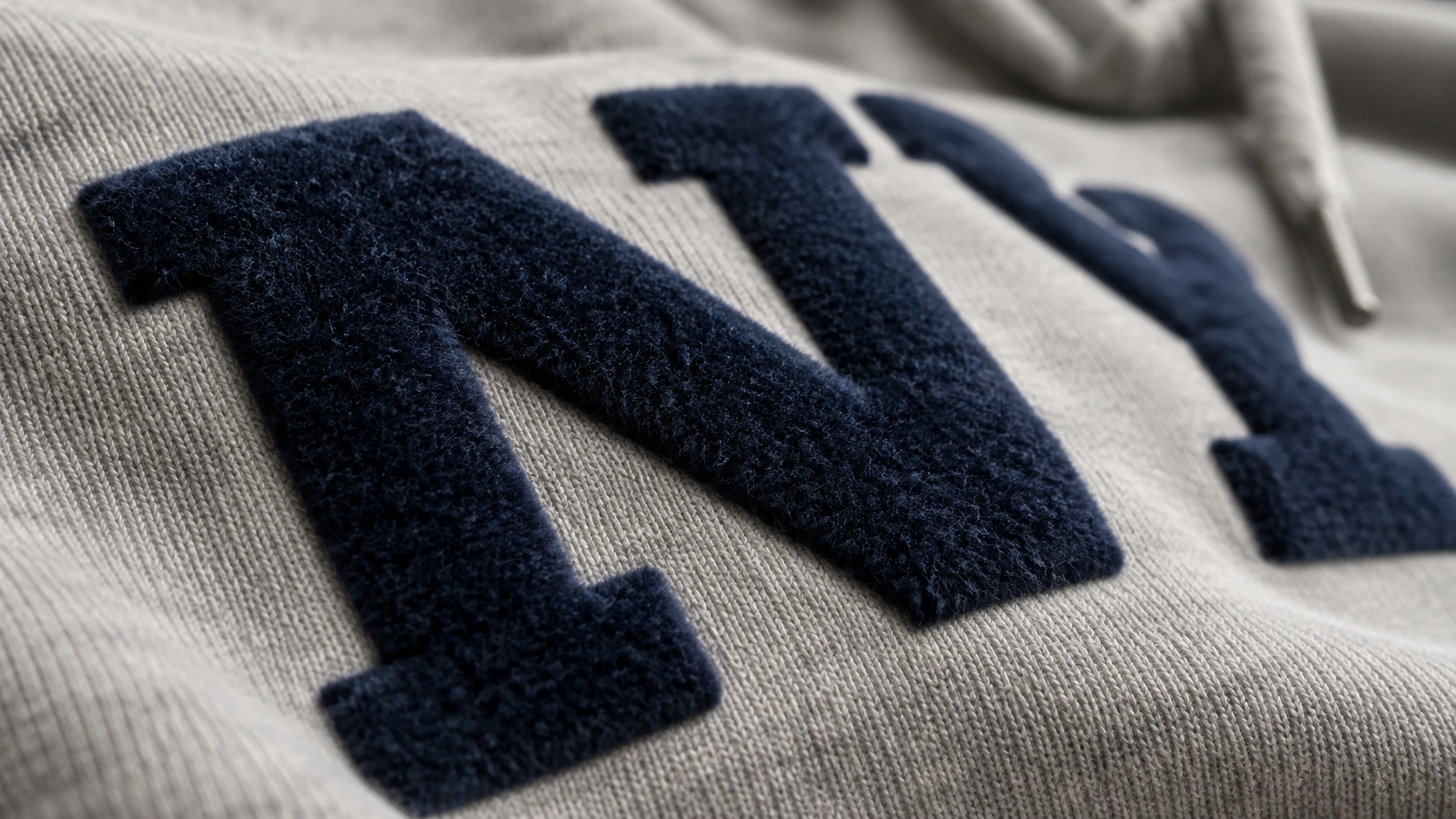
Flock printing is a textile decoration process that creates a raised velvet-like surface by applying short fibers onto fabric through adhesive and electrostatic flocking technology.
Unlike traditional printing methods that only transfer ink onto the fabric surface, flock printing adds a layer of fibers to the material. These fibers stand vertically after application, creating a soft texture and three-dimensional visual effect.
The key material used in this process is flocking fiber, which directly influences the final appearance, softness, durability, and consistency of the flocked surface.
Common flocking fiber materials used in textile applications include rayon, polyamide, polyester, and cotton. Different materials provide different characteristics depending on the required application. For example, rayon is often selected when softness and smooth hand feel are important, while other synthetic fibers may be chosen for specific performance requirements.
For apparel manufacturers, selecting suitable flocking material is an important part of achieving consistent results. Fiber composition, fiber length, color quality, and processing performance can all affect the final appearance of the flocked design.
Explore our flocking fiber options for apparel production.
How Does Flock Printing Work?
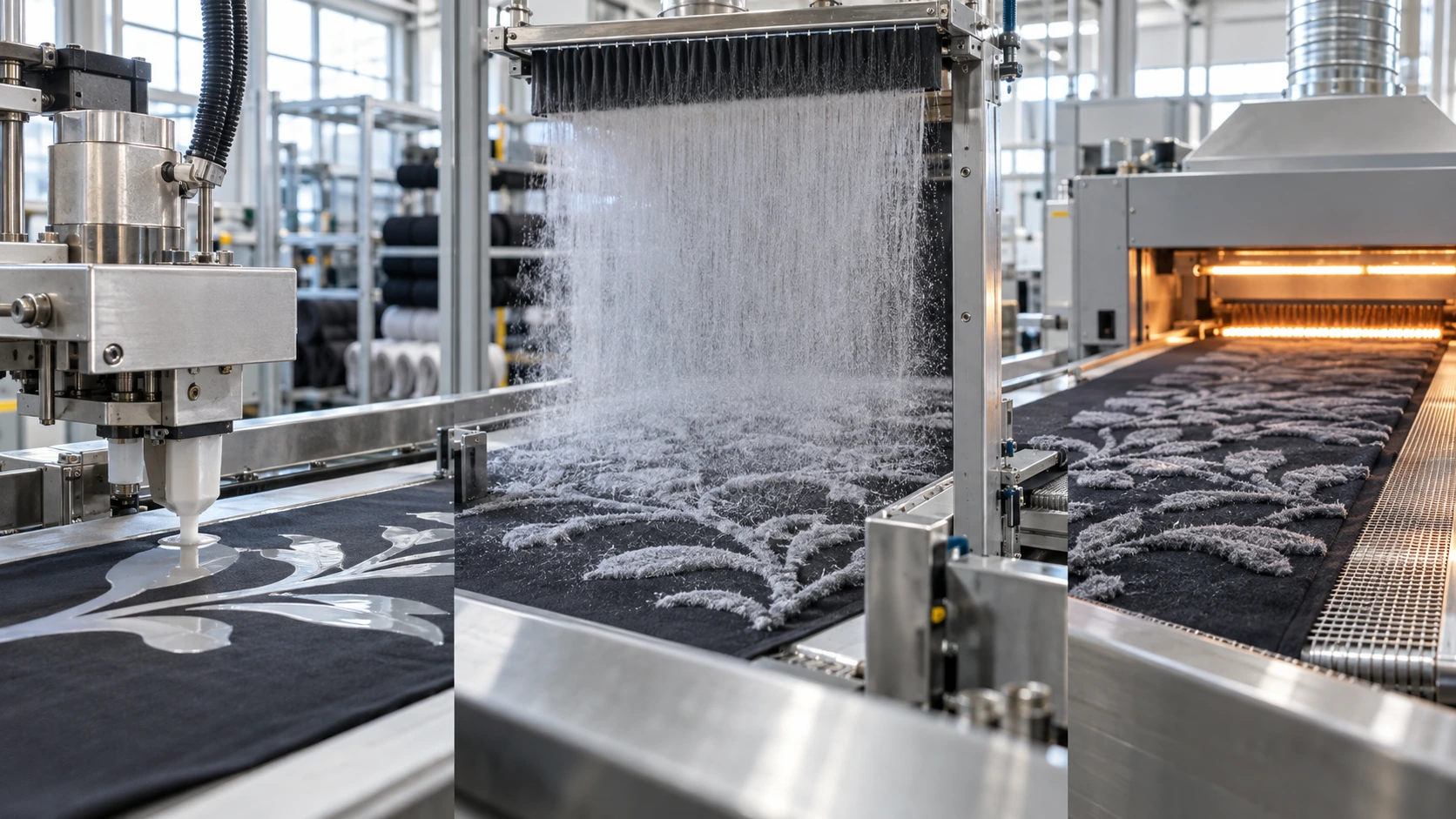
The quality of flock printing depends not only on the printing equipment but also on the stability of the complete flocking process.
In industrial production, flocking involves several controlled stages, including fiber preparation, adhesive application, electrostatic flocking, drying, and finishing.
The first stage is preparing the flocking fiber according to the required application. Fiber length consistency is important because uneven fiber size may influence surface uniformity and create differences in the final texture.
After fiber preparation, the fibers are dyed according to customer requirements. During this stage, manufacturers also manage characteristics related to conductivity and electro-treatment because these properties influence fiber behavior during the flocking process.
The next stage is electrostatic flocking, where fibers receive an electrical charge and are attracted vertically onto the adhesive-coated fabric surface. This vertical arrangement is what creates the soft velvet effect that differentiates flock printing from traditional flat printing methods.
After flocking, the material goes through drying and finishing procedures to improve stability and remove excess fibers. These steps help ensure a more consistent surface effect during final application.
According to Zhangs’ manufacturing information, its flock fiber production process includes cutting, dyeing, drying, and sieving procedures to improve fiber consistency and maintain stable flocking performance.
From manufacturing experience, controlling fiber consistency is one of the important factors affecting flocking quality. Differences in fiber length, moisture control, or distribution can influence the final appearance, especially for apparel products that require a uniform premium texture.
Learn more about electrostatic flocking technology and process control.
What Is Screen Printing?
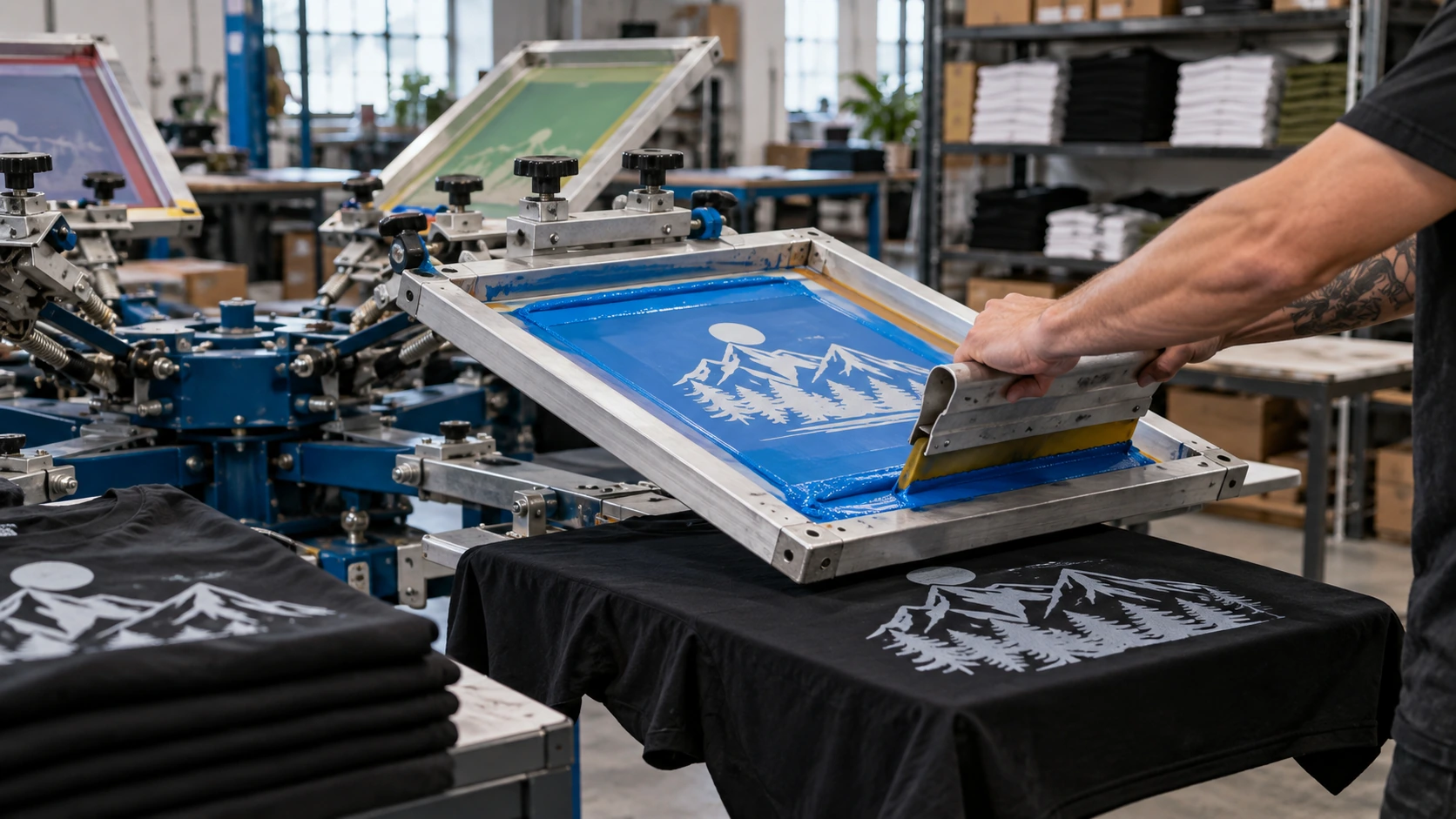
Screen printing is one of the most established textile printing methods used in apparel manufacturing.
The process works by transferring ink through a mesh screen onto fabric, creating a flat printed design. Different colors usually require separate screen preparation, allowing manufacturers to achieve consistent and repeatable results for large production orders.
Because of its mature production process and scalability, screen printing is widely used for promotional apparel, uniforms, basic T-shirts, sports clothing, and other products requiring large quantities of the same design.
The main advantage of screen printing is production efficiency. Once the screens are prepared, manufacturers can reproduce the same design across large numbers of garments with consistent quality.
However, screen printing mainly creates a flat surface effect. While it performs well for detailed graphics and color reproduction, it cannot provide the same raised texture and soft tactile experience created by flock printing.
Flock Printing vs Screen Printing: Key Differences
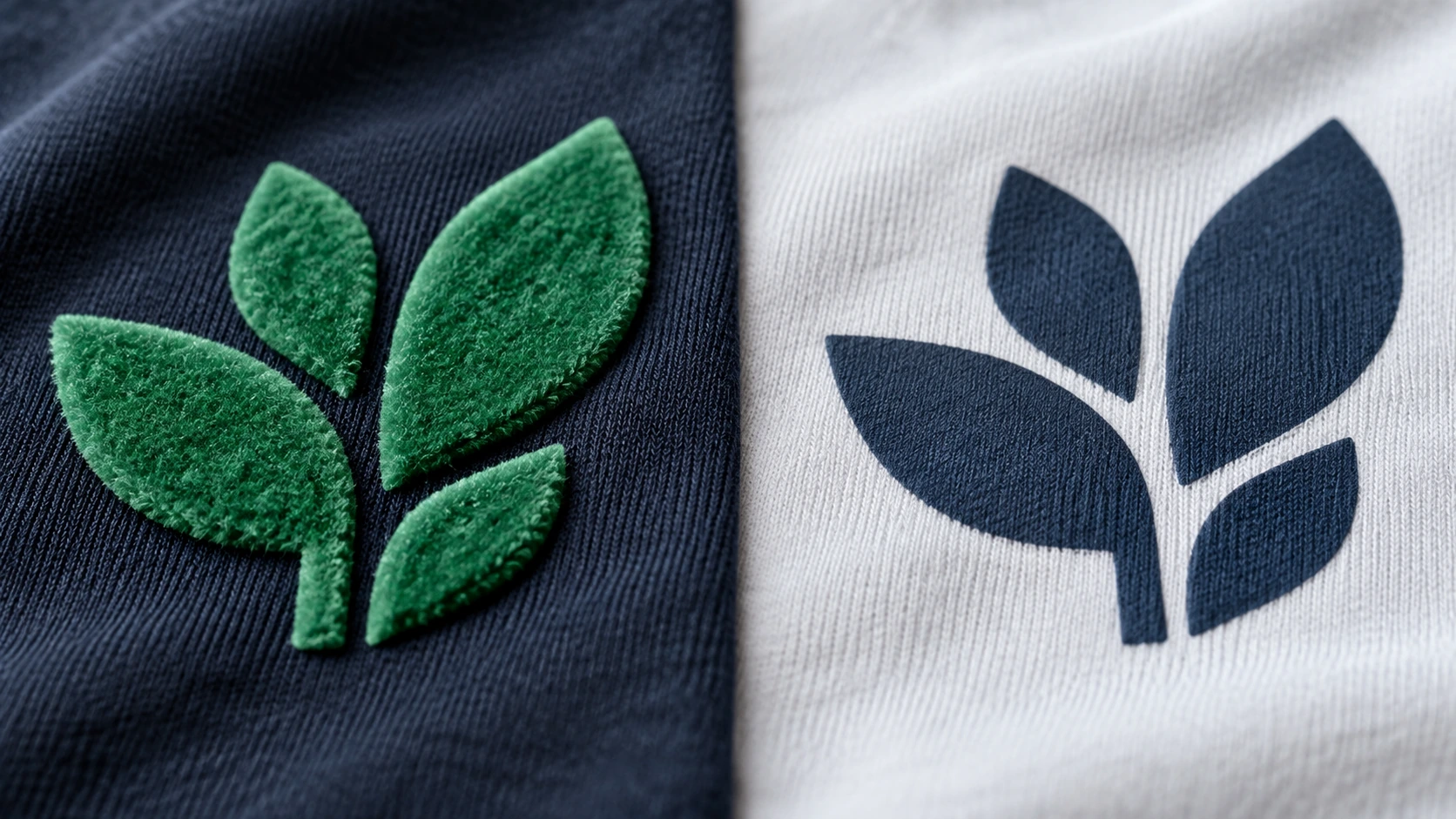
The biggest difference between flock printing and screen printing is the final surface effect they create.
Screen printing applies ink onto fabric, while flock printing creates a fiber-based surface that changes both the appearance and feeling of the garment.
| Comparison Factor | Flock Printing | Screen Printing |
|---|---|---|
| Main material | Flocking fiber + adhesive | Textile ink |
| Surface effect | Raised velvet texture | Flat printed surface |
| Touch feeling | Soft and tactile | Smooth |
| Visual appearance | Three-dimensional effect | Flat graphic effect |
| Best suited for | Premium logos, textured designs, fashion apparel | Large-volume graphics and detailed artwork |
| Main advantage | Product differentiation and premium feel | Efficiency and scalability |
Choosing the Right Printing Method for Apparel Manufacturing

For apparel manufacturers, the decision between flock printing and screen printing should be based on the role that the decoration plays in the final product.
When the decoration is mainly used to display complex artwork, reproduce multiple colors, or support large-scale production, screen printing is usually the more efficient choice.
When the decoration itself becomes part of the product value, flock printing provides advantages through texture, softness, and visual depth. This is why many fashion brands and premium apparel manufacturers use flocking effects for logos, lettering, and decorative elements.
The most suitable method depends on whether the product competes mainly through production efficiency or through appearance, touch, and differentiation.
Flock Printing Applications: Where Can It Be Used in Apparel Manufacturing?
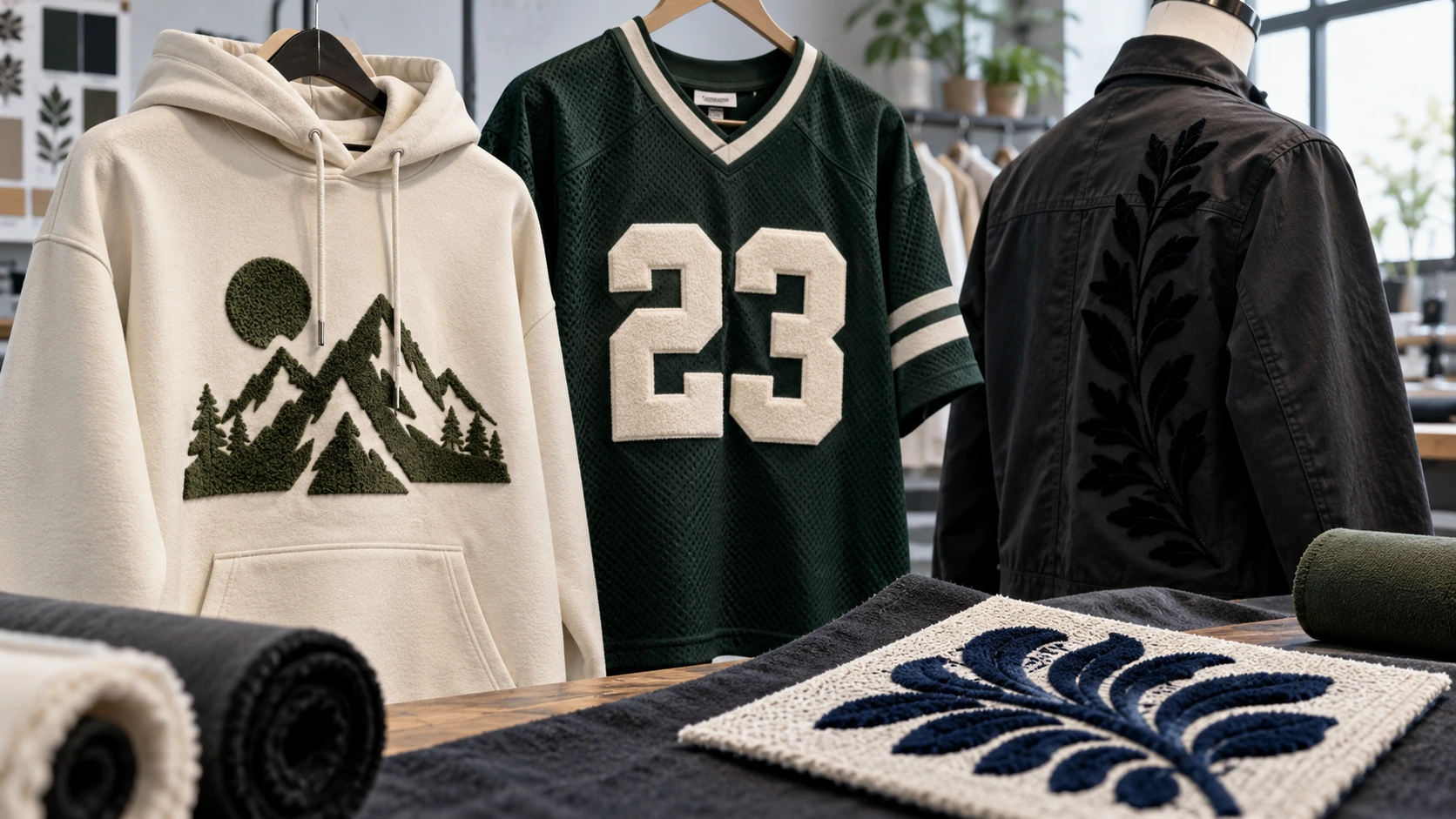
The value of flock printing comes from the unique surface experience it creates. Unlike traditional printing methods that mainly focus on transferring colors and graphics, flock printing adds a fiber layer onto the fabric surface, creating a combination of visual depth and tactile feedback.
For apparel manufacturers, the decision to use flock printing is usually related to product positioning. When a garment needs to communicate premium quality, brand identity, or a unique design style, the texture created by flocking material can become an important part of the final product experience.
Fashion Apparel and Premium Clothing
In fashion apparel, product differentiation has become increasingly important. Many brands are no longer competing only through patterns and colors but also through material feeling and surface effects.
Flock printing is commonly used for premium hoodies, jackets, streetwear collections, and limited-edition garments because it creates a soft velvet-like texture that traditional flat printing cannot achieve.
For example, a simple brand logo printed with regular ink creates only a visual element, while a flocked logo adds a raised surface that customers can see and feel. This additional texture helps brands create stronger product recognition and improve the perceived value of apparel.
For manufacturers producing fashion-focused garments, flock printing can be an effective solution when the goal is to create a more distinctive customer experience.
Sportswear and Team Apparel
Sportswear is another important application area for flock printing.
Team uniforms and sports garments often require clear identification through names, numbers, and logos. Compared with standard flat printing, flocked graphics provide a stronger three-dimensional appearance and a more professional visual effect.
The use of flocking fiber allows manufacturers to create designs that are not only visible but also have a unique surface feeling. This makes flock printing suitable for sportswear brands, team apparel suppliers, and manufacturers looking to create differentiated products.
Brand Logos and Decorative Textile Applications
For apparel brands, logos represent more than simple identification. They are also part of the product design and customer experience.
Using flocking material for branding elements can create a soft-touch logo effect, raised lettering, and decorative textile details. This is especially valuable for brands that want their products to feel more premium compared with standard printed garments.
Beyond apparel logos, flocking materials are also used in different textile decoration applications where manufacturers need enhanced texture, visual contrast, and a unique surface effect.
Discover more flocking applications across apparel and textile products.
How to Select the Right Flocking Fiber for Apparel Printing?
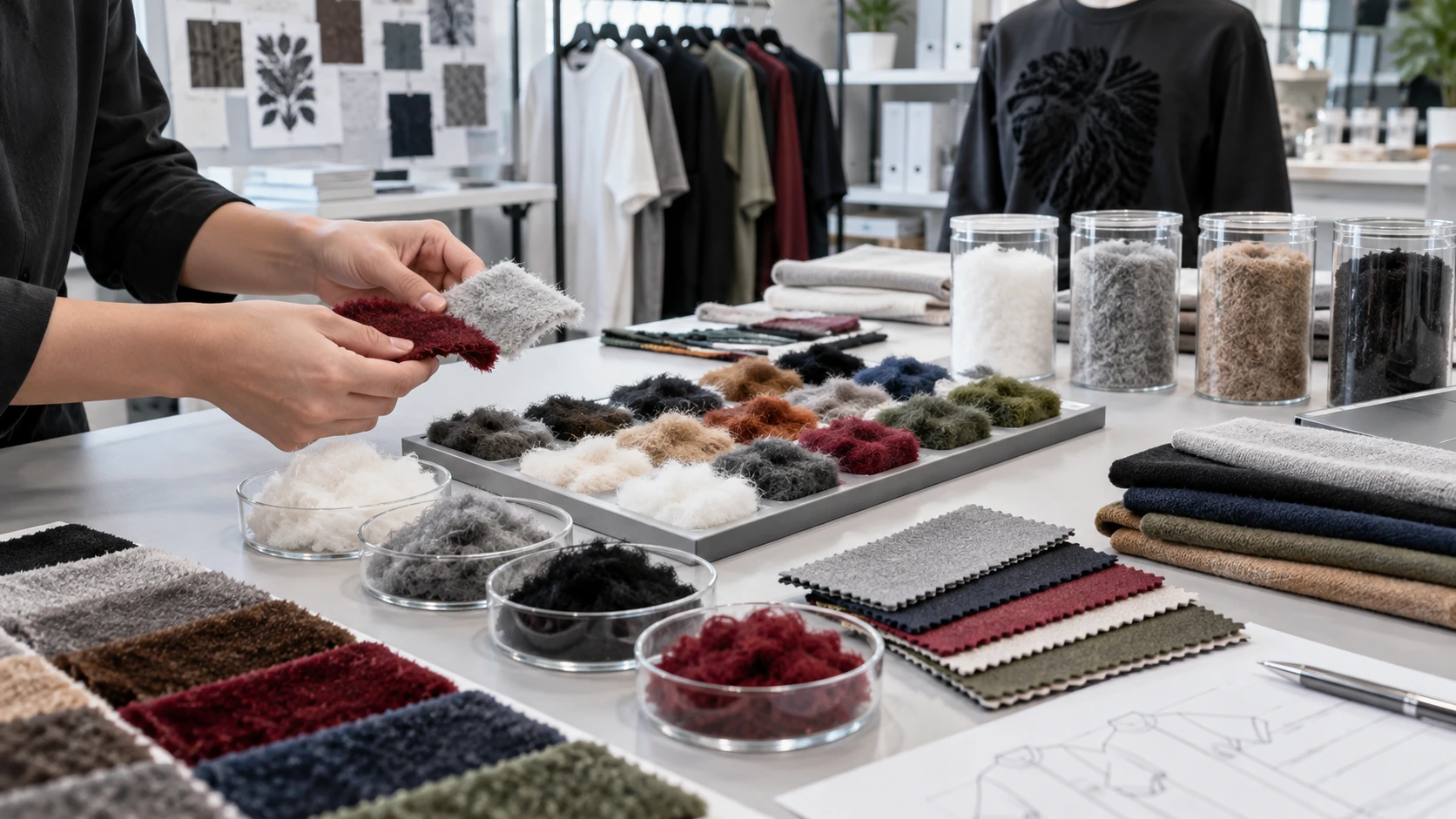
Choosing suitable flocking fiber is one of the key factors that determines the final quality of flock printing.
From a manufacturing perspective, there is no single fiber type that is suitable for every application. Different apparel products may require different levels of softness, durability, appearance, and processing performance.
A professional flocking fiber supplier should not only provide raw materials but also help customers select suitable specifications according to the final application requirements.
Work with an experienced flocking fiber supplier for stable material quality.
Selecting Flocking Fiber Based on Material Characteristics
Different types of flocking fiber provide different surface effects.
Rayon flocking fiber is often selected for apparel applications where softness and smooth hand feel are important. Because of its textile-like appearance and comfortable touch, it is commonly considered for fashion garments and decorative textile products.
Polyamide flocking fiber can be selected when manufacturers require stable performance and reliable flocking results. It is often considered for applications where durability and consistent surface quality are important.
Polyester flocking fiber provides another option for manufacturers looking for stable processing performance and consistent production results.
Cotton flocking fiber offers a different natural fiber characteristic and may be suitable for applications where a more natural textile feeling is preferred.
According to Zhangs’ manufacturing information, the company produces different types of flock fibers, including polyamide, rayon, polyester, and cotton materials, supporting different application requirements.
How Fiber Length Influences Flock Printing Results ?
Besides fiber material, fiber length is another important factor affecting the final appearance of flock printing.
Shorter fibers generally create a finer and smoother surface, making them suitable for applications that require a more delicate texture.
Medium-length fibers provide a balance between softness, appearance, and processing stability, making them suitable for many general apparel applications.
Longer fibers create a stronger raised effect and a more obvious velvet appearance. They are often selected when brands want the flocked design to become a more noticeable visual feature.
Therefore, apparel manufacturers should select fiber length based on the desired product effect instead of simply choosing a longer or shorter fiber.
Why Choose Zhangs as Your Flocking Fiber Supplier?
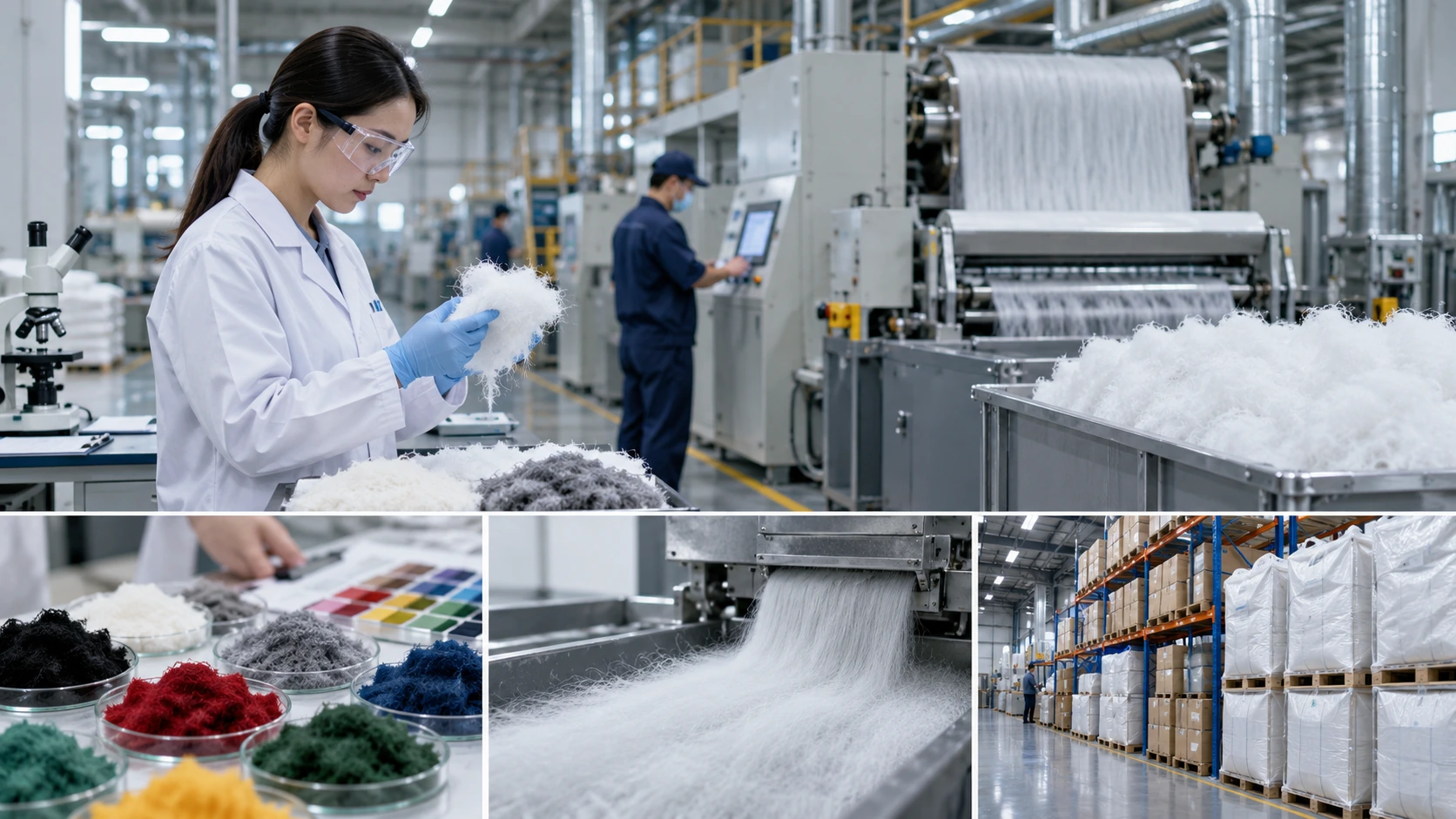
For apparel manufacturers, choosing the right supplier is an important part of achieving stable flocking quality.
The final performance of flock printing depends not only on printing equipment but also on raw material consistency. Differences in fiber length, color consistency, and processing stability can influence the final appearance of the flocked surface.
Based on practical manufacturing experience, Zhangs understands that controlling each stage of flock fiber production is essential for maintaining consistent quality.
Professional Flocking Material Production Capability
Zhangs provides flocking material solutions for textile and industrial applications, with different fiber options including polyamide, rayon, polyester, and cotton.
These material choices allow customers to select suitable solutions based on softness requirements, surface effects, and application conditions.
Controlled Manufacturing Process
The quality of flocking fiber depends heavily on production consistency.
Zhangs controls key manufacturing stages, including fiber cutting, dyeing, drying, and sieving.
During cutting, fiber length is prepared according to application requirements. During dyeing, colors are developed while conductivity and electro-treatment properties are controlled. The drying process helps maintain suitable moisture conditions, while sieving improves fiber uniformity by separating fibers according to size requirements.
These production steps help maintain stable flocking performance for customers with different application needs.
Stable Supply for Apparel Manufacturers
For businesses purchasing flock materials, supply stability is an important consideration.
According to Zhangs’ manufacturing information, the company has a production capability of 150 tons per month, supports an MOQ of 50kg per color, and provides a typical lead time of 10–15 days.
These capabilities allow Zhangs to support both product development projects and regular production requirements.
Frequently Asked Questions About Flock Printing vs Screen Printing
Is flock printing better than screen printing for apparel?
There is no universal winner between the two methods because they are designed for different purposes.
Flock printing is more suitable when apparel products need a raised texture, soft touch, and premium appearance. Screen printing is generally more suitable for large-volume production where manufacturers need efficient reproduction of detailed graphics and multiple colors.
The right choice depends on the product requirements, production quantity, and expected customer experience.
What is the main difference between flock printing and screen printing?
The main difference is the surface effect created on the garment.
Screen printing applies ink onto the fabric surface and creates a flat printed layer. Flock printing uses adhesive and flocking fiber to create a raised fiber surface, producing a three-dimensional appearance and soft tactile feeling.
Is flock printing durable on clothing?
The durability of flock printing depends on several factors, including fiber quality, adhesive selection, fabric compatibility, and the control of the flocking process.
Using suitable flocking material and maintaining consistent production conditions can help improve the stability and durability of the final flocked design.
What apparel designs are suitable for flock printing?
Flock printing is especially suitable for apparel designs where texture and surface effects are important. It is commonly used for brand logos, lettering, sports numbers, decorative patterns, and other designs where a raised appearance can improve product differentiation.
Which flocking fiber is best for apparel applications?
The best flocking fiber depends on the required product effect.
Rayon is often selected for applications where softness and smooth texture are priorities, while polyamide, polyester, and cotton fibers may be chosen according to durability requirements, processing conditions, and desired appearance.
Can apparel brands customize flocking materials?
Yes. Apparel brands can customize flocking material solutions according to their product requirements. Customization may involve selecting different fiber materials, adjusting fiber length, matching colors, and developing specific surface effects to achieve the desired appearance and performance.
Contact us to discuss our custom flocking service for your products.
About Zhangs Flocking Material Team
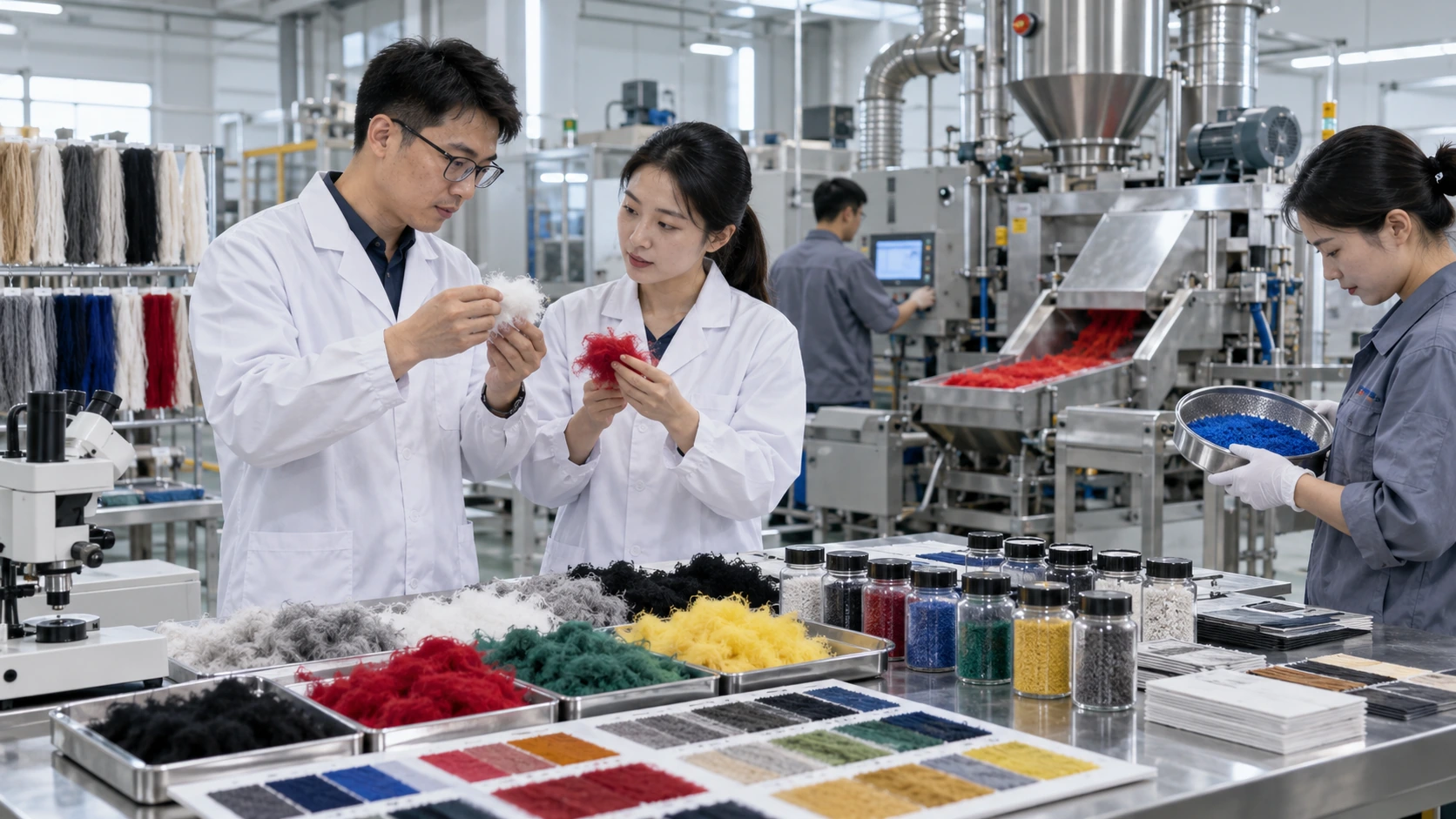
This article is based on Zhangs’ practical experience in flocking fiber manufacturing and textile applications.
Through controlled production processes, material selection experience, and application support, Zhangs helps apparel manufacturers and textile companies develop suitable flocking solutions for different product requirements.
The company’s manufacturing capabilities include fiber preparation, dyeing, drying, and sieving processes to support consistent flocking performance.
Conclusion: Choosing the Right Printing Method for Apparel
Both flock printing and screen printing have important roles in apparel manufacturing, but they create different product experiences.
When the priority is large-scale production, detailed graphics, and production efficiency, screen printing remains a practical solution.
When brands want to create garments with a premium texture, soft touch, and stronger product differentiation, flock printing provides unique advantages.
For apparel manufacturers, selecting the right flocking fiber, flocking material, and experienced supplier is essential for achieving consistent quality and creating products that stand out in competitive markets.
| Anchor Text | Target Page | Placement |
|---|---|---|
| flocking fiber | Flocking Fiber Product Page | Definition section |
| flocking powder | Flocking Powder Product Page | Textile decoration section |
| flocking applications | Application Page | Application section |
| custom flocking service | Service Page | Supplier section |
| electrostatic flocking | Technology Page | Production process section |