Quick Answer: Are Flocked Decoys Better Than Non-Flocked Decoys?
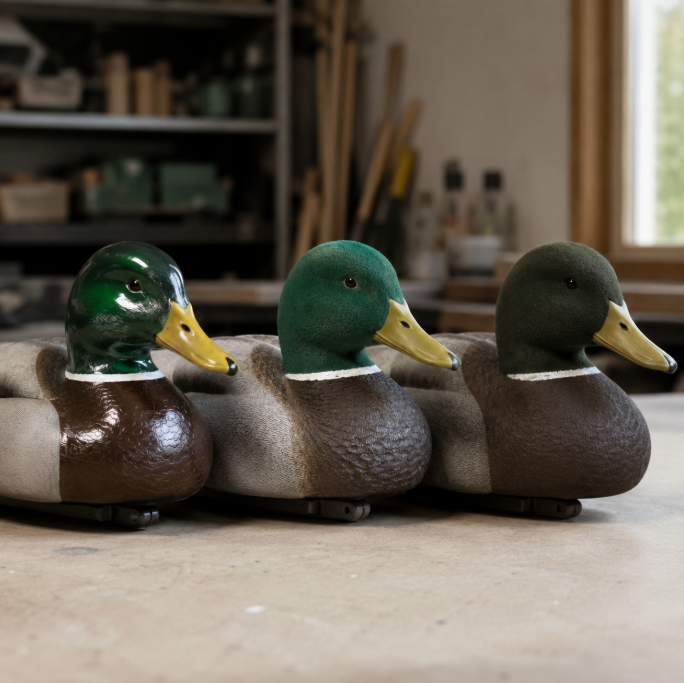
Flocked decoys are not always better than non-flocked decoys, but they can help in specific situations. The main value of flocking powder is to create a softer, matte surface that reduces glare and makes certain parts of a duck or goose decoy look less like painted plastic.
This is especially useful on dark heads, mallard drake heads, goose heads and black duck decoys, where unwanted shine can make the surface look less natural. However, a flocked texture also needs more careful handling because the fiber layer can collect dirt, wear from rubbing or become harder to clean than a simple painted surface.
For hunters, decoy makers and repair workshops, the better question is not simply “flocked or non-flocked.” It is: which part of the decoy actually needs a matte surface, and what flocking material can hold up under the intended use conditions?
Why Hunters Compare Flocked vs Non-Flocked Decoys
The comparison usually comes from four practical concerns: realism, glare, cost and maintenance. Non-flocked decoys are usually easier to clean, more affordable and more tolerant of rough transport. Flocked decoys can look softer and less reflective, but they require better storage and care.
This is why fully flocked duck decoys can create mixed opinions. In real use, rain, snow, ice, mud and repeated handling can all affect the flocked surface. Some users like flocked heads or DIY flocking because the visual improvement is obvious on dark areas, while others question whether full-body flocking is worth the extra care.
For a flocking material supplier, this search behavior is important. Some users begin by searching for finished products such as fully flocked mallard decoys or flocked goose decoys, but part of that audience also moves toward repair, repainting, flocked head upgrades, DIY kits and flocking powder selection.
What Does Flocking Powder Do on Decoy Surfaces?
Reducing Glare and Plastic Shine
Flocking powder helps reduce the shiny appearance of smooth plastic or painted decoy surfaces. Instead of reflecting light like a glossy coating, the short fiber layer creates a more matte finish.
This matters most when sunlight hits the decoy from a low angle, when the head area is dark, or when old paint has become too glossy. The soft fiber coating can help absorb light and reduce the artificial shine often seen on standard painted decoys.
The effect should not be overstated. Flocking does not replace decoy shape, placement, color accuracy or concealment. But when surface shine is the problem, it can make the decoy look less artificial.
Creating a Softer and More Realistic Texture
A flocked texture can make duck and goose decoys appear softer and more feather-like from a visual distance. This is one reason flocked head decoys are common for mallards, black ducks and goose decoys.
The material does not turn a poor decoy shape into a perfect one. However, if the base decoy already has a usable shape and color layout, flocking powder can improve the surface finish by reducing the hard, painted look.
For custom decoy makers, this also creates more surface design options. Dark green flock can be used for mallard heads, black flock for black duck or goose head areas, and brown, grey or custom colors for specific product styles or repair needs.
Flocked Head Decoys vs Fully Flocked Decoys
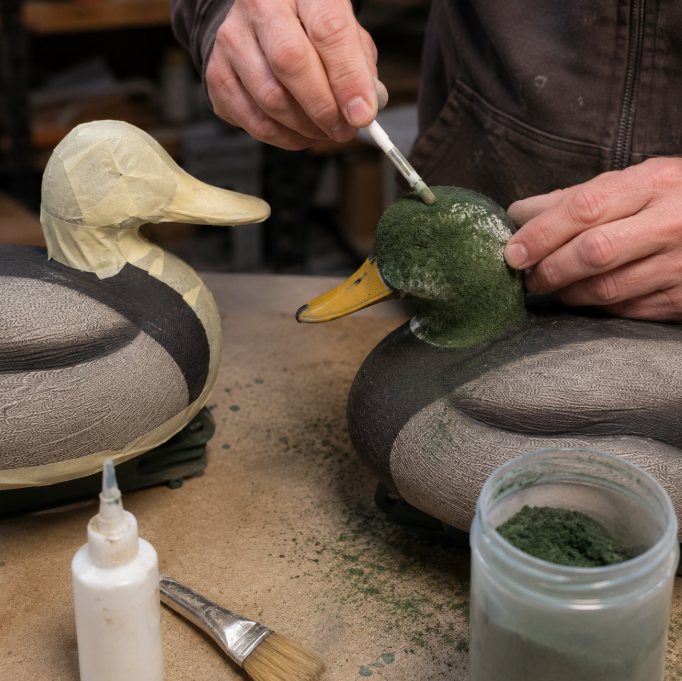
When Flocked Head Decoys Make More Sense
Flocked head decoys are often the most practical middle ground. The head is one of the most visible parts of many duck and goose decoys, and it is also where glare can look especially unnatural on darker colors.
For mallard drake decoys, a dark green flocked head can create a softer and more natural appearance than glossy paint. For goose decoys, black flocked heads may help reduce shine and improve the matte visual effect.
From a maintenance point of view, head flocking is easier to manage than full-body flocking. The treated area is smaller, easier to inspect and more realistic for repair or DIY work. For many users, this gives a better balance between appearance improvement and care requirements.
When Fully Flocked Duck or Goose Decoys Make Sense
Fully flocked duck decoys or fully flocked goose decoys may be worth considering when a premium matte appearance is more important than easy cleaning. They can be used for high-end product lines, display-grade decoys, field setups with cleaner handling, or users who are willing to store and maintain decoys carefully.
The limitation is that a full-body flocked surface has more exposed area. More fiber area means more contact with mud, water, rubbing, stacking and transport wear. This is why fully flocked decoys can look impressive when new but may require more attention in real use.
That does not mean fully flocked decoys are a poor choice. It means the material system must be selected carefully. For full-body applications, flocking adhesive, fiber length, color stability, curing quality and storage method all matter.
When Does Flocking Powder Really Help?
Flocking powder helps most when the user needs glare reduction, matte texture or surface repair. It is less necessary when the decoy is used in rough conditions where simple cleaning and low cost matter more.
Use Condition | Does Flocking Help? | Reason |
Bright sunlight or low-angle light | Yes | Helps reduce shine on plastic surfaces |
Dark heads or black duck decoys | Yes | Matte fiber texture can look more natural |
Worn or glossy head repair | Yes | Refreshes old surfaces and reduces glare |
Premium product appearance | Yes | Creates a softer, higher-value surface |
Muddy water or rough transport | Limited | Fibers may collect dirt or wear faster |
Budget beginner setup | Not always | Painted decoys may be enough |
Full-body flocking for heavy use | Depends | More realistic, but needs more care |
A balanced answer is more credible than simply saying flocked decoys are always better. In many cases, flocking powder is most useful on selected areas, especially heads and dark parts, rather than on every surface.
Practical Pros and Cons of Flocked and Non-Flocked Decoys
The right surface depends on how the decoy will be used, cleaned, transported and stored.
Type | Advantages | Limitations |
Non-flocked decoys | Lower cost, easy cleaning, durable under rough handling | May shine under sunlight and look more plastic |
Flocked head decoys | Good balance of realism and maintenance | Treated area still needs careful storage |
Fully flocked decoys | Strong matte effect and premium appearance | Easier to collect dirt, higher cost, more care required |
DIY flocked decoys | Good for repair and customization | Requires adhesive control, color matching and testing |
For many users, flocked head decoys are the most realistic starting point. They improve the most visible areas without exposing the full body to the same level of wear.
For manufacturers or repair workshops, the choice depends on the final market. A premium product line may justify fully flocked mallard or goose decoys, while repair kits and DIY material packs may focus on heads, dark areas or worn surfaces.
How to Flock Decoys with Flocking Powder?
Basic Decoy Flocking Process
Decoy flocking usually starts with surface preparation. The old surface should be cleaned, lightly sanded if needed and kept free from oil, dust or loose paint. Poor preparation is one of the main reasons a flocked surface fails.
A basic process usually includes:
Clean the decoy surface.
Lightly sand glossy or worn areas.
Apply a compatible flocking adhesive.
Add flocking powder evenly while the adhesive is wet.
Let the surface dry fully.
Remove loose fibers after curing.
Check surface coverage and rubbing resistance.
For DIY users, preparation, adhesive timing, full drying and gentle cleanup are often more important than applying a large amount of flocking powder. A thick layer cannot solve problems caused by a dirty surface or weak adhesive.
Common Areas to Flock on Duck and Goose Decoys
Not every decoy needs full-body flocking. Smaller areas are often easier to control and maintain.
Common flocking areas include:
l Mallard drake heads
l Goose heads and neck areas
l Black duck heads
l Worn body patches
l Tail or wing accent areas
l Premium display surfaces
l Custom repair sections
For beginners, smaller areas are easier than full-body flocking. For batch repair or OEM production, consistency in adhesive application and material testing becomes more important than hand-applied appearance alone.
Choosing Flocking Powder for Decoy Surfaces
The quality of flocking powder directly affects the final look and durability of the decoy surface. A material that works for indoor craft decoration may not perform the same way on an outdoor hunting product.
Color is usually the first decision. Mallard heads often need dark green tones. Goose and black duck areas may require black or dark brown shades. Body repairs may need grey, tan, brown or custom colors. For branded hunting products, color consistency across batches is especially important.
Fiber length also matters. Shorter, finer flock fibers usually create a smoother and more even surface. Longer fibers may create a thicker texture, but they can be harder to keep clean and may not suit detailed head areas. For decoy surfaces, the material should create a matte effect without looking too heavy or uneven.
Adhesive compatibility is just as important as the flock itself. Outdoor decoys may face moisture, friction, temperature changes and repeated handling. The adhesive should support good bonding, reasonable flexibility and rubbing resistance after curing.
Before bulk use, testing is recommended:
l Color matching under natural light
l Rub test after full drying
l Water exposure test
l Adhesion test on the actual decoy surface
l Drying and curing check
l Shedding check after handling
For material buyers, this is where a supplier can provide value beyond simply selling flocking powder. Custom colors, suitable fiber size, batch consistency and adhesive matching can help decoy makers, repair workshops and outdoor product brands reduce trial-and-error.
How to Make Flocked Decoys Last Longer
Flocked surfaces need gentler handling than plain painted plastic. This does not mean they are too fragile to use, but storage and cleaning habits matter.
To extend service life:
l Store flocked decoys in slotted bags or separated compartments.
l Avoid dragging them through wet mud.
l Let wet decoys dry before storage.
l Do not stack them roughly against hard edges.
l Remove dry dirt with a soft brush.
l Avoid aggressive scrubbing.
l Do not use harsh cleaners unless the material supplier confirms compatibility.
l Check worn areas before the next season.
User concerns often focus on wear, dirt pickup, cleaning difficulty and whether the visual benefit is worth the extra care. These concerns should be answered directly rather than ignored.
For repair work, old flocking should be inspected carefully before recoating. If the original layer is already loose, adding new adhesive and fiber on top may not solve the problem. The weak layer may need to be removed or sanded first.
Who Needs Flocking Powder for Decoys?
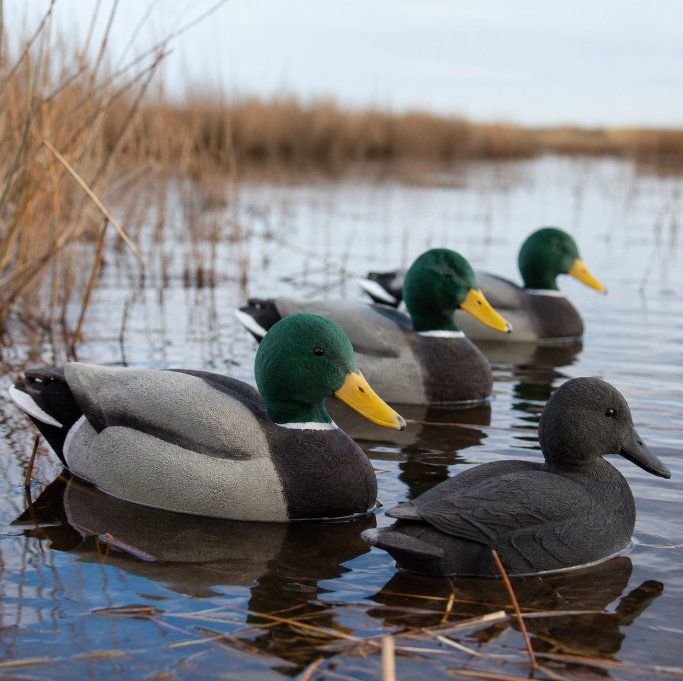
Flocking powder for decoys is useful for more than individual DIY hunters. It can also serve businesses that repair, customize or manufacture hunting products.
Potential users include:
l DIY hunters repairing old duck decoys
l Custom decoy makers
l Decoy refurbishing workshops
l Hunting gear brands
l Flocked head decoy producers
l Fully flocked duck and goose decoy manufacturers
l Outdoor product distributors needing custom colors
l OEM suppliers developing premium decoy surfaces
For these users, buying flocking powder is not only about one color or one small repair. They may need repeatable color matching, stable fiber quality, suitable adhesive recommendations and samples for production testing.
FAQ About Flocked Decoys and Flocking Powder
1.Are flocked decoys worth it?
Flocked decoys are worth considering when glare reduction, matte texture and realistic surface appearance matter. They may not be necessary for every hunting setup, especially if the decoys are used in rough, muddy or low-budget conditions.
2.What is a flocked decoy?
A flocked decoy has short fibers bonded to part or all of its surface. The fiber layer creates a soft, matte texture that can reduce shine and make the decoy look less like painted plastic.
3.Do fully flocked decoys need more care than painted decoys?
Yes. Fully flocked decoys usually need more careful handling because the fiber surface can collect dirt, wear from rubbing or become harder to clean than painted plastic. Painted decoys are usually simpler to rinse and store.
4.Can I flock old duck decoys myself?
Yes. Old duck decoys can be flocked or repaired if the surface is cleaned, prepared and matched with suitable adhesive and flocking powder. Small areas such as heads or worn patches are usually easier for beginners than full-body flocking.
5.What color flocking powder is used for mallard decoy heads?
Dark green is commonly used for mallard drake heads, but the exact color should match the decoy style, lighting condition and desired finish. For batch production, applied color samples are more reliable than viewing loose fibers only.
6.Where do you buy flocking powder for decoys?
Flocking powder can be purchased from material suppliers that offer suitable fiber length, color matching and adhesive compatibility for decoy surfaces. For outdoor use, it is better to test both flocking powder and adhesive on the actual decoy material before bulk application.
7.Can goose decoys be flocked the same way as duck decoys?
Goose decoys can use a similar preparation and adhesive process, but the treated area, color and durability requirements may be different. Goose heads and dark neck areas are common flocking areas.
8.Why does flocking fall off a decoy?
Flocking may fall off because of poor surface preparation, weak adhesive, damp or dusty application conditions, excessive rubbing or unsuitable fiber material. Testing adhesion before full application helps reduce shedding problems.
Conclusion
Flocked and non-flocked decoys each have a place. Non-flocked decoys are easier to clean, usually more affordable and better suited to rough handling. Flocked decoys can provide a softer, more matte and realistic surface, especially on heads, dark areas and premium decoy designs.
Flocking powder really helps when the goal is to reduce glare, refresh worn surfaces, customize decoy colors or create a more natural texture. For DIY users, flocked heads and small repair areas are often the most practical starting point. For brands and manufacturers, material consistency, adhesive compatibility and field-use testing matter more than appearance alone.
For decoy repair, custom hunting products or OEM flocked decoy production, choosing the right flocking powder can make the difference between a surface that only looks good at first and one that performs reliably in real use.