Nylon 6 and Nylon 66 are both polyamide materials used to produce durable, precision-cut flock fibers. In general, Nylon 6 offers a softer and more flexible fiber character, while Nylon 66 provides greater stiffness, heat-resistance potential and abrasion-resistance potential. These differences can influence the finished flocked surface, but they do not determine performance on their own.
Once the polymer has been converted into short fibers, the result is also affected by fiber length, dtex, cut consistency, color treatment, conductivity, adhesive, curing conditions and substrate geometry. A well-matched Nylon 6 flock can perform better than an unsuitable Nylon 66 specification in the actual product.
The reliable way to choose nylon flock powder is therefore to compare the complete flocked construction, not select a material only from a generic polymer property table.
What Are Nylon 6 and Nylon 66 Nylon Flock Fibers?
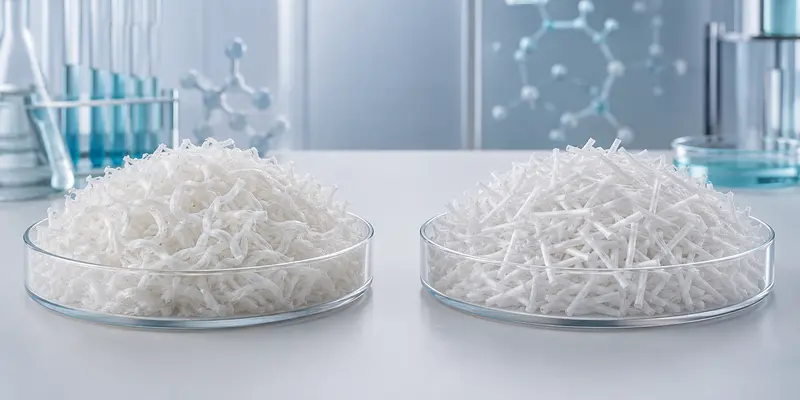
Nylon 6, also called PA6 or polyamide 6, is produced from caprolactam. Nylon 66, also written as Nylon 6.6, Nylon 6/6 or PA66, is produced from hexamethylenediamine and adipic acid. Their different molecular structures influence crystallinity, stiffness, thermal behavior, moisture response and mechanical performance.
For flocking applications, the polymer is converted into tow and cut into controlled fiber lengths. The fibers may then be dyed and surface-treated to obtain the color, flow and conductivity required by the flocking process. The resulting material may be described as nylon flock powder, nylon flock fibers, precision-cut nylon flock or polyamide flock.
Both PA6 and PA66 can create dense, velvet-like surfaces. They are used for automotive trim, plastic components, packaging inserts, textiles and industrial products that need resilience and resistance to repeated handling.
The word “nylon” is not a complete purchasing specification. Buyers should confirm whether the fiber is PA6 or PA66 and request its length, dtex, color, conductive treatment and recommended application conditions.
Nylon 6 vs Nylon 66 Flock Powder: Key Differences
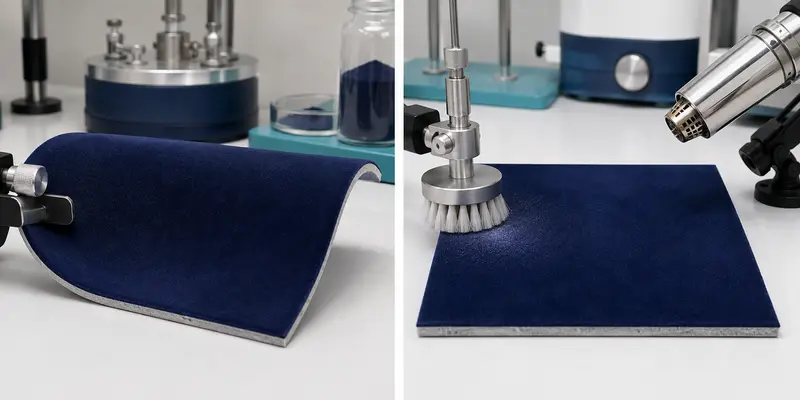
The comparison below describes common material tendencies. It should not be interpreted as a guaranteed result for every fiber grade or finished flocked component.
| Selection factor | Nylon 6 flock | Nylon 66 flock |
| Surface character | Usually softer and more flexible | Usually firmer and more resilient |
| Abrasion potential | Suitable for general and moderate-wear uses | Often evaluated for demanding wear conditions |
| Heat performance | Lower general thermal range | Higher thermal-resistance potential |
| Dyeing response | Generally easier to dye | May require tighter dye-process control |
| Moisture response | Can absorb slightly more moisture | Often slightly more dimensionally stable |
| Typical priority | Soft touch, color and balanced performance | Durability, recovery and technical performance |
| Final decision | Confirm on an actual flocked sample | Confirm on an actual flocked sample |
Nylon 66 is often described as the higher-performance material because its structure can support higher stiffness, heat resistance and wear resistance. That description is incomplete for flocking. A PA66 fiber that is too long, too coarse or poorly matched to the component can create a less uniform surface than a correctly specified PA6 flock.
Finished abrasion resistance also depends on how deeply the fibers are anchored in the adhesive. Material type establishes a performance range; the flock specification and production process determine how much of that potential appears in the finished product.
Nylon 6 Flock Powder for Softness, Color and Flexible Surfaces
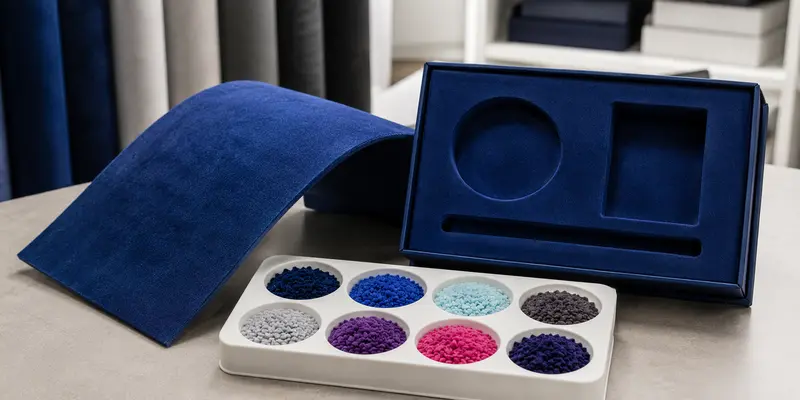
Nylon 6 flock powder is commonly considered when a project needs a balance of softness, resilience and color flexibility. Its comparatively flexible fiber character can help create a comfortable tactile finish, particularly when paired with a fine dtex and a short or medium cut length.
This can be useful for packaging interiors, presentation products, selected textile surfaces, beauty tools and other parts handled directly by the user. PA6 does not automatically create a soft finish: a coarse or long PA6 fiber can feel more pronounced than a fine, short PA66 fiber.
Nylon 6 is also generally considered easier to dye. This can support custom colors and appearance-led projects, but batch consistency still depends on the dye formulation, base fiber and production controls. The same loose flock may appear different on white paper, dark plastic, fabric or a colored adhesive layer.
Where accurate color is important, approve an actual flocked sample rather than loose fiber alone. The custom flocking powder color guide explains how the substrate and adhesive color influence the final appearance.
PA6 is therefore not simply a lower-performance alternative to PA66. It is a practical option when softer touch, flexibility, color development and balanced everyday performance matter more than maximum heat or wear resistance.
Polyamide 66 Flock Powder for Wear and Heat Resistance
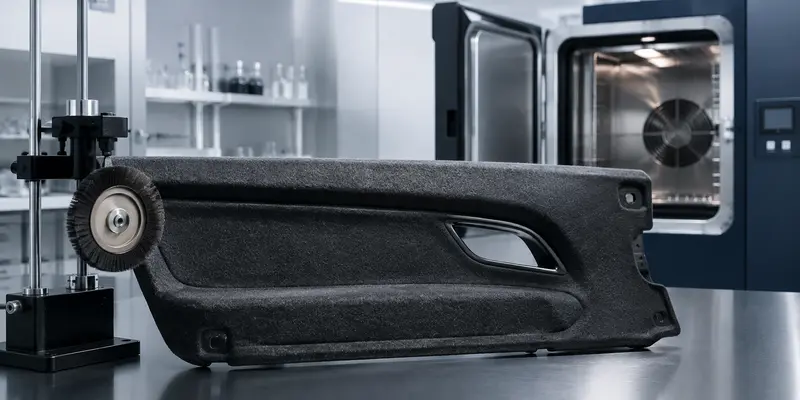
Polyamide 66 flock powder is commonly selected when a project places greater emphasis on wear resistance, pile recovery, dimensional stability or elevated-temperature performance. PA66 generally has higher crystallinity and a higher melting range than PA6, which can support a firmer and more resilient fiber.
These properties are useful for automotive storage compartments, seals, frequently handled plastic parts and technical components. A firmer fiber can maintain a more defined pile after repeated contact when the complete flocked layer has been designed and cured correctly.
Higher performance potential does not remove the need for validation. If the adhesive is too thin, incompatible with the substrate or inadequately cured, PA66 fibers can still shed during rubbing. The polymer may also tolerate a higher temperature while the dye, conductive finish, adhesive or substrate becomes the limiting part of the system.
PA66 may feel firmer than an equivalent PA6 specification. This can benefit a resilient technical surface but may be less suitable when the primary objective is an extremely soft cosmetic or textile touch.
Electrostatic Nylon Flock Powder and Fiber Conductivity
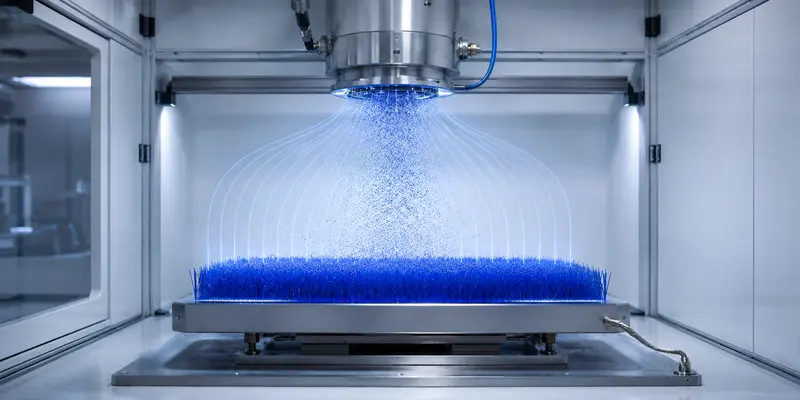
The polymer name does not independently determine whether an electrostatic nylon flock powder will separate, travel and stand upright correctly. Electrostatic behavior depends heavily on conductive preparation, moisture condition, fiber length, cut consistency and the production environment.
During electrostatic flocking, charged fibers move toward a grounded, adhesive-coated substrate and align with the electric field. A suitable material should separate consistently and enter the adhesive with enough vertical alignment to form an even pile.
Both PA6 and PA66 interact with moisture in the surrounding air. Extremely dry fibers may not charge or move as expected, while excessive moisture can encourage clumping. The working range depends on the fiber treatment and equipment rather than one universal humidity value.
Voltage, grounding, applicator distance and adhesive open time can also create differences that are incorrectly blamed on the nylon type. Before comparing PA6 and PA66, confirm that the samples use comparable length, dtex, moisture conditioning and surface treatment.
For the underlying process, see What Is Electrostatic Flocking?.
Nylon Flock Fibers for Packaging, Textile and Automotive Applications
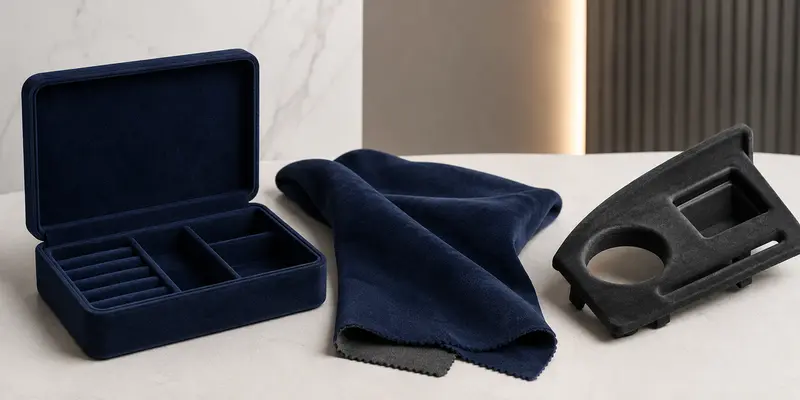
For packaging inserts and presentation boxes, selection is often driven by surface refinement, color accuracy, edge definition and resistance to repeated product removal. A fine PA6 flock may provide a useful balance of softness and appearance. PA66 can be evaluated for reusable packaging or inserts exposed to greater abrasion.
For textile and garment surfaces, flexibility becomes more important. The fiber, adhesive and fabric must move together without creating a hard or brittle print. PA6 may suit applications where softness is central, while PA66 may suit designs that place more emphasis on wear resistance or pile recovery. Wash performance must be tested on the complete construction.
Automotive trim generally creates stronger requirements for abrasion, shedding, temperature exposure and long-term appearance. PA66 is therefore commonly evaluated for glove compartments, storage areas, seals and frequently contacted plastic components. A PA6 specification may still meet the requirement when the wear level is moderate and a softer surface is preferred.
Industrial products should be selected from measurable conditions. Instead of describing the use only as industrial, define the substrate, friction level, contact pressure, operating temperature, cleaning method and required lifetime.
For the wider Nylon, Viscose and Polyester decision, read How to Choose Flocking Powder by Material and Application.
Nylon Flock Powder Specifications: Length, Dtex and Finish
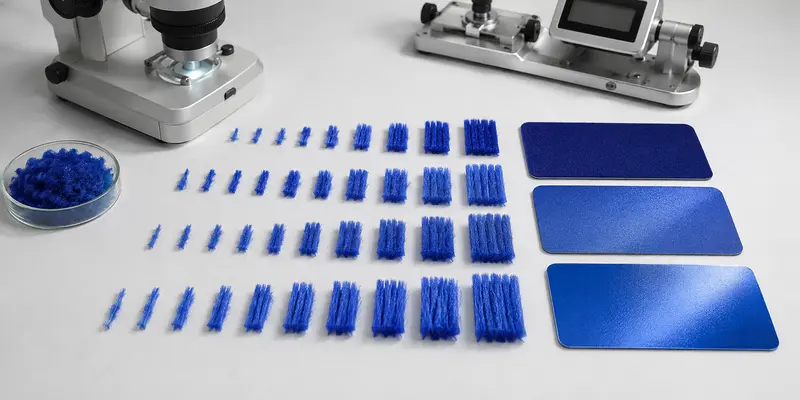
Polymer type is only one line in a nylon flock powder specification. Fiber length controls pile height and affects how easily the material follows detailed geometry. Dtex describes fiber fineness and influences density, softness, opacity and surface definition.
A short, fine flock generally forms a smoother and more compact surface. A longer fiber creates a deeper and more visible pile but requires tighter process control, particularly on corners and recesses. A specification such as 1.0mm 3.3 dtex nylon flock communicates more useful purchasing information than the word nylon alone.
Cut quality is equally important. Precision cut flock fibers should have controlled length distribution and low levels of oversized fibers, fused ends and dust. Poor cutting consistency can create irregular pile height and uneven electrostatic movement regardless of whether the polymer is PA6 or PA66.
The conductive finish should match the application method and working environment. Color treatment should be assessed against the required colorfastness, light exposure, washing or chemical contact. Buyers should also confirm length tolerance and whether the stated dtex refers to the individual filament.
The Flocking Powder Specifications Guide provides a detailed explanation of material, length, dtex, denier and finish.
How to Choose Nylon Flock Powder Through Sample Testing?
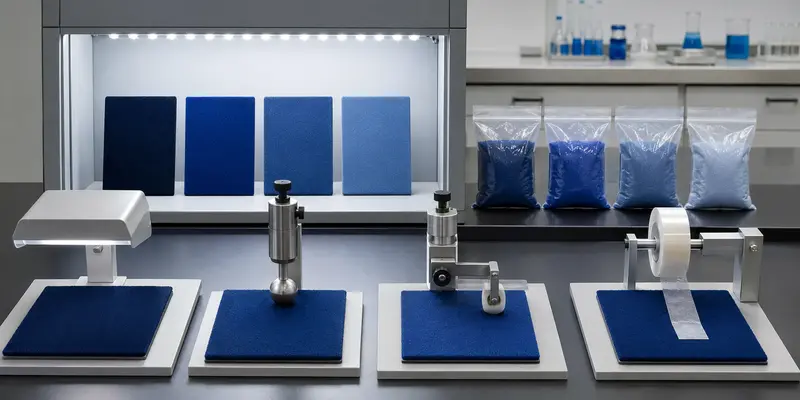
The choice between PA6 and PA66 should begin with the finished-product requirement. Define the substrate, intended hand feel, abrasion level, operating temperature, cleaning method, component geometry, color standard and flocking process before requesting samples.
Ask the supplier to control the comparison variables. If the PA6 and PA66 samples have different lengths, dtex values or conductive treatments, the trial will not isolate the influence of the polymer. Ideally, both materials should be compared at a similar color, length, dtex and application weight.
Apply each sample to the actual substrate with the intended adhesive and equipment. Inspect coverage density, fiber standing, recess coverage, edge definition and loose-fiber level after cleaning. Then test the risks that matter to the product, such as rubbing, compression recovery, washing, heat exposure or chemical contact.
Color and hand feel should be approved after flocking and curing. Loose-fiber samples cannot show how the adhesive color, pile density and substrate affect the final result.
A complete sample request should state the application, substrate, preferred nylon type, length, dtex, target color, flocking method, required softness or durability, expected order quantity and acceptance test. If these details are not yet known, an existing material or finished component can provide a more reliable reference.
Use the Zhangs flocking powder range as the product hub for specification, sample and quotation enquiries.
Nylon 6 vs Nylon 66 Flock Powder FAQ
Is Nylon 66 flock powder always better than Nylon 6?
No. Nylon 66 generally offers higher stiffness, heat-resistance potential and wear-resistance potential, while Nylon 6 may provide a softer and more flexible surface. The better material is the one that meets the actual product and process requirements.
Which nylon flock powder feels softer?
Nylon 6 often provides a softer or more flexible feel when length and dtex are comparable. Fiber fineness, pile density and cut length can nevertheless affect perceived softness as much as the polymer type.
Which nylon flock fibers are better for automotive trim?
PA66 flock fibers are commonly evaluated for high-contact automotive parts because of their durability and recovery potential. The final choice should be confirmed through abrasion, heat, shedding and adhesion tests on the actual component.
Does Nylon 66 flock perform better in electrostatic flocking?
Not automatically. Electrostatic performance depends on conductive treatment, fiber moisture, length consistency, grounding, voltage and adhesive open time. Both PA6 and PA66 can produce uniform results when correctly prepared and processed.
Can Nylon 6 and Nylon 66 flock use the same adhesive?
They may be compatible with the same adhesive, but compatibility should not be assumed. The adhesive must match the substrate, curing process, flexibility and performance requirement. A sample test should confirm fiber anchoring and adhesion.
How should buyers compare PA6 and PA66 flock samples?
Compare samples with similar length, dtex, color and conductive treatment. Apply them to the same substrate with the same adhesive and settings, then evaluate appearance, touch, coverage, shedding, abrasion, recovery and any required heat or washing performance.
Choosing the Right Nylon Flock Powder
Nylon 6 and Nylon 66 are not simply standard and premium versions of the same flock. PA6 is often suitable when softness, flexibility and color development are priorities. PA66 is often preferred when wear resistance, recovery and thermal performance carry more weight.
The final decision should combine polymer type with fiber length, dtex, cut quality, conductive treatment, adhesive compatibility and actual service conditions. A controlled sample comparison provides more useful evidence than selecting material from a generic property table alone.