Can Flocking Powder Colors Be Customized?
What Is Custom Color Flocking Powder?
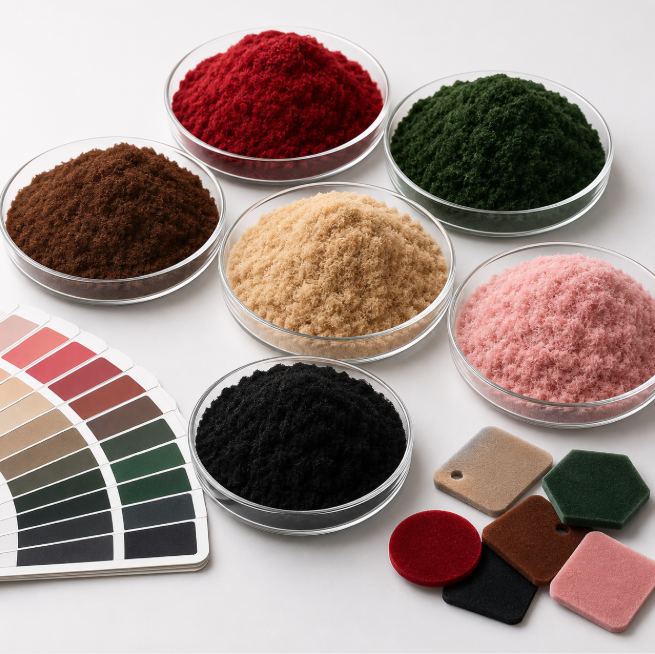
Custom color flocking powder can be produced by dyeing flocking fibers to match a required color standard or physical sample. This allows brands, packaging manufacturers, craft suppliers and industrial users to create a flocked surface that matches a design theme, product line or brand color.
Custom flocking powder colors are usually confirmed by sample testing before bulk production. A color may look different on paper, plastic, fabric, wood or metal, so the final match should be checked on the actual surface rather than only in the loose powder form.
When Do Buyers Need Custom Flocking Powder Colors?
Buyers need custom flock powder color when standard colors cannot match the final product design. Common cases include luxury packaging, jewelry boxes, cosmetic boxes, holiday decorations, craft kits, toy surfaces, display trays and branded promotional items.
Color matching flocking powder is especially useful when the flocked surface is part of the product’s visual identity. For example, a cosmetic brand may need a specific pink or red finish, while a gift packaging supplier may need brown, green or black flocking powder to match seasonal collections.
How Does Flock Powder Color Customization Work?
How to Match Flocking Powder Colors?
Flocking powder colors are usually matched by comparing a target color with dyed flocking fibers under controlled lighting. The target may be a Pantone number, RAL number, fabric sample, printed card, plastic part or previous flocking sample.
The most reliable color matching process uses both loose flock powder and applied flocked samples. Loose fibers may appear lighter, darker or more saturated than the finished flock coating, especially when fiber length, density and substrate color change.
What Information Is Needed for Flocking Fiber Color Matching?
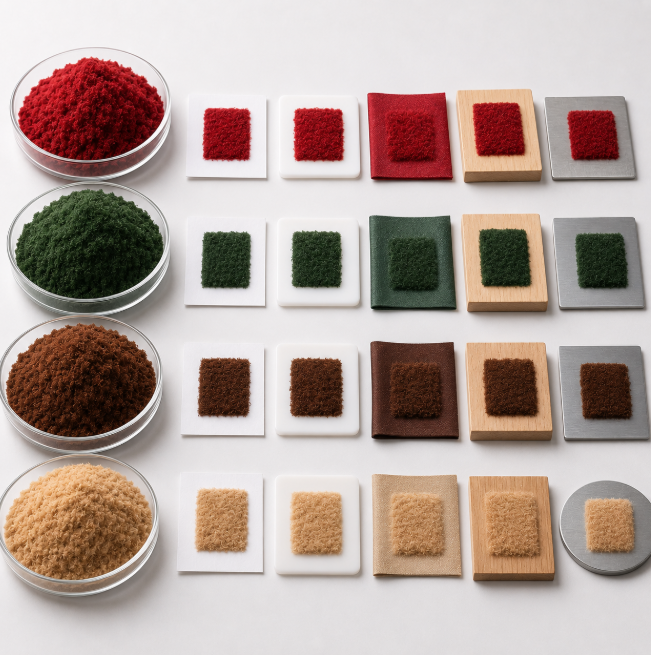
Flocking fiber color matching needs a clear color target, material type, fiber length, application surface and final use condition. Without this information, a supplier may match the powder color but miss the final surface effect.
Information Needed | Why It Matters |
Target color | Helps define the required shade |
Material type | Nylon, rayon, polyester and viscose absorb dye differently |
Fiber length | Longer fibers may show color depth differently |
Surface type | Paper, plastic, fabric and metal reflect color differently |
Adhesive color | Clear, white or tinted glue can affect the final tone |
Lighting condition | Indoor, daylight and display lighting can change perception |
End use | Decorative, packaging and industrial uses have different tolerance levels |
Can Flocking Colors Be Mixed to Create Custom Shades?
Can Flocking Colors Be Mixed to Create Custom Shades?
Flocking colors can be physically mixed to create custom shades, but this method is not the best choice for precise or repeatable color matching. Mixing two or more colored flocking powders may create a blended appearance, but the final surface can look uneven if the fibers are not distributed consistently.
Custom dyed flocking powder is usually better for stable bulk production. If the project requires the same red, green, brown or brand color across multiple batches, dyed flocking powder is more reliable than hand-mixed colored flocking powder.
When Is Color Mixing Acceptable?
Color mixing is acceptable when the goal is a decorative, natural or variegated effect rather than an exact solid color. Craft projects, model scenery, seasonal decoration and artistic surfaces may benefit from mixed flocking powder colors.
Color mixing is less suitable for premium packaging or strict brand color requirements. For cosmetic boxes, jewelry trays, branded displays or retail packaging, custom dyed flocking fibers normally provide better consistency and a cleaner surface.
How to Choose Flocking Powder Colors for Different Surfaces?
How Do Surfaces Affect Flocking Powder Colors?
Different surfaces can change how flocking powder colors appear after application. A red flocking powder may look more vivid on a white base, deeper on a black base and slightly muted on porous cardboard.
Surface color, adhesive color and flock density all influence the final result. This is why the same colored flocking powder should be tested on the actual substrate before mass production.
Color Matching Guide by Surface
The best flocking powder color should be selected according to the surface material and final visual effect.
Surface | Color Matching Focus | Practical Suggestion |
Paper / Cardboard | Avoid dull or uneven tones | Use a clean base color and enough flock coverage |
Plastic | Improve color depth and bonding | Clean the surface and test adhesion before approval |
Fabric | Match color and hand feel together | Use flexible adhesive and test rubbing performance |
Wood | Control absorption and base shade | Seal the surface if the wood absorbs adhesive heavily |
Metal | Keep color clean and stable | Degrease the surface and test primer if needed |
Packaging inserts | Match brand and display lighting | Confirm the color under real display conditions |
How Do I Apply Flocking to Achieve Vibrant Red or Green Effects?
How to Achieve Vibrant Red Flocking Powder Effects?
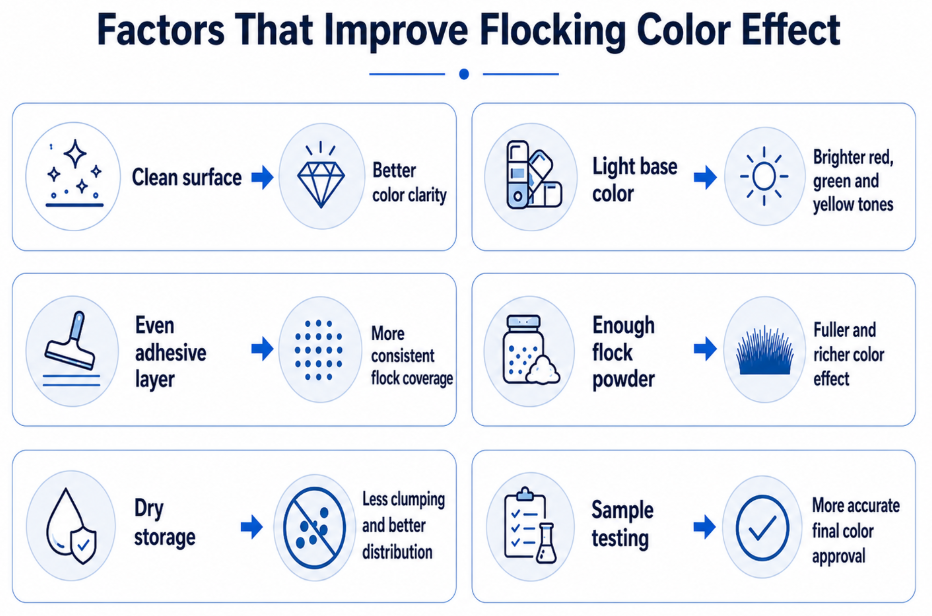
Vibrant red flocking powder works best on a clean, light and evenly coated surface. Red can lose brightness if the base is dark, the adhesive layer is uneven or the flock coverage is too thin.
Red flocking powder for decorative surfaces should be tested with the actual adhesive and substrate. A bright red loose powder may look slightly different after application, especially on paper, fabric or plastic surfaces.
How to Apply Green Flocking Powder for Crafts and Packaging?
Green flocking powder works well for crafts, packaging, seasonal decoration, model scenery and nature-inspired designs. It can create fresh, soft and vivid effects when the fiber density is even and the base color supports the green tone.
Green flocking powder for crafts and packaging should be applied with enough material to avoid sparse coverage. If the flock layer is too thin, the background color may show through and make the green surface look weak or patchy.
Tips for More Vibrant Colored Flocking Powder
Vibrant flocking colors depend on both the powder quality and the application process.
What Are the Different Types of Flocking Colors Available for Crafts?
Standard Flocking Powder Colors
Standard flocking powder colors usually include common shades such as black, white, red, green, blue, yellow, brown, gray and beige. These colors are suitable for general crafts, packaging, decorative products and surface finishing.
Standard colored flocking powder is useful when the project does not require strict brand color matching. It can reduce sampling time and may be more practical for small orders or seasonal products.
Custom Dyed Flocking Powder Colors
Custom dyed flocking powder is used when a specific shade is required. This can include brand colors, packaging series colors, retail display colors or design-specific tones.
Dyed flocking powder should be approved through a physical sample. Digital color references can help start the process, but the final decision should be based on actual flocked samples.
Natural and Decorative Flock Powder Colors
Natural flock powder colors such as brown, beige, dark green and gray are often used for realistic or soft decorative surfaces. These colors work well in craft kits, model making, display props and gift packaging.
Decorative color ranges may also include bright, pastel or seasonal shades. For example, red and green are common for holiday products, while pink, beige and brown can be used for cosmetic packaging and soft luxury displays.
How Is Brown Flocking Applied to Different Surfaces?
Brown Flocking Powder for Wood, Packaging and Crafts
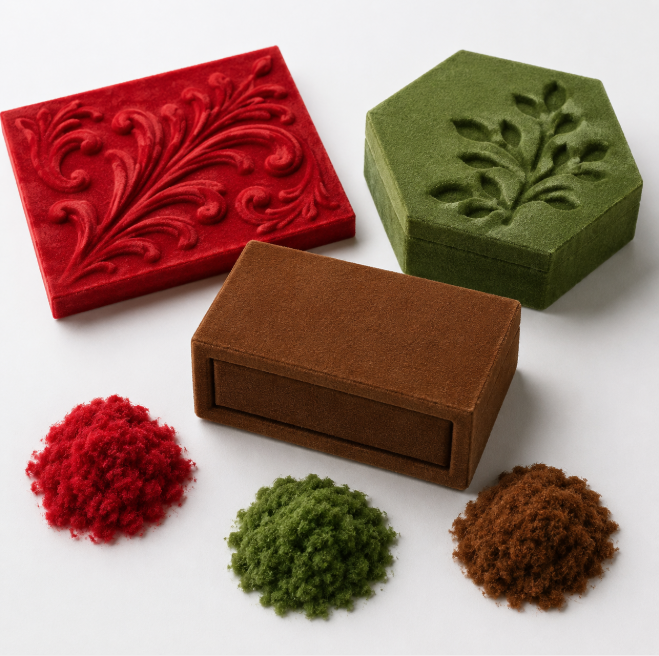
Brown flocking powder is often used when the final surface needs a warm, natural or leather-like appearance. It can be suitable for jewelry boxes, craft surfaces, display trays, gift packaging and decorative panels.
Brown flocking powder for different surfaces should be tested because base color can strongly affect the final tone. On wood, brown may look warmer; on white paper, it may appear cleaner; on dark plastic, it may look deeper and less bright.
How to Keep Brown Flocking Color Consistent?
Brown flocking color stays more consistent when the substrate, adhesive and flock density are controlled. Small changes in base color or glue thickness can make brown tones look warmer, cooler, lighter or darker.
Batch testing is important for brown, beige and other natural shades. These colors often show subtle differences more clearly than highly saturated colors such as bright red or green.
How to Avoid Color Difference in Flocking Powder?
Why Does Flocking Powder Color Difference Happen?
Flocking powder color difference happens when fiber dyeing, substrate color, adhesive thickness, lighting or batch conditions are inconsistent. The same custom color flocking powder may look different if it is applied under different process conditions.
Color difference can also happen when loose powder is approved without testing the finished surface. Buyers should always confirm the final flocked sample, not only the color of the powder in the bag.
How to Reduce Color Variation Before Mass Production?
Color variation can be reduced by approving a standard sample before mass production. The approved sample should include material, fiber length, color, adhesive, substrate and application method.
Color Risk | Cause | How to Reduce It |
Color looks lighter | Low flock density or light reflection | Apply enough flock powder and test coverage |
Color looks darker | Dark substrate or thick adhesive | Use a suitable base color and controlled glue layer |
Color looks uneven | Poor distribution or mixed fiber lengths | Use consistent fiber length and application method |
Batch color varies | Different dyeing lots | Confirm batch samples before bulk use |
Surface color changes | Lighting condition changes | Check samples under real use lighting |
Custom Flocking Fibers for Brand and Product Design
Why Choose Custom Flocking Fibers?
Custom flocking fibers help brands control color, texture and surface identity at the same time. Instead of selecting only from standard colors, buyers can match the flock fiber color to packaging, product design or seasonal themes.
Custom flocking powder colors can also be matched with fiber length and material. A short red rayon flock may create a soft decorative surface, while a longer green nylon flock may create a more visible texture for craft or display use.
What Should Be Confirmed Before Ordering Custom Color Flocking Powder?
Custom color flocking powder should be confirmed by sample before bulk production. The sample should show the real surface result, not only the loose dyed fiber.
Buyer Checkpoint | What to Confirm |
Color target | Pantone, RAL, physical sample or approved previous sample |
Fiber material | Nylon, rayon, polyester, viscose or other material |
Fiber length | Short, medium or longer flocking fiber |
Surface type | Paper, plastic, fabric, wood, metal or coated board |
Adhesive | Clear, white, colored or application-specific glue |
Final use | Packaging, crafts, display, decoration or industrial product |
Approval sample | Loose powder and applied flocked sample |
FAQ About Custom Flocking Powder Colors
1.Can Flocking Powder Colors Be Customized?
Flocking powder colors can be customized by dyeing flocking fibers to match a required shade. Buyers can provide a color code, physical sample or previous approved flocked sample for reference.
2.Can Flocking Colors Be Mixed to Create Custom Shades?
Flocking colors can be mixed for decorative effects, but custom dyed flocking powder is better for accurate and repeatable color matching. Mixed colors may look uneven if the fibers are not distributed consistently.
3.How Do I Match Flocking Powder Colors?
Flocking powder colors should be matched by testing both loose powder and applied flocked samples. The final color depends on fiber material, surface color, adhesive, density and lighting.
4.How Do I Apply Flocking to Achieve Vibrant Red or Green Effects?
Vibrant red or green flocking effects require a clean base, even adhesive layer and enough flock powder coverage. Testing on the actual surface helps confirm brightness and color consistency.
5.What Types of Flocking Colors Are Available for Crafts?
Craft flocking colors usually include standard, bright, natural, seasonal and custom dyed shades. Red, green, brown, black, white, blue and beige are common options.
6.How Is Brown Flocking Applied to Different Surfaces?
Brown flocking is applied by matching the powder color with the surface base and adhesive condition. It should be tested on wood, paper, fabric or plastic because the final tone may change by substrate.
7.How Can I Avoid Color Difference in Flocking Powder?
Color difference can be reduced by approving a sample before bulk production. The sample should match the actual surface, adhesive, lighting and application method.