Flocking Powder vs Velvet Powder: What Is the Core Difference?
Is Flock Powder the Same as Velvet Powder?
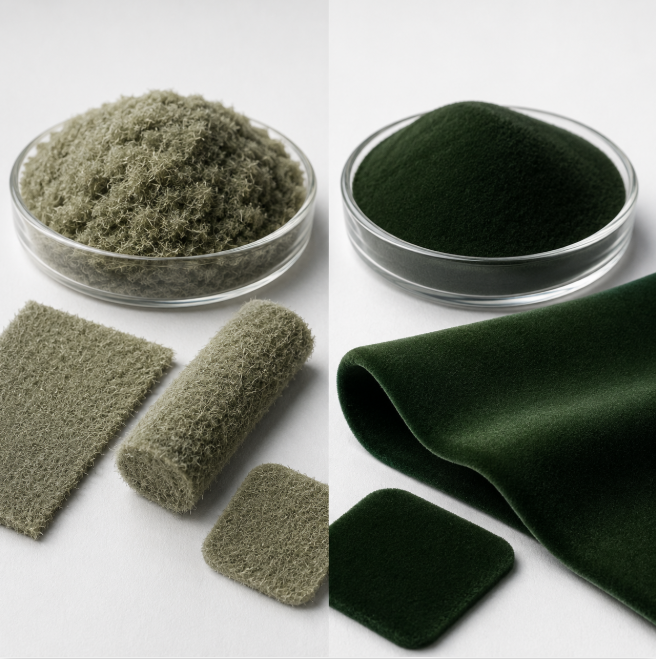
Flock powder and velvet powder can look similar in some applications, but they are not always the same material. Flock powder usually refers to short cut fibers used for flocking processes, while velvet powder is often used as a broader decorative term for materials that create a soft velvet-like surface.
The main difference depends on how the product is defined by the supplier. Flocking powder is usually described by fiber material, fiber length, fineness, color and application method, while velvet powder is often described by the final touch or visual effect.
What Is Flocking Fiber Powder?
Flocking fiber powder is a short fiber material used to build a soft, matte and textured surface on different substrates. It can be made from nylon, rayon, polyester, viscose or other fibers depending on the required softness, durability and finish.
The performance of flocking fiber powder depends on more than appearance. Buyers should confirm fiber length, material type, adhesive compatibility, color stability and final application before choosing it for textile or surface projects.
Velvet Powder Meaning and Velvet-Like Flocking Finish
What Does Velvet Powder Usually Mean?
Velvet powder usually means a fine soft material used to create a velvet-like touch or decorative surface. It is commonly used in crafts, cards, packaging, nail art, decorative coatings and soft-touch design projects.
Velvet powder is more effect-focused than specification-focused. Some suppliers may use the term for fine flocking fibers, while others may use it for decorative soft powders that are not intended for industrial flocking production.
What Is a Velvet-Like Flocking Finish?
A velvet-like flocking finish is a soft, dense and slightly matte surface created by applying fine fibers onto adhesive. The surface can feel similar to velvet, suede or soft fabric depending on fiber length, density and base material.
A high-quality velvet-like effect requires controlled adhesive and even fiber coverage. If the adhesive layer is too thin, the finish may look sparse; if it is too thick, the surface may become hard or uneven.
Textile Flocking Powder vs Velvet Powder for Fabric Use
What Are the Main Differences in Textile Applications?
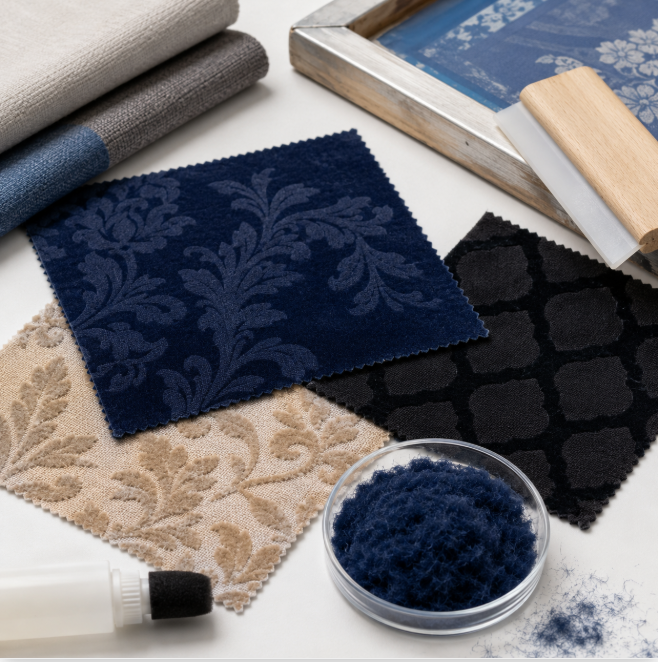
The main difference in textile applications is that textile flocking powder is usually selected for stronger process control, while velvet powder is often selected for soft visual decoration. Fabric applications may require flexibility, rub resistance, pattern clarity and stable bonding.
Velvet powder can be used for simple fabric decoration, but it may not always meet production requirements. For garments, logos, textile prints or repeat orders, buyers should test the powder with a suitable textile adhesive before bulk use.
Which Material Works Better for Flocking Powder for Fabric?
Flocking powder for fabric is usually better when the final product needs durability, flexibility and repeatable pattern quality. It can be used for garment decoration, textile logos, patches, fabric panels and raised graphic effects.
Velvet powder may be suitable for low-friction decorative fabric projects. It can work for craft fabric, handmade accessories or display textiles where the surface is mainly used for appearance rather than frequent washing or rubbing.
Surface Flocking Powder for Paper, Plastic and Wood
Can Surface Flocking Powder Be Used Beyond Textiles?
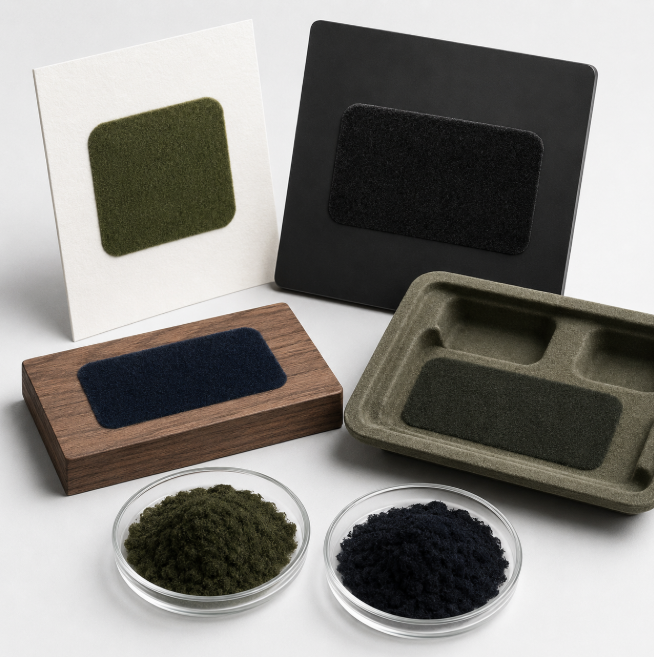
Surface flocking powder can be applied to paper, plastic, wood, metal and other non-textile substrates when the adhesive is properly matched. These applications are common in packaging, jewelry trays, display boards, greeting cards, craft products and molded parts.
Different surfaces require different preparation methods. Paper and wood may absorb adhesive, plastic may need cleaning or surface treatment, and metal may require degreasing or primer for better bonding.
When Should You Choose Velvet Flocking Powder for Decorative Surfaces?
Velvet flocking powder is a good choice when the surface needs a soft, premium and decorative appearance. It is often used for gift boxes, cosmetic packaging, display trays, cards, model surfaces and small craft designs.
The material should still be tested before production. A powder that creates a soft finish on paper may behave differently on plastic, fabric or coated board because adhesion, color and texture can all change by surface.
Flocking and Velvet Powder Comparison Table
Quick Buyer Guide
The best way to compare flocking and velvet powder is to look at material definition, surface effect and production use.
Comparison Item | Flocking Powder / Flock Powder | Velvet Powder / Velvet Flocking Powder |
Main meaning | Short cut fibers for flocking applications | Soft decorative powder or fine fibers for velvet-like effects |
Main focus | Fiber material, length, fineness and adhesion | Soft touch, visual texture and decorative finish |
Common uses | Textile prints, packaging, plastic parts, display inserts | Crafts, cards, nail art, soft decorative surfaces |
Surface effect | Controlled flocked coating | Velvet-like or suede-like appearance |
Production stability | Better when specifications are controlled | Depends on product type and adhesive |
Best for | Repeatable textile and surface applications | Appearance-focused decorative projects |
Testing need | Adhesion, rubbing, coverage and color | Touch, color, adhesion and surface smoothness |
How to Apply Flock Powder for a Professional Finish?
How Do You Apply Flocking Powder for a Velvet-Like Surface?
Flock powder is applied by coating the surface with adhesive and covering the wet adhesive with fine flocking fibers. After drying, loose fibers are removed to reveal a soft and even flocked surface.
The final result depends on adhesive thickness, fiber amount and drying control. Too little powder can create sparse coverage, while too much adhesive can make the surface feel stiff or rough.
What Are Popular Techniques for Fabric and Surface Flocking?
Popular techniques include screen printing, brushing, spraying, rolling and controlled sample coating. Each method works better for different materials and production scales.
Application Technique | Suitable Use | Key Control Point |
Screen printing adhesive | Textile logos, cards, patterned designs | Edge clarity and adhesive viscosity |
Brush application | DIY crafts and small surfaces | Even glue layer and open time |
Spray adhesive | Larger simple areas | Uniform spray and dust control |
Roller coating | Flat boards and packaging | Smooth adhesive thickness |
Sample coating | New materials or new colors | Adhesion, texture and color approval |
How to Use Flocking Powder for Fabric and Textile Decoration?
Can Textile Flock Powder Create Clear Patterns?
Textile flock powder can create clear raised patterns when the adhesive is applied accurately. Screen printing or controlled pattern coating is often used when logos, letters, graphics or decorative shapes need sharp edges.
The adhesive must remain flexible after drying. If the glue becomes too hard, the fabric may feel stiff, crack during bending or lose comfort during use.
How Can You Improve Flocked Fabric Quality?
Flocked fabric quality improves when fiber length, adhesive and curing conditions match the textile. A soft decorative fabric may need fine fibers, while a thicker raised effect may require a different flocking fiber powder specification.
Testing should include rubbing and handling checks. If the finished surface is used on garments, bags or accessories, the sample should be checked under real use conditions before production.
Velvet Powder for Crafts and Small-Scale Production
Is Velvet Powder Beginner-Friendly?
Velvet powder can be beginner-friendly for small craft projects when it is used with a compatible adhesive and simple surface preparation. It is commonly used for greeting cards, DIY boxes, ornaments, decorative panels and soft-touch handmade products.
Beginners should start with small test areas. This helps them understand how much adhesive to apply, how much powder is needed and how long the surface should dry before loose powder is removed.
What Should Small Workshops Test First?
Small workshops should test adhesion, color, touch and loose powder removal before making a full batch. Even if the material looks attractive, poor glue matching may cause shedding, patchy coverage or uneven texture.
A simple test panel can prevent production problems. The test should use the same surface, adhesive, powder, drying time and cleaning method as the final product.
Safety Tips for Flocking and Velvet Powders
Are Flocking and Velvet Powders Safe to Use?
Flocking and velvet powders can be used safely when dust control, ventilation and basic protection are managed properly. These materials are lightweight and can become airborne during application or cleanup.
Users should avoid breathing loose fibers or spreading powder into the air. For small projects, a clean ventilated workspace is important; for production, workers should follow the SDS and workplace safety requirements.
How Should Flocking Fiber Powder Be Stored?
Flocking fiber powder should be stored in a sealed, dry and clean container. Moisture can cause clumping, poor flow, uneven application and reduced surface quality.
Storage conditions also affect color and usability. Keep different colors separated, close opened bags after use and avoid contamination from dust, oil or other materials.
Safety Area | Practical Suggestion |
Ventilation | Work in a clean, ventilated space |
Dust control | Avoid blowing loose fibers into the air |
Protection | Use mask and gloves when needed |
Storage | Keep powder sealed and dry |
Cleanup | Remove loose fibers carefully |
Production use | Follow SDS and local safety rules |
Best Flocking Powder for Textile and Surface Applications
How Do You Choose the Right Material?
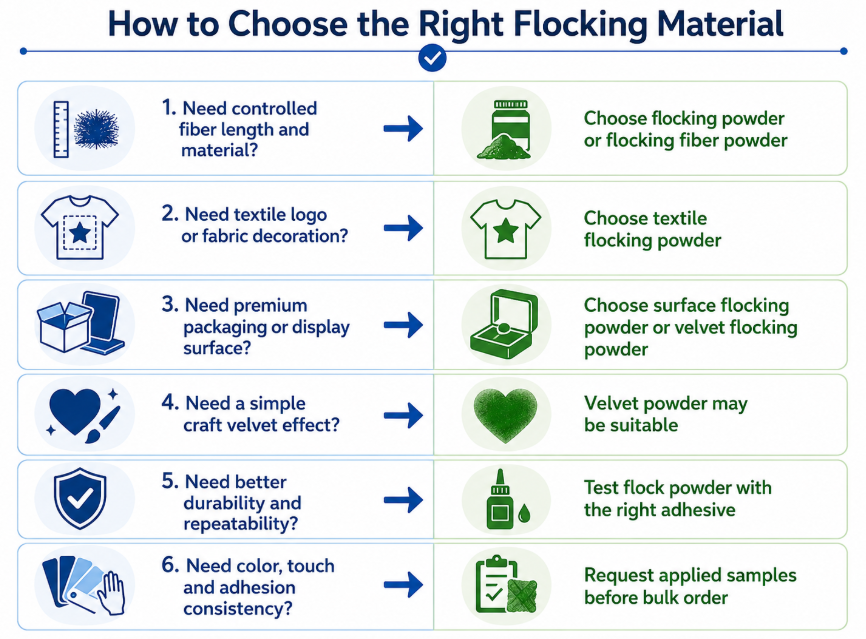
The best flocking powder for textile and surface applications is the one that matches the substrate, adhesive and final performance need. Product names alone are not enough because flocking powder, velvet powder and velvet flocking powder may be used differently by different suppliers.
Buyers should choose by actual application requirements. Fabric may need flexibility, packaging may need visual consistency, plastic may need strong bonding, and craft products may need bright colors and soft touch.
What Should Buyers Confirm Before Ordering?
Buyers should confirm material, fiber length, color, surface type, adhesive and testing requirements before ordering. This helps avoid confusion between flock powder, velvet powder and other soft decorative materials.
Buyer Checkpoint | What to Confirm |
Product name | Flocking powder, velvet powder or velvet flocking powder |
Fiber material | Nylon, rayon, polyester, viscose or other fiber |
Fiber length | Fine, short, medium or longer flocking fibers |
Surface | Fabric, paper, plastic, wood, metal or coated board |
Adhesive | Textile adhesive, craft glue or production adhesive |
Final effect | Smooth, suede-like, velvet-like or plush |
Testing | Adhesion, rubbing, color and surface touch |
Buyer Decision Guide: Flock Powder or Velvet Powder?
Which One Should You Choose?
You should choose flock powder when you need controlled fiber specifications and repeatable production results. It is usually more suitable for textile printing, packaging inserts, plastic parts, display materials and industrial surface decoration.
You can choose velvet powder when the main goal is a soft decorative effect. It may be suitable for crafts, cards, small handmade products and appearance-focused surfaces.
FAQ About Flocking Powder vs Velvet Powder
1.What Is the Difference Between Flocking Powder and Velvet Powder?
Flocking powder usually refers to short cut fibers used for flocking applications, while velvet powder often refers to a soft decorative material used to create a velvet-like effect. The exact difference depends on the supplier’s material definition.
2.Is Flocking Powder the Same as Velvet Powder?
Flocking powder is not always the same as velvet powder, although some uses overlap. Flocking powder is usually more specification-based, while velvet powder is often named by the surface effect.
3.What Are the Main Differences Between Flocking Powder and Velvet Powder in Textile Applications?
In textile applications, flocking powder is usually better for controlled patterns, flexible bonding and repeatable results. Velvet powder may be suitable for simple decorative fabric effects but should be tested first.
4.How Do You Apply Flocking Powder for a Velvet-Like Finish?
You apply flocking powder for a velvet-like finish by adding flock fibers onto an adhesive-coated surface. After drying, loose fibers are removed to create a soft, matte and tactile surface.
5.Can Velvet Powder Be Used on Fabric?
Velvet powder can be used on some fabric projects if it works with the adhesive and fabric surface. For garments or repeat production, textile flocking powder is usually more reliable.
6.What Is the Best Flocking Powder for Fabric?
The best flocking powder for fabric is a textile-compatible flocking fiber matched with flexible adhesive. It should be tested for softness, rubbing, bending and washing requirements when needed.
7.Are There Safety Tips for Using Flocking and Velvet Powders?
Safety tips include using ventilation, avoiding airborne dust, wearing protection when needed and storing powder in sealed dry containers. Production users should also follow the SDS and local safety requirements.
8.Can Flock Powder Be Used on Paper or Plastic?
Flock powder can be used on paper or plastic when the surface is prepared and the adhesive is suitable. Paper may need absorption control, while plastic may need cleaning or surface treatment.