Fiber length is one of the first numbers buyers notice on a flock specification, yet it should never be selected in isolation. A 0.5mm fiber can create a fine, controlled surface, while a 2mm fiber can produce a much more visible pile. The result also changes with fiber material, dtex, cut consistency, adhesive depth, substrate geometry and electrostatic flocking conditions.
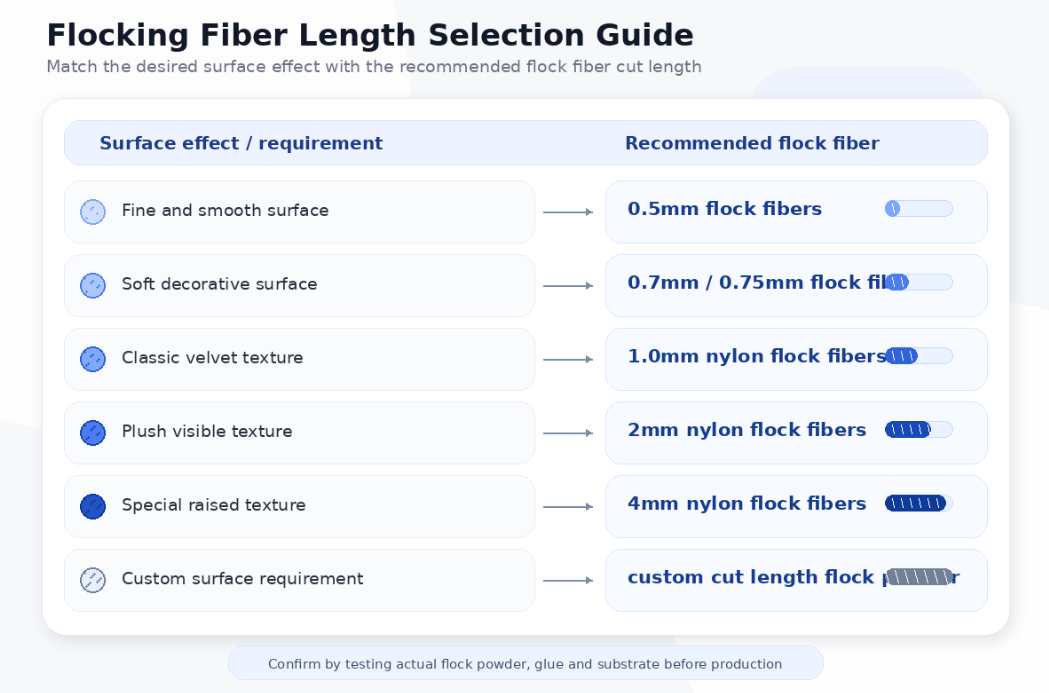
This guide compares the practical selection range from 0.5mm to 2mm and explains how to narrow the options for packaging, textiles, automotive trim, decorative parts and industrial surfaces. The purpose is not to declare one universal “best” length. It is to help a buyer define a testable custom cut length flock powder specification before sampling and bulk production.
Why Flock Fiber Length Changes Flocking Powder Performance
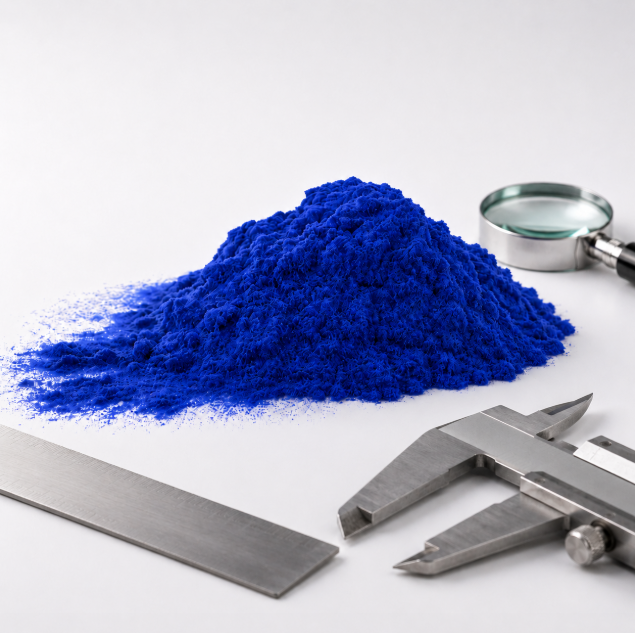
Flock fiber length is the cut length of each fiber, normally stated in millimeters. It affects pile height, the visibility of individual fibers, edge definition and how the surface responds to touch. Short fibers generally produce a lower-profile and more controlled surface, which helps fine patterns and small areas retain cleaner boundaries. Longer fibers create a fuller pile and stronger tactile presence, but the higher pile may be less suitable for very narrow lines or intricate graphics.
Length does not determine softness by itself. The industry reference from Flock.de explains that appearance and touch depend on the relationship between cut length and titer, or dtex. A long fine fiber may feel softer than a short coarse fiber, while two products with the same nominal length can look different when their material, cross-section, finish or fiber density changes. Longer flock also becomes harder to process as it becomes more prone to curving and clumping. For this reason, a useful specification must state material, length and dtex together.
0.5mm Nylon Flock Fibers and Short Cut Flock Powder for Fine Detail
0.5mm nylon flock fibers are a practical starting point when the desired surface is fine, smooth and low profile. Short cut flock powder is often easier to contain within small printed areas, thin graphics and detailed decorative zones than a visibly raised pile. Typical candidates include paper cards, branded packaging panels, compact logos, stationery, cosmetic display cards and small molded components.
This length does not automatically guarantee a dense or soft result. A fine dtex can create a more delicate surface, while a coarser fiber at the same 0.5mm length can feel firmer and more pronounced. Adhesive color also matters on thin or incomplete coverage, because the base may remain visible between fibers. When appearance is critical, evaluate the actual color, edge clarity and hand feel on the production substrate rather than approving loose fibers alone.
0.7mm Nylon Flock Fibers for Balanced Coverage and Texture
0.7mm nylon flock fibers sit between very short micro-style flock and a more obvious 1mm velvet pile. This range is useful when a product needs visible softness without sacrificing too much graphic control. Gift boxes, cosmetic packaging, decorative cards, display boards and selected textile printing designs are common trial applications.
Some suppliers label a nearby grade as 0.75mm. Buyers should not assume that a 0.05mm label difference will be more important than the complete specification. Ask for the stated cutting tolerance, dtex, fiber material, finish and sample result. Two nominally similar grades can behave differently if their cut distribution or electrostatic preparation differs. Treat 0.7mm and 0.75mm as candidates to test, not as automatically interchangeable products.
1.0mm Nylon Flock Fibers for a Defined Velvet Surface
1.0mm nylon flock fibers create a clearer pile than 0.5mm or 0.7mm grades and are commonly evaluated for packaging inserts, jewelry trays, plastic parts, textile decoration, display panels and automotive trim. The length is visible enough to create a recognizable velvet texture while remaining within a widely used industrial range. A specification such as nylon 6.6, 3.3 dtex, 1mm is also used by Flock.de as an example of molded-part flock, illustrating why length should be read with material and dtex.
The trade-off is detail. A 1mm pile can make a premium insert feel richer, but it may soften the boundary of very small lettering or narrow printed lines. On a three-dimensional plastic part, grounding, adhesive coverage and part geometry can be more important than the nominal length. Recesses may receive fewer fibers because the electrostatic field is weaker there, so the sample should include the deepest and most difficult features of the real component.
2mm Nylon Flock Fibers for Plush and High-Pile Effects
2mm nylon flock fibers are selected when a raised, tactile and visually obvious pile is part of the product design. They can suit larger decorative areas, craft and display surfaces, specialty textile effects and selected functional applications. Compared with shorter grades, 2mm flock makes fiber height more noticeable and can create a more dramatic suede-like or plush appearance.
The process window is narrower. Longer fibers require suitable separation, charging and vertical orientation, and they are more likely to curve or clump if the flock condition and equipment are not controlled. The adhesive must retain the fiber after curing without flooding the pile, and the applied layer must be uniform across the substrate. A successful 0.5mm process should not be assumed to run 2mm flock without adjustment. Verify coverage, uprightness, shedding and recovery after handling before approving the longer grade.
Custom Cut Length Flock Powder Must Be Matched with Dtex
Custom cut length flock powder becomes useful when a standard length cannot deliver the required combination of pile height, detail and touch. However, ordering a custom length without defining fineness only solves half the specification. Dtex expresses linear density: one dtex equals one gram per 10,000 meters of fiber. A lower dtex generally indicates a finer fiber, while a higher dtex indicates a heavier or coarser fiber.
For a smooth premium box, the trial may start with a shorter, finer grade. For a more pronounced decorative or functional texture, a longer or coarser combination may be appropriate. These are starting hypotheses rather than universal formulas. Material resilience, finish, cut quality and flock density can change the result. Buyers who need a complete explanation of dtex, denier, length and material should also review Zhangs’ flocking powder specifications guideflocking powder specifications guide.
Precision Cut Flock Fibers Depend on Material and Finish
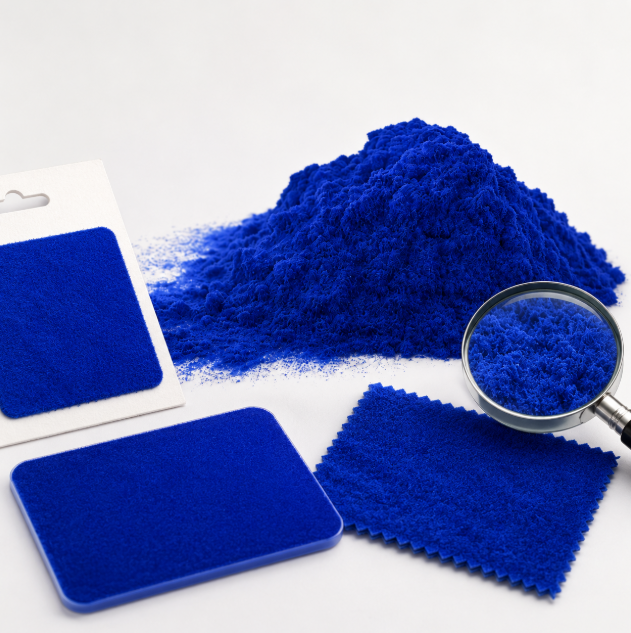
Precision cut flock fibers help produce a more consistent pile because the population contains fewer excessively long, short or irregular fibers. Uniformity supports cleaner coverage and more predictable electrostatic behavior, especially on visible packaging, molded parts and decorative panels. Nominal length alone cannot reveal this quality; sample inspection and supplier batch controls are necessary.
Material selection changes what a given length can deliver. Nylon is commonly chosen where resilience and abrasion performance matter. Viscose is often considered for soft decorative surfaces, paper and packaging, while polyester may be evaluated when the application places greater emphasis on moisture, chemical or light exposure. These are material-level tendencies, not a substitute for application testing. Use the material selection guidematerial selection guide to select a fiber family before fine-tuning length and dtex.
Flock Powder for Packaging, Textile, Automotive Trim and Industrial Applications
Flock powder for packaging usually begins in the short-to-medium range because boxes, inserts and display panels need a clean surface and controlled edges. A 0.5mm or 0.7mm trial may suit detailed paper decoration, while 1mm can create a more obvious velvet feel on jewelry trays or molded inserts. Compare the options on the actual board, EVA, plastic or coated paper using the planned adhesive. Zhangs’ packaging flocking powder pagepackaging flocking powder page provides the relevant product route.
Flock powder for textile and garments must account for design detail, fabric movement, curing conditions and the required wash or abrasion performance. Shorter grades can help printed motifs remain controlled; a longer grade can add stronger texture but requires an adhesive system that can move with the fabric. Do not transfer a packaging recommendation directly to textiles without testing flexibility and cleaning performance.
Flock powder for automotive trim and industrial applications is often specified around function as well as appearance. Plastic compartments, seals and guides may require controlled friction, noise reduction, abrasion resistance or surface protection. Geometry and field accessibility matter on molded parts. Begin with the performance requirement, then compare suitable nylon flocking powdernylon flocking powder or technical flock powdertechnical flock powder grades rather than choosing length from appearance alone.
Electrostatic Flocking Powder Length Must Match Adhesive and Equipment
Electrostatic flocking charges short-cut fibers and drives them toward a grounded, adhesive-coated substrate. To stand upright and cover evenly, the fibers must separate, accept the required charge and reach the adhesive before its open time closes. Length interacts with voltage, electrode distance, grounding, fiber moisture, room humidity and flock delivery. A grade that disperses well in one machine may require adjustment in another.
Adhesive application is equally important. Too little effective bond depth can reduce retention, especially as pile height increases; too much adhesive can contaminate the visible fiber and flatten the intended texture. Curved parts and deep recesses should be evaluated separately from flat coupons. Where recesses are difficult to reach, electrostatic-pneumatic assistance may help fiber transport, but the correct process depends on the equipment and component. For process fundamentals, see Understanding the Basics of Electrostatic FlockingUnderstanding the Basics of Electrostatic Flocking.
How to Test Custom Cut Length Flock Powder Before Bulk Orders
A useful sample program compares a small number of controlled alternatives rather than changing every variable at once. Keep material, color and finish constant, then compare two or three length-and-dtex combinations on the real substrate. Record adhesive, coating method, open time, voltage, grounding, ambient conditions, curing cycle and cleaning method. This makes the result reproducible and helps distinguish a fiber issue from a process issue.
Evaluate the sample after curing and removal of excess flock. Check surface uniformity under direct and angled light, edge definition around the smallest feature, pile height, touch, color appearance, fiber orientation and shedding after handling. Add application-specific tests such as abrasion, bending, humidity exposure, washing or chemical contact. Approve a physical standard that represents the acceptable production result, then confirm that bulk lots maintain the agreed material, cut length, dtex, color and electrostatic performance.
What to Send a Custom Flock Powder Supplier
To receive a useful recommendation, send the supplier more than a requested length. Provide the end product, substrate, flocking method, equipment type, current adhesive, target surface, fiber material preference, color reference and required performance. State whether the design contains fine text, narrow lines, deep recesses or flexible areas. If an existing product is being matched, send both a loose fiber sample and the approved finished part when possible.
A purchase specification should identify the agreed material, length and tolerance, dtex or denier, color standard, finish, moisture or electrostatic handling requirement where relevant, packaging and test method. This information turns “1mm black flock” into a specification that a supplier can reproduce. Buyers can review the full flocking powder rangeflocking powder range and request a sample based on the actual substrate and production target.
Custom Cut Length Flock Powder Selection Summary
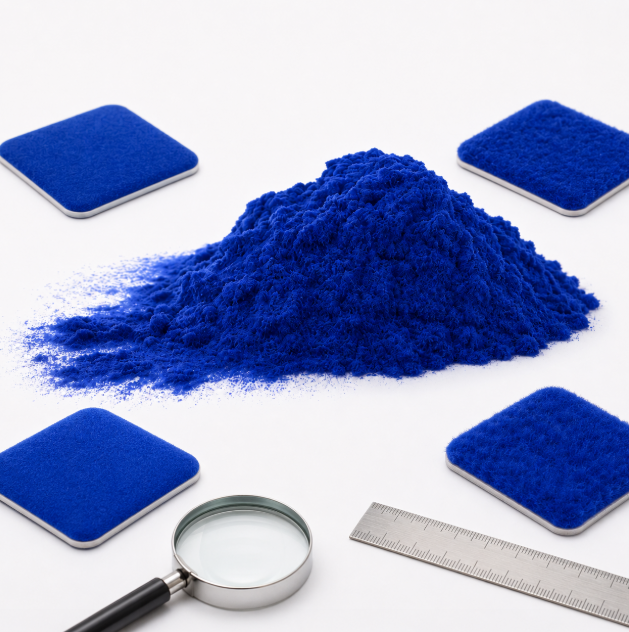
From 0.5mm to 2mm, increasing flock fiber length generally moves the surface from fine and low profile toward a more visible and plush pile. That direction is useful, but it is not a complete selection rule. Dtex, material, precision cutting, adhesive, substrate geometry and electrostatic conditions can change both appearance and processability.
Use 0.5mm and 0.7mm as starting candidates for fine or controlled surfaces, 1mm for a defined velvet pile, and 2mm where a raised texture is intentional. Then validate the chosen custom cut length flock powder on the actual product. A controlled sample comparison is more reliable than selecting a bulk grade from length alone.
FAQ About Flock Fiber Length and Custom Cut Length Flock Powder
What is the best flock fiber length?
There is no universal best length. The correct choice depends on required texture, detail, material, dtex, substrate and process. Compare a limited set of samples on the actual product.
Are 0.7mm and 0.75mm flock fibers the same?
They are close nominal sizes, but should not be assumed identical. Confirm cutting tolerance, dtex, material, finish and actual sample performance.
What are 1.0mm nylon flock fibers used for?
They are commonly evaluated for packaging inserts, molded plastic parts, displays, textile decoration and automotive trim where a defined velvet texture is required.
When should I choose 2mm nylon flock fibers?
Choose 2mm as a trial when a raised, tactile pile is intentional and the design has enough open area. Verify separation, orientation, adhesion and shedding before bulk production.
Why do precision cut flock fibers matter?
A more consistent cut distribution supports uniform pile height, cleaner appearance and predictable processing. Nominal length should be supported by sample and batch-quality checks.
Does a longer flock fiber always feel softer?
No. Touch depends on the relationship between length and dtex as well as material, finish, density and orientation. A long coarse fiber may not feel softer than a shorter fine fiber.