Why Does Flocking Adhesive Matter?
How Does Flock Adhesive Affect the Final Flocked Surface?
Flock adhesive determines whether flocking powder can form a stable, even and durable surface. Even when the flock powder has good fiber quality, the final result may still shed, rub off or look patchy if the glue does not match the substrate.
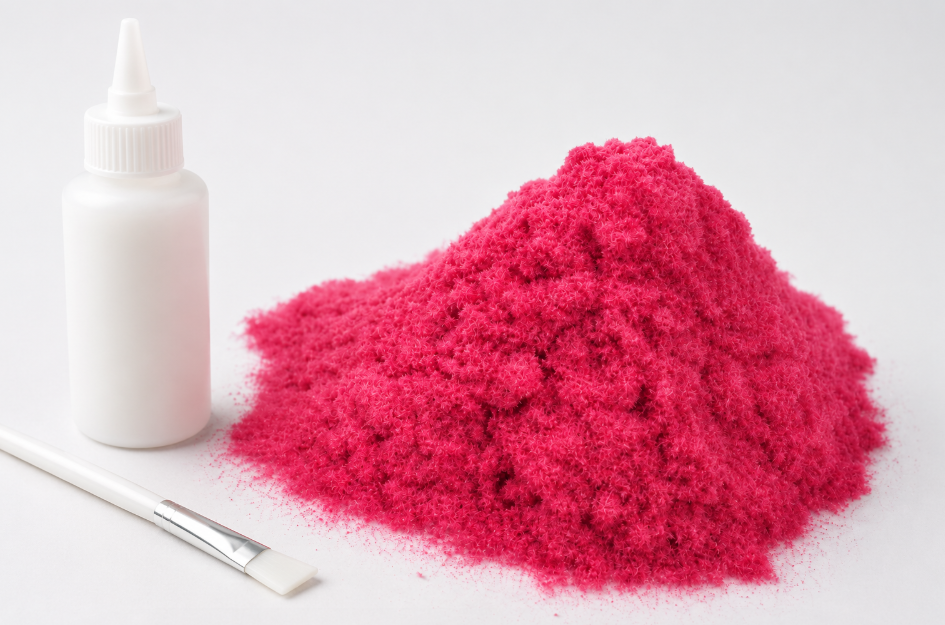
A good flocking adhesive needs to bond both the base material and the short flock fibers. The glue should attach well to wood, plastic, fabric, paper, cardboard or metal, while keeping enough tack on the surface for the fibers to embed before drying.
Why Is Flocking Glue Different from Regular Glue?
Flocking glue is different from regular glue because it is designed to hold fine fibers evenly on a coated surface. Ordinary glue may dry too quickly, soak too deeply into porous materials or become too hard after curing.
The right adhesive for flocking depends on the surface, application method and final use. A flexible textile surface, a paper gift box and a plastic automotive trim part all require different glue performance.
What Is the Best Glue for Flocking Powder?
Best Glue for Flocking Powder by Application
The best glue for flocking powder is the one that matches the surface material and the required finish. It should provide good wet tack, enough open time, stable bonding and the right level of flexibility after drying.
There is no single best glue for flocking that works perfectly on every surface. Wood, plastic, fabric, paper and metal have different absorption, surface energy and movement, so the adhesive should always be selected by material and tested before bulk use.
Flock Adhesive Selection Table by Surface
Quick Guide to Choosing Flocking Glue
The easiest way to choose flock adhesive is to start with the base surface. Each material needs a different adhesive property to achieve good bonding and surface quality.
Surface Type | Suitable Adhesive Direction | Main Requirement | Common Uses |
Wood | Flock glue for porous surfaces | Control absorption and keep surface tack | Boxes, crafts, panels, displays |
Plastic | Flock adhesive for plastic | Strong bonding on smooth surfaces | Trays, molded parts, inserts |
Fabric / Textile | Flexible flocking adhesive | Soft hand feel and rub resistance | Garments, logos, textile decoration |
Paper / Cardboard | Packaging-suitable flocking glue | Low soak-in and clean finish | Gift boxes, cards, cosmetic packaging |
Metal | Flock glue for metal | Degreasing, primer or strong bonding | Industrial parts, trims, components |
Automotive trim | Durable flock adhesive | Abrasion resistance and stable bonding | Car interiors, trim parts, sliding areas |
Best Flock Adhesive for Wood
What Flocking Glue Works Best on Wood?
The best flocking glue for wood should control absorption and leave enough adhesive on the surface to hold the fibers. Wood is porous, so some glue may sink into the material instead of staying on the surface.
A sealed or primed wood surface usually gives a cleaner flock coating. If the wood absorbs too much adhesive, the flock powder may look thin, dry or uneven after application.
Can You Use PVA Glue for Flocking on Wood?
PVA glue for flocking can work for simple wood, paper and craft projects. It is easy to apply and can bond well to porous surfaces, especially for small decorative work.
PVA glue is not always the best choice for professional flocking applications. For products that need stronger durability, water resistance, flexibility or consistent batch production, a dedicated flocking adhesive is usually more reliable.
Best Flock Adhesive for Plastic
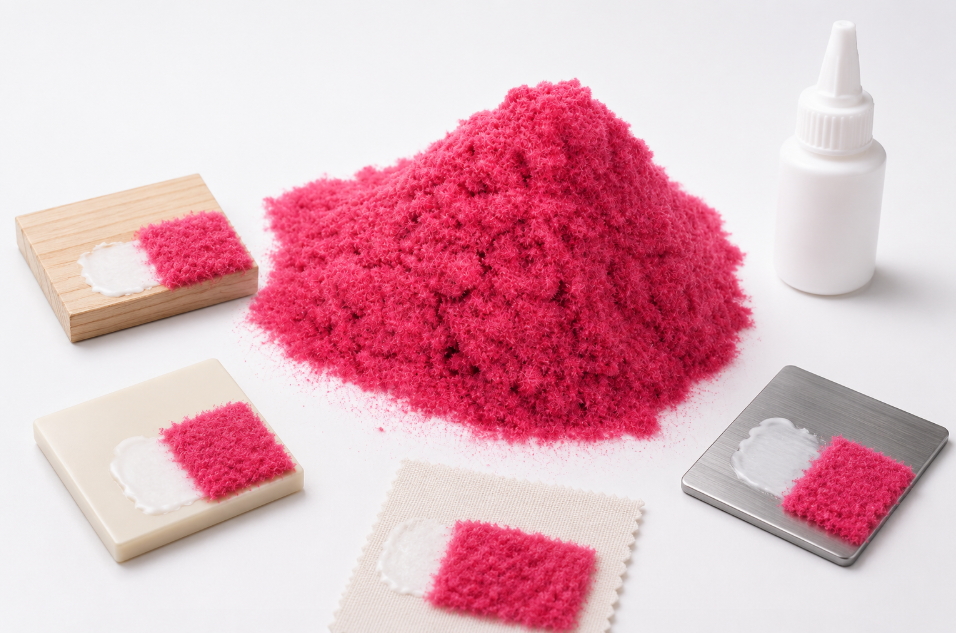
What Glue Works for Flocking Powder on Plastic?
Flock adhesive for plastic must match the plastic type and surface condition. Many plastic materials are smooth, coated or low-energy surfaces, which makes bonding more difficult than on wood or paper.
Plastic surfaces should be cleaned before applying flock glue. Dust, oil, release agents and fingerprints can weaken adhesion and cause the flocking powder to rub off after drying.
How Can Flocking Glue Bond Better to Plastic?
Flocking glue can bond better to plastic when the surface is properly cleaned, treated or primed. Some plastic parts may need surface activation or a compatible primer before flocking.
Flock powder for decorative plastic surfaces needs both good coverage and handling resistance. This is especially important for molded parts, trays, display components, cosmetic inserts and decorative plastic panels.
Best Flock Adhesive for Fabric and Textile
What Flock Glue Should Be Used for Fabric?
Flock glue for fabric should remain flexible after drying so the textile does not become too stiff. Fabric bends, moves and stretches more than rigid materials, so the adhesive layer should not crack or feel uncomfortable.
Soft flock powder for fabric should be matched with a soft and flexible adhesive system. This helps keep the textile hand feel while allowing the flock fibers to stay attached during use.
How Does Flock Adhesive Screen Printing Work?
Flock adhesive screen printing applies glue in a designed pattern before flock fibers are added. This method is commonly used for garment decoration, textile logos, raised graphics and decorative patterns.
Screen-printing flock adhesive needs suitable viscosity and clean edge control. If the adhesive spreads too much, the pattern may blur; if it is too thin, the fiber coverage may be weak.
Best Flocking Glue for Paper, Cardboard and Packaging
What Glue Is Suitable for Flock Powder Packaging?
Flocking glue for packaging should stay on the surface instead of soaking too deeply into paper or cardboard. If the adhesive penetrates too much, the flock coating may appear thin, uneven or less premium.
Flock powder for packaging usually needs a clean look, soft touch and consistent color. Gift boxes, jewelry boxes, cosmetic packaging and display cards often require a smooth flocked surface rather than a heavy glue layer.
Can PVA Glue Be Used for Flocking Paper?
PVA glue can be used for some paper flocking and DIY card projects. It works best on simple porous paper surfaces where high durability is not the main requirement.
Professional packaging usually needs a more controlled adhesive for flocking. A dedicated flocking glue can help keep sharper edges, smoother coverage and more stable surface quality on paper or cardboard.
Best Flock Glue for Metal
What Flock Glue Works on Metal?
Flock glue for metal requires strong surface preparation because metal is smooth and non-porous. Oil, oxidation, dust and coating residues can reduce bonding strength.
Metal surfaces should be cleaned and degreased before applying flock adhesive. Depending on the part, primer or surface treatment may also be needed to improve adhesion.
How Should Flock Powder Be Applied to Industrial Metal Parts?
Flock powder for industrial applications needs an adhesive that can meet the working environment. Industrial parts may require abrasion resistance, stable bonding and consistent flock coating.
Metal flocking should be tested under real use conditions. Samples should be checked for rubbing, peeling, handling performance and environmental exposure before mass production.
Flock Glue for Manual and Production Flocking
Which Flocking Adhesive Is Better for Production?
Production flocking needs adhesive with stable viscosity, open time and repeatable bonding performance. Large-scale work requires more consistent glue control than small hand projects.
The adhesive layer should stay workable long enough for flock fibers to be applied evenly. If the glue dries too quickly, the finished surface may become sparse, patchy or weak.
Which Glue for Flocking Powder Is Better for Manual Use?
Manual flocking can use simpler glue methods, but the adhesive still needs to match the surface. Small craft projects may tolerate some variation, while packaging, textile and automotive products need stronger process control.
Manual application should avoid glue that dries too fast or forms an uneven layer. If the adhesive loses tack before the flock powder is applied, the fibers cannot embed properly.
Common Flock Adhesive Mistakes
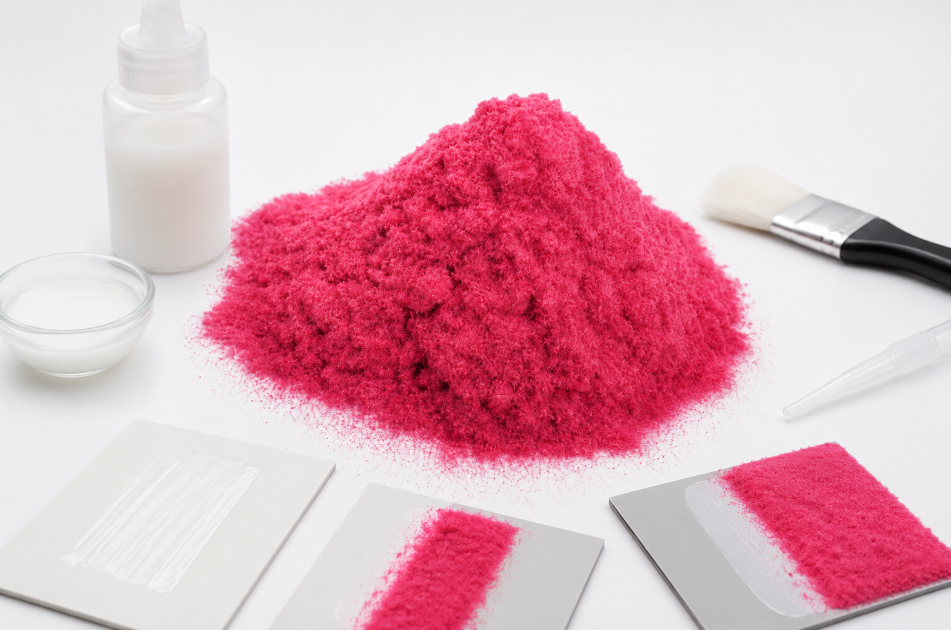
Why Does Flocking Powder Fall Off?
Flocking powder often falls off because the glue is too thin, too dry, unsuitable for the surface or applied to an unclean substrate. Poor bonding is usually related to the adhesive system rather than the flock powder alone.
Another common mistake is applying fibers after the flock adhesive has passed its open time. Once the glue surface loses tack, the fibers cannot bond well to the adhesive layer.
Why Does the Flock Coating Look Uneven?
A flock coating looks uneven when the adhesive layer, flock powder amount or surface preparation is inconsistent. Thin glue areas create sparse coverage, while overly thick areas may look rough or hard.
Uneven flocking glue application is especially visible on packaging, textile and decorative surfaces. For premium products, the sample should be checked for both appearance and adhesion before bulk production.
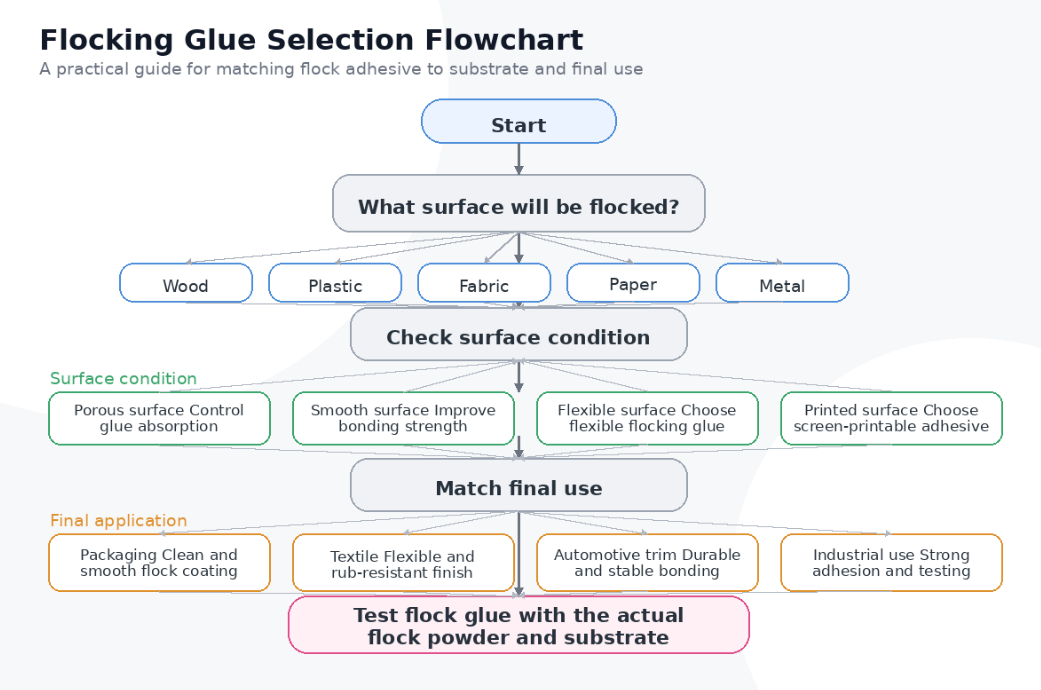
Flocking Glue Selection Flowchart
How to Choose Flock Glue by Surface?
The best way to choose flock glue is to match the adhesive to the substrate first, then confirm the final performance requirement.
Buyer Checklist for Flocking Glue
What Should Buyers Confirm Before Choosing Glue for Flocking Powder?
Buyers should confirm the surface, glue type, application method and final performance before choosing glue for flocking powder.
Checklist Item | Question to Confirm |
Substrate | Is the surface wood, plastic, fabric, paper, cardboard or metal? |
Glue type | Do you need flocking glue, flock glue, PVA glue or adhesive for flocking? |
Application method | Is it brush, spray, roller, screen printing or production coating? |
Surface effect | Do you need a soft, smooth, dense or durable flock coating? |
Flock material | Is the flock powder nylon, rayon, polyester or another fiber? |
Final use | Is it for packaging, garment, automotive trim or industrial applications? |
Testing | Has the glue been tested with the actual flock powder and substrate? |
FAQ About Flocking Glue
1.What Is the Best Glue for Flocking Powder?
The best glue for flocking powder is a flocking glue matched to the substrate and final use. Wood, plastic, fabric, paper and metal need different adhesive properties.
2.Is Flock Glue the Same as Flocking Adhesive?
Flock glue and flocking adhesive usually refer to the same type of adhesive used to bond flock fibers. Flock adhesive, flock glue and adhesive for flocking are often used to describe the same product category.
3.Can I Use PVA Glue for Flocking?
PVA glue can be used for some simple wood, paper and craft flocking projects. For plastic, fabric, metal, packaging production or high-durability applications, a dedicated flocking adhesive is usually more reliable.
4.Can I Use Spray Glue for Flocking Powder?
Spray glue can be used for simple craft projects, but it is not always suitable for durable or professional flocking. For packaging, textile or industrial products, a proper adhesive for flocking is usually safer.
5.What Is the Best Flock Glue for Fabric?
The best flock glue for fabric should be flexible and able to hold fibers without making the textile too stiff. It should also be tested for rubbing, bending or washing requirements when needed.
6.What Flock Adhesive Is Used for Plastic?
Flock adhesive for plastic should be selected according to the plastic type and surface treatment. Cleaning, primer or surface activation may be needed for better bonding.
7.Why Is My Flock Powder Not Sticking?
Flock powder may not stick because the glue is unsuitable, too thin, too dry or applied to a dirty surface. The fibers should be applied while the flocking glue still has enough tack.
8.What Is Flock Adhesive Screen Printing?
Flock adhesive screen printing is a method of printing adhesive in a pattern before applying flock fibers. It is often used for garment decoration, textile logos, paper products and decorative designs.
9.Do Car Interiors Need Special Flock Glue?
Car interiors usually need more durable flock glue than simple decorative products. The adhesive should support stable bonding, abrasion resistance and long-term surface performance.