A flocking powder specification is more than a color and fiber length. It should identify the fiber material, cut length, fineness, color, surface finish and any treatment required for the intended flocking process. These parameters work together to determine the appearance, touch, coverage, durability and processing behavior of the finished surface.
For buyers, the main challenge is not understanding each number separately. It is predicting how the complete specification will behave on the actual substrate. A fine 1.0 mm fiber, for example, will not produce the same surface as a coarse 1.0 mm fiber, even though their cut lengths are identical.
This guide explains how to read flocking powder specifications and how to turn them into a practical sample and bulk-order requirement.
How to Read a Flocking Powder Specification
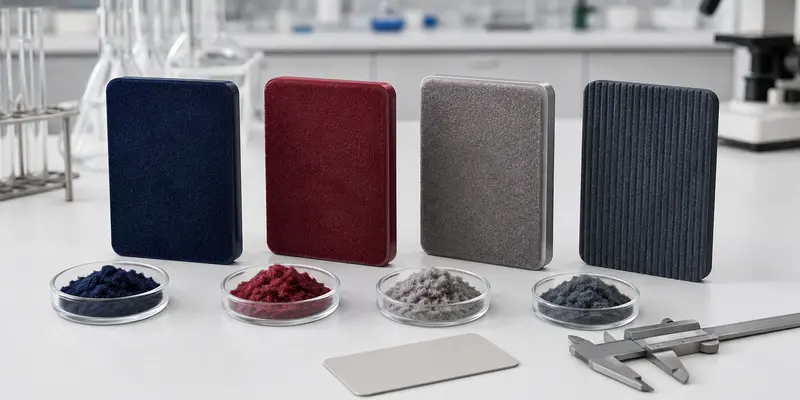
A complete flock powder specification may be written in a format such as:
PA 6.6 - 3.3 dtex - 1.0 mm - black - matte - electrostatic grade
Each part answers a different purchasing question. “PA 6.6” identifies the fiber material. “3.3 dtex” describes its linear density or fineness. “1.0 mm” is the cut length. “Black” identifies the color, while “matte” describes the desired visual finish. Electrostatic grade indicates that the fiber has been prepared to charge, flow and orient during electrostatic application.
Not every supplier uses the same order or terminology. Some specifications use denier instead of dtex, and some place length before fineness. Buyers should therefore confirm the unit rather than relying on the number alone. “Finish” can also describe color, luster, softness, surface appearance or the chemical treatment used to control conductivity and flow. A reliable purchase specification should state which meaning is intended.
Flocking Powder Material Specifications
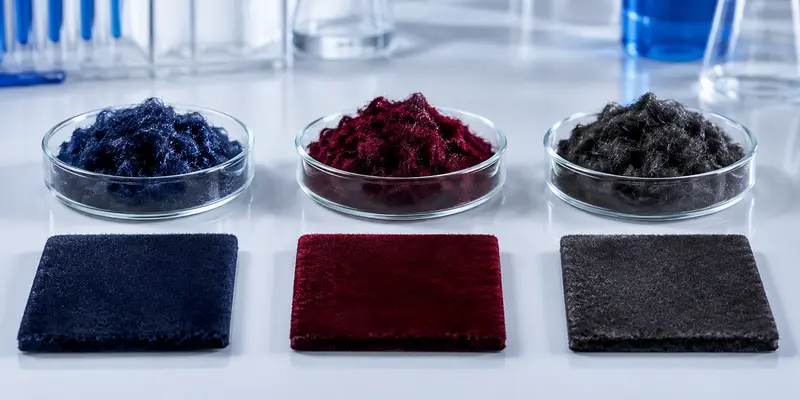
Fiber material establishes the basic performance range of a flocked surface. It influences resilience, abrasion resistance, moisture behavior, softness, color response and suitability for different service conditions.
Nylon flock powder is commonly selected when resilience and wear resistance are important. Nylon fibers recover relatively well after compression and are suitable for frequently handled surfaces, automotive components, packaging inserts and technical parts. A polyamide 66 flock powder specification is often used when a project requires a durable, precisely cut synthetic fiber.
Viscose flock powder produces a soft, refined and velvet-like surface. It is frequently used for gift packaging, jewelry boxes, stationery and decorative products where visual quality and touch are more important than heavy abrasion resistance. Some buyers search for “viscose rayon flock powder,” but Zhangs uses viscose flock powder as the primary customer-facing material name.
Polyester flock powder can be considered for industrial or decorative applications requiring dimensional stability and selected environmental performance. It is not automatically the best option for every outdoor or high-temperature project; the fiber grade, dye system, adhesive and test requirement must be evaluated together. Acrylic flock fibers can serve particular decorative effects and application requirements, but suitability should still be confirmed through an actual flocked sample.
For the broader selection process, read How to Choose Flocking Powder by Material and Application.
Flocking Powder Length Specifications in Millimeters
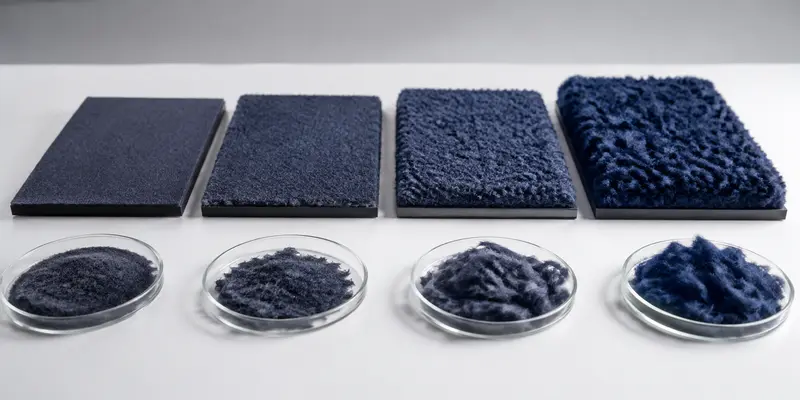
Flocking powder length is normally stated in millimeters and determines visible pile height, surface definition and how the fibers interact with the adhesive and product geometry.
Short fibers generally create a low-profile, even surface. They are often chosen for detailed patterns, packaging interiors, printed flocking and products requiring a fine velvet effect. A short cut flock powder can follow small features more easily, but very fine or very short fibers may require tighter control of moisture, dispensing and electrostatic conditions to prevent poor flow or agglomeration.
Longer fibers create a deeper and more noticeable pile. They can produce a softer or more luxurious touch when combined with a suitable dtex, but they require sufficient adhesive depth and appropriate application conditions. On recessed or complex parts, longer fibers may be harder to orient evenly.
Precision cut flock fibers provide more consistent pile height and a more uniform surface than fibers with a wide length distribution. Buyers needing a custom cut length flock powder should provide the target surface, substrate geometry and equipment information instead of specifying length in isolation.
For a focused comparison, read the Flock Fiber Length Guide: 0.5 mm to 2 mm.
Flocking Powder Dtex and Denier Specifications
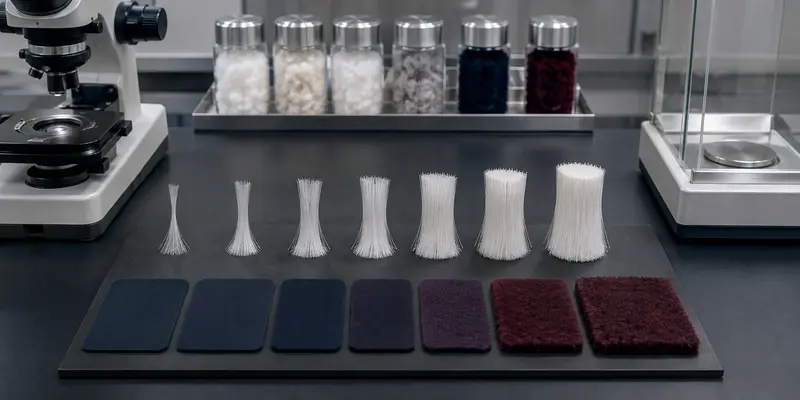
Dtex and denier describe linear density rather than physical fiber diameter. One dtex represents the mass in grams of 10,000 meters of fiber. A lower dtex normally indicates a finer fiber, while a higher dtex indicates a heavier and generally thicker fiber of the same material. Denier uses the mass in grams of 9,000 meters.
- Dtex = denier x 1.111
- Denier = dtex x 0.9
A buyer should not compare a 3.3 dtex specification directly with a 3.3 denier specification as if they were identical. The values use different reference lengths.
Finer nylon flock fibers can create a dense, smooth and refined surface because more individual fibers may occupy a given area. Coarser fibers create a stronger, more noticeable texture. Neither is universally better. The appropriate dtex depends on the intended touch, durability, coverage, length and process.
A specification such as 1.0 mm 3.3 dtex nylon flock provides both length and fineness, making it more useful than a request for “1 mm black nylon flock.” Where a standard combination cannot create the required effect, the supplier may evaluate a custom denier flock powder or alternative dtex.
How Flocking Powder Length and Dtex Work Together
Length and dtex must be evaluated as a pair. Length mainly controls pile height, while dtex controls fiber fineness and contributes to density, texture and visual definition.
| Specification direction | Likely surface effect | Selection consideration |
|---|---|---|
| Shorter and finer | Smooth, dense, low-profile | Fine details and refined packaging surfaces |
| Longer and finer | Soft, fuller, flexible pile | Requires good flow, orientation and adhesive support |
| Shorter and coarser | Firm, defined texture | Useful where softness is not the priority |
| Longer and coarser | Bold, pronounced texture | Test carefully on corners and recesses |
These descriptions are selection tendencies, not guaranteed outcomes. Fiber density, voltage, grounding, adhesive viscosity, adhesive open time and the amount of excess flock applied will also change the finished surface. A 0.5 mm, 0.7 mm, 1.0 mm or 2 mm fiber should therefore be shortlisted as part of a length-dtex combination and tested with the production substrate and adhesive.
Flocking Powder Finish, Color and Surface Treatment
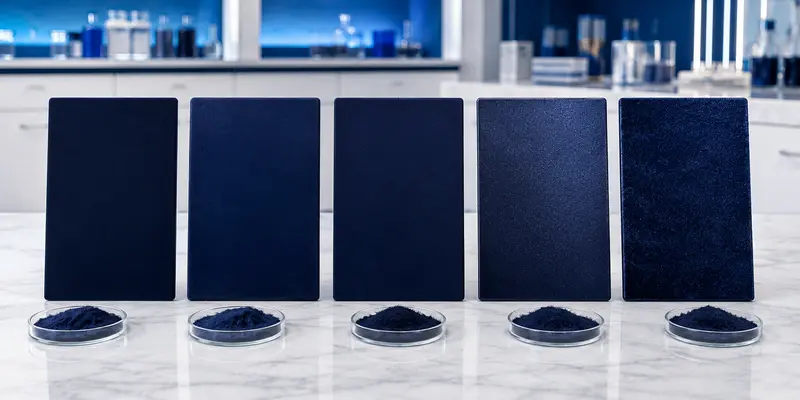
In a commercial flocking powder specification, finish should cover more than the visible color. It may include luster, shade tolerance, surface touch, conductivity treatment, moisture condition and flow behavior.
A custom dyed flock powder can be developed from a Pantone reference or physical sample, but loose fiber color is not always the same as the final flocked color. The substrate, adhesive color, pile density, lighting and fiber orientation can all influence visual perception. Color approval should therefore be made on an actual flocked panel whenever possible.
For colored flocking powder, buyers should state whether the surface should appear matte, bright, deep, soft or highly uniform. If the adhesive or substrate remains visible between fibers, using an adhesive color close to the flock color may improve apparent coverage.
Electrostatic performance depends partly on surface preparation. A suitable electrostatic nylon flock powder can still perform poorly if grounding, humidity, voltage or adhesive open time is unsuitable. For color approval guidance, see Can Flocking Powder Colors Be Customized?.
Matching Flock Powder Specifications to Applications
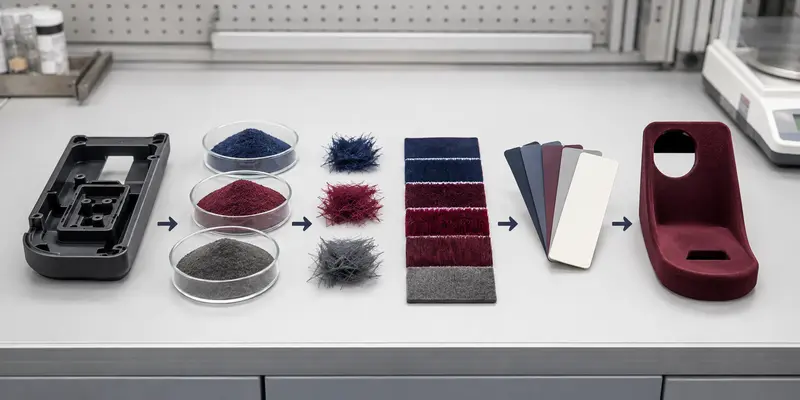
The same flock powder specification should not be automatically reused across packaging, textiles, automotive components and industrial parts.
Flock powder for packaging usually prioritizes visual uniformity, softness, color accuracy and clean edges. Shorter or medium-length fine fibers are often evaluated for jewelry boxes, cosmetic packaging and presentation inserts, but the final choice depends on substrate shape and the desired depth of the velvet effect.
Flock powder for textile must be evaluated with fabric flexibility, washing requirements and the adhesive curing process. The fiber may be suitable while the complete flocked construction fails because the adhesive is too rigid or cannot withstand laundering.
Flock powder for automotive trim is more likely to require abrasion resistance, recovery after contact, low loose-fiber levels and stable behavior on three-dimensional parts. Nylon is commonly considered, while complex recesses may require process adjustment to achieve uniform density.
Flock powder for industrial applications may be selected for noise reduction, sliding behavior, insulation, sealing or surface protection rather than appearance alone. Technical testing should take priority over softness or visual preference.
Explore related applications for apparel fabrics, car interior accessories and technical parts.
Testing Flocking Powder Specifications Before Bulk Orders
A supplier sample should reproduce the proposed material, length, dtex, color and treatment, not simply provide a fiber with a similar appearance. The best verification method is to flock the actual production substrate with the intended adhesive and equipment. The sample should be assessed after curing and removal of loose fibers.
Visual checks should cover color, density, pile height, edge definition and uniformity. Performance checks may include rubbing, abrasion, washing, compression recovery, adhesion or environmental exposure, depending on the product. Process behavior must also be recorded. A sample that looks acceptable but requires an unstable voltage, unusually narrow adhesive open time or excessive fiber consumption may not be suitable for efficient production.
Adhesive selection is especially important because fiber length affects anchoring depth. The adhesive must also match substrate flexibility, curing conditions and end-use resistance. Review the Best Glue for Flocking Powder guide before approving a new combination. Once approved, retain the confirmed specification, flocked reference sample and color standard for repeat orders.
Common Flocking Powder Specification Mistakes
One frequent mistake is describing a fiber only by material and color, such as “black nylon flock powder.” Without length and dtex, the supplier cannot reliably reproduce the required texture. Another is assuming dtex is the fiber diameter. Dtex is a mass-per-length measurement, and fibers made from different polymers may not have exactly the same physical diameter even when they share the same dtex.
Buyers may also approve loose flock powder without testing the flocked surface. Loose fiber appearance does not reveal final pile density, adhesive interaction, substrate influence or electrostatic orientation. Finally, a specification that performs well on a flat paperboard insert may not perform identically on fabric, rubber or a recessed plastic component. Any change in substrate, adhesive, geometry or process should trigger a compatibility review.
Flocking Powder Specification FAQ
What information should a flock powder specification include?
It should include fiber material, cut length, dtex or denier, color, finish, intended application and flocking method. Performance requirements and the substrate-adhesive combination should also be stated.
Does lower dtex mean softer flocking powder?
Lower dtex means a finer fiber, not automatically a softer finished surface. Softness also depends on length, material, pile density, adhesive layer and fiber orientation.
Is longer flocking powder always more luxurious?
Longer fibers can create a deeper pile, but the result also depends on dtex and density. A long, coarse fiber may feel more textured than a shorter, finer specification.
Can flocking powder specifications be customized?
Yes. Material, color, cut length, dtex and surface effect can be evaluated for customization. Feasibility depends on the fiber combination, order volume, production tolerance and intended application.
Final Flocking Powder Specification Checklist
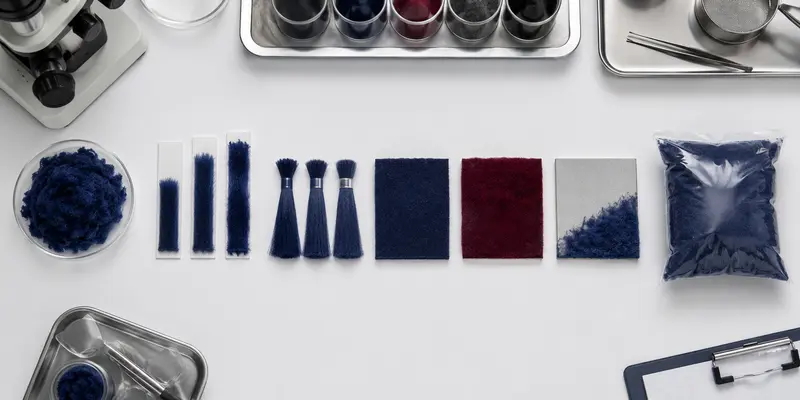
- Fiber material: nylon, viscose, polyester or acrylic
- Cut length in millimeters
- Fineness in dtex or denier, with the unit clearly stated
- Target color and approval reference
- Matte, bright, soft or other required surface effect
- Electrostatic or alternative flocking method
- Substrate material and product geometry
- Adhesive type and curing conditions
- Abrasion, washing, color or environmental requirements
- Sample approval method and bulk-order tolerance
A complete flocking powder specification reduces sampling cycles and helps the supplier recommend a material that can be reproduced in production. If the exact parameters are not known, provide the substrate, application, finished-product sample or target surface effect. Zhangs can then compare material, length, dtex and finish before preparing a sample or bulk quotation.