Flocking Powder for Furniture: What Is It Used For?
What Does Flocking Powder Do on Furniture Surfaces?
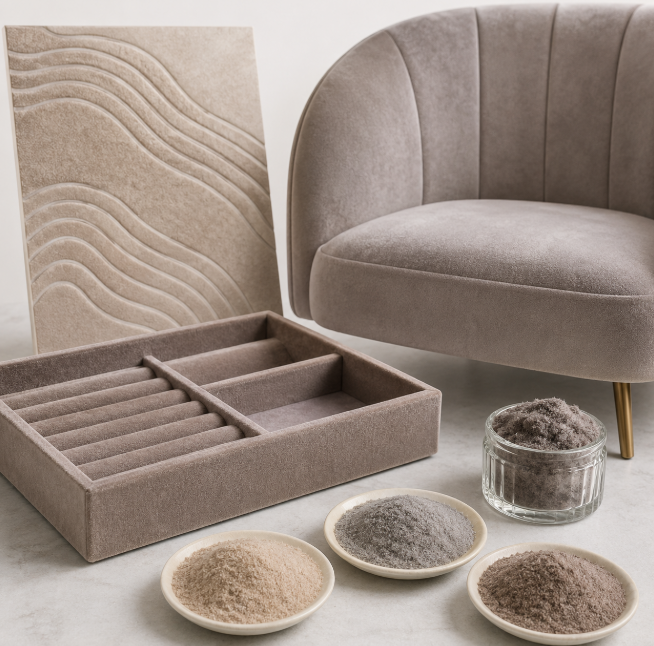
Flocking powder for furniture creates a soft, matte and velvet-like surface on selected furniture parts or decorative panels. It is commonly used to improve touch, reduce glare, add color depth and create a more premium surface feel.
Furniture flocking is not limited to full sofa or chair coverage. It can also be used on drawer interiors, display panels, decorative trims, wall panels, jewelry cabinet linings, storage boxes and selected soft-touch furniture details.
Where Can Decorative Flocking Powder Be Applied in Home Decor?
Decorative flocking powder can be applied to home decor surfaces that need a soft visual texture or tactile finish. Common examples include lampshade panels, picture frames, wall art, storage boxes, craft furniture, display shelves and decorative boards.
Home decor projects usually focus on appearance, color and texture rather than heavy-duty abrasion resistance. However, the final finish still needs proper adhesive, suitable substrate preparation and enough flock coverage to avoid patchy or weak surfaces.
Upholstery Flocking Powder and Fabric Selection
How Do I Choose the Right Fabric for Flocking Furniture or Decor?
The right fabric for flocking furniture or decor should have stable structure, suitable surface texture and good adhesive compatibility. A fabric that is too stretchy, oily, loose or heavily textured may make the flocked surface uneven or less durable.
Flocking powder for furniture fabric works best when the base fabric supports both bonding and appearance. Cotton blends, polyester fabrics, nonwoven substrates and selected woven fabrics may be suitable, but each fabric should be tested with the actual adhesive and flock fibers.
What Makes a Fabric Suitable for Flocking Powder?
A suitable fabric for flocking powdershould hold adhesive evenly without bleeding, shrinking or becoming too stiff. The surface should allow the flocking fibers to bond while keeping the final hand feel acceptable for the intended use.
Fabric Factor | Why It Matters | What to Check |
Surface texture | Affects pattern clarity and flock coverage | Avoid overly rough or unstable surfaces |
Absorption | Controls adhesive behavior | Test whether glue soaks in too deeply |
Flexibility | Affects comfort and durability | Check bending, rubbing and handling |
Base color | Influences final flock color | Use a compatible base shade |
Fabric strength | Supports longer use | Test tearing, stretching and abrasion |
Cleaning need | Affects product choice | Confirm if the surface will be wiped, brushed or washed |
Best Fabric for Flocking Projects
What Are the Best Fabrics for Flocking Projects?
The best fabrics for flocking projects are stable, clean and compatible with the adhesive system. Woven cotton blends, polyester, nonwoven fabric and some coated textile bases can be suitable depending on the desired finish and final use.
There is no single best fabric for every flocking project. A decorative cushion panel, a furniture insert, a craft wall panel and a display surface may require different base fabrics because their flexibility, touch and durability needs are different.
Which Fabrics Are Less Suitable for Flocking?
Very stretchy, fuzzy, oily or loose-structured fabrics are less suitable for controlled flocking. These surfaces may cause poor adhesive control, uneven coverage, fiber shedding or distorted patterns.
Highly textured upholstery fabric may also reduce edge clarity. If the base material has deep woven texture, the flocking finish may look less smooth than it would on a flatter textile surface.
Flocking Powder for Fabric and Soft Surfaces
Can Flocking Powder Be Used on Soft Surfaces?
Flocking powder for soft surfaces can be used when the adhesive remains flexible after drying. Soft surfaces move, bend and compress, so the flocking layer must not become too hard or brittle.
Soft surface flocking needs a balance between appearance and performance. A thick velvet flocking finish may look attractive, but it should still pass rubbing, bending and handling tests if used on furniture or upholstery areas.
How Can Flocked Upholstery Fabric Stay Comfortable?
Flocked upholstery fabric stays comfortable when the flock fibers, adhesive and base fabric work together without creating stiffness. Shorter fibers may give a smoother touch, while slightly longer fibers can create a fuller velvet-like effect.
Comfort should be tested by touch and movement, not only by appearance. For cushions, panels or frequently touched surfaces, the sample should be checked for hand feel, fiber loss and surface recovery after pressure.
Velvet Flocking Finish for Home Decor Surfaces
What Is a Velvet Flocking Finish?
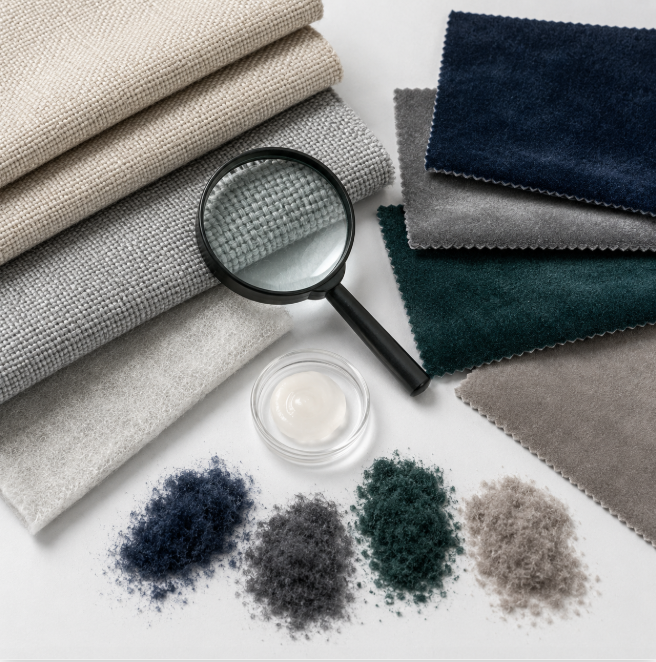
A velvet flocking finish is a soft, dense and matte surface made by bonding short fibers onto a coated substrate. It can make furniture panels, decorative boxes and home decor surfaces look warmer, softer and more refined.
The final velvet-like effect depends on fiber length, fiber density, color and adhesive thickness. A fine flocking powder may create a smooth suede-like finish, while a longer fiber may create a deeper and more tactile surface.
Where Does a Velvet-Like Surface Work Best in Home Decor?
A velvet-like surface works best on home decor items that are touched or viewed closely. Examples include jewelry boxes, drawer linings, wall panels, display trays, decorative storage boxes, picture frames and boutique-style furniture details.
Large seating surfaces require more careful testing than decorative panels. If the flocked area will face frequent sitting, rubbing or cleaning, the project should use a more durable flocking system rather than only a visual decorative finish.
Durable Flocking Finish for Furniture
How Durable Can Flocking Powder Be on Furniture?
A durable flocking finish for furniture depends on adhesive strength, fiber material, fabric base and the amount of friction the surface receives. Flocking can be long-lasting on decorative and moderate-touch areas, but high-wear seating zones need stricter testing.
Durability should be judged by the final application, not by the powder name alone. A flocked drawer lining and a chair seat experience very different levels of pressure, rubbing and cleaning.
How Can You Improve Wear Resistance?
Wear resistance can be improved by choosing suitable flock fibers, using the right adhesive and testing the applied surface before production.Nylon flocking fibers are often selected when stronger handling resistance is needed, while softer fibers may be chosen for decorative touch.
The application process also affects durability. An uneven adhesive layer, poor drying condition or low fiber density can make a flocked upholstery fabric shed or wear faster.
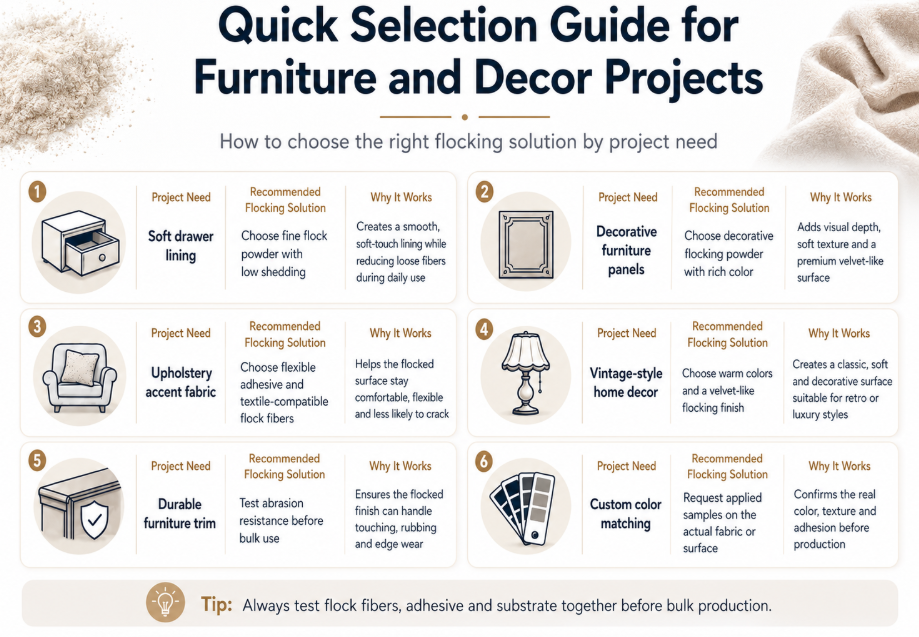
Durability Need | Recommended Focus | Practical Test |
Decorative panel | Smooth color and soft touch | Visual and touch inspection |
Drawer lining | Fiber stability and low shedding | Light rubbing test |
Upholstery accent | Flexibility and surface recovery | Bending and rubbing test |
Furniture trim | Adhesion and handling resistance | Edge and abrasion check |
High-contact area | Stronger adhesive and fiber control | Repeated friction testing |
Vintage Flocked Fabric vs Modern Flocked Fabric
Can Vintage Flocked Fabric Be Used for Upholstery or Clothing?
Vintage flocked fabric can be used for upholstery or clothing only after its condition, strength and fiber stability are checked. Older fabrics may look beautiful, but they may have weakened backing, worn flocking, fading, odor, dust or adhesive aging.
Vintage flocked fabric is often better for decorative or low-wear use than heavy upholstery. It may work for framed textile art, decorative cushions, accent panels or light-use design pieces, but it may not be reliable for frequently used seating.
How Do Vintage Flocked Fabrics Differ from Modern Ones?
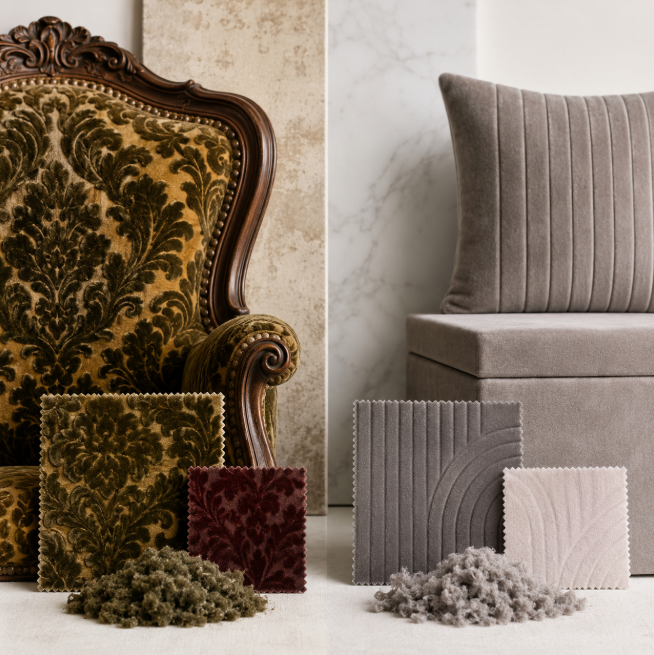
Vintage flocked fabrics usually differ from modern ones in fiber type, adhesive technology, backing stability and performance consistency. Modern flocked materials can be engineered for more controlled color, texture, adhesion and batch repeatability.
Vintage fabrics may have more character, while modern flocked upholstery fabric usually offers better predictability. For commercial furniture or repeat production, modern flocking powder and controlled application are usually easier to manage.
Comparison Item | Vintage Flocked Fabric | Modern Flocked Fabric |
Appearance | Unique, aged, decorative | More consistent and controlled |
Durability | Depends on age and storage | Can be tested and specified |
Adhesive condition | May be weakened over time | Selected by application need |
Color stability | May fade or vary | More controllable by batch |
Best use | Decorative accents, restoration, art | Furniture panels, packaging, decor production |
Risk | Wear, dust, odor, brittle backing | Requires correct material and process selection |
How to Choose Flocking Powder for Home Decor Surfaces?
What Should You Consider Before Choosing a Finish?
Flocking powder for home decor surfaces should be selected by touch, color, durability and substrate type. A wall panel, fabric trim, storage box and decorative frame may all need different flock fiber length and adhesive performance.
The finish should match how the item will be used. A display piece can focus more on color and softness, while a frequently handled furniture part needs stronger adhesion and better rub resistance.
Application Tips for Flocking Powder on Furniture Fabric
How Should Furniture Fabric Be Prepared Before Flocking?
Furniture fabric should be clean, dry and stable before flocking powder is applied. Dust, oil, loose fibers or fabric finishes can interfere with adhesive bonding.
Testing on a small fabric piece is important before full application. This helps confirm whether the adhesive soaks too deeply, changes fabric hand feel or affects the final color.
How Can You Get a Cleaner Flocked Surface?
A cleaner flocked surface comes from even adhesive, enough flock powder and proper drying time. Thin adhesive areas may create sparse coverage, while excess glue may make the finish hard or uneven.
Loose fibers should be removed only after the surface has dried properly. Brushing too early can damage the flocking layer and reduce the density of the final surface.
Buyer Checklist for Upholstery and Home Decor Flocking
What Should Buyers Confirm Before Ordering?
Buyers should confirm the fabric type, flock fiber, color, adhesive, finish and durability target before ordering upholstery flocking powder. This reduces the risk of color mismatch, weak bonding or uncomfortable texture.
Buyer Checkpoint | What to Confirm |
Application | Furniture, upholstery, decor, lining or craft surface |
Base material | Fabric, wood, plastic, board, paper or mixed surface |
Flock material | Nylon, rayon, polyester, viscose or custom fiber |
Surface effect | Smooth, suede-like, velvet-like or plush |
Color | Standard shade or custom color matching |
Adhesive | Flexible, decorative or stronger production adhesive |
Durability | Decorative use, moderate handling or high contact |
Testing | Rub test, bending test, color check and shedding check |
FAQ About Flocking Powder for Furniture and Upholstery
1.How Do I Choose the Right Fabric for Flocking Furniture or Decor?
You should choose a stable, clean and adhesive-compatible fabric for flocking furniture or decor. The fabric should hold adhesive evenly and keep the final surface soft enough for its intended use.
2.What Are the Best Fabrics for Flocking Projects?
The best fabrics for flocking projects are stable woven fabrics, selected polyester fabrics, cotton blends, nonwoven bases and other surfaces that can hold adhesive evenly. The final choice should be confirmed by sample testing.
3.Can Vintage Flocked Fabric Be Used for Upholstery or Clothing?
Vintage flocked fabric can be used for upholstery or clothing only if it is strong, clean and stable enough for the intended use. It is usually safer for decorative or low-wear applications.
4.How Do Vintage Flocked Fabrics Differ from Modern Ones?
Vintage flocked fabrics often have more visual character, while modern flocked fabrics usually offer better consistency, adhesion and performance control. Modern options are easier to test and repeat in production.
5.What Is Flocking Powder for Furniture Fabric Used For?
Flocking powder for furniture fabric is used to create soft, matte, decorative or velvet-like surfaces on selected furniture and upholstery areas. It can be used for trims, panels, linings and accent surfaces.
6.Is Flocking Powder Durable Enough for Upholstery?
Flocking powder can be durable enough for some upholstery uses when the adhesive, fabric and fiber are properly selected. High-contact seating areas require stronger testing than decorative panels.
7.What Finish Can Flocking Powder Create on Home Decor Surfaces?
Flocking powder can create smooth, suede-like, velvet-like or plush decorative finishes on home decor surfaces. The effect depends on fiber length, material, density and surface preparation.