Choosing flocking powder is not simply a matter of selecting a color or asking for the softest fiber. The correct specification must work as a system with the substrate, adhesive, electrostatic equipment, curing conditions and performance expected from the finished product. A fine decorative surface for a jewelry box and a high-touch automotive component may look similar in a photograph, yet they place very different demands on the flock fiber.
A practical selection sequence is to define the end use first, then compare fiber material, cut length, dtex, color and process compatibility. Nylon is generally preferred where resilience and abrasion resistance matter; viscose is commonly chosen for a soft, refined decorative finish; polyester can provide a useful balance of appearance and dimensional stability. The final decision should be confirmed on the actual substrate before bulk production. Zhangs supplies custom flocking powder in Nylon, Viscose, Polyester and Acrylic options, with color, length and fineness developed around the application.
How to Choose Flocking Powder by End Use and Performance
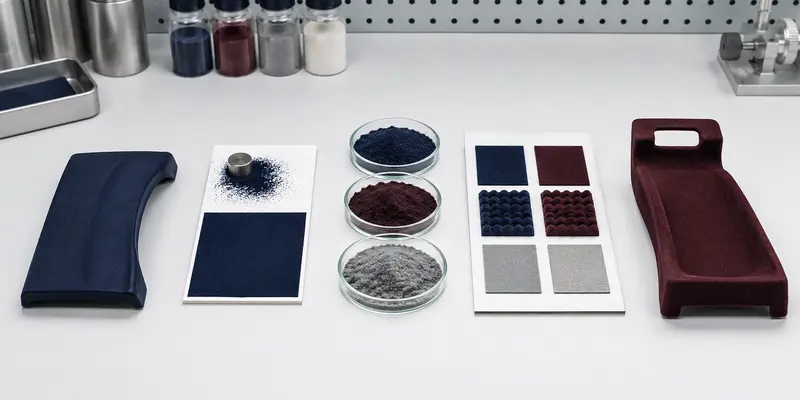
Begin with the conditions the flocked surface will face. Will it be touched repeatedly, flexed, washed, exposed to heat, or used mainly for visual presentation? A packaging insert may prioritize a dense velvet appearance and precise color. Garment decoration must tolerate bending and the care conditions specified for the finished textile. Automotive trim may require recovery after compression, resistance to rubbing and stable performance across temperature changes. Technical parts may use flock to reduce noise, manage friction, improve sealing or protect adjacent surfaces.
These requirements should be converted into a short approval specification before a flock powder supplier recommends material. State the substrate, adhesive system, flocking method, target pile appearance, expected contact or wear, color reference and any required tests. This prevents a common procurement error: approving a fiber because it looks correct in a loose sample, then discovering that the same fiber behaves differently after electrostatic application and curing.
Comparing Flocking Powder Materials for Different Requirements
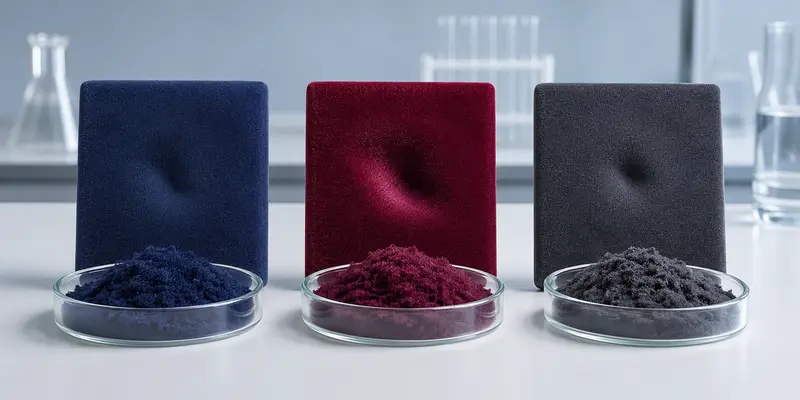
Fiber chemistry influences feel, recovery, abrasion behavior, color response and processing. No material is universally best. The most useful comparison is therefore not “Which fiber is highest quality?” but “Which fiber gives the required surface and service performance on this product?”
Nylon Flock Powder for Durable, High-Touch Surfaces
Nylon flock powder is widely selected for products that receive frequent handling or friction. Nylon flock fibers generally recover well after pressure and can support a durable, uniform pile when the fiber, adhesive and process are properly matched. This makes nylon a strong starting point for automotive storage compartments, molded plastic parts, seals, packaging components that require repeated use and other functional surfaces.
Specification still matters within the nylon category. A short, fine electrostatic nylon flock powder can create a smooth, compact finish, while a longer or heavier fiber produces a fuller texture. Polyamide grade, cut quality, conductivity treatment and moisture condition can also influence processing. Buyers should therefore compare complete specifications rather than treating all nylon flock as interchangeable.
Viscose Flock Powder for Soft Decorative Finishes
Viscose flock powder is commonly chosen where softness, color richness and a delicate velvet-like appearance matter more than severe wear resistance. Typical uses include gift packaging, jewelry boxes, stationery, display surfaces and decorative textile effects. The fibers can create a refined hand feel, especially when short cut length and fine dtex are combined with a smooth adhesive layer.
Some keyword lists and overseas buyers use the phrase viscose rayon flock powder. For Zhangs product communication, Viscose is the clearer primary material name. Regardless of terminology, approval should consider humidity, expected handling and adhesive compatibility. A soft decorative result does not automatically mean the material is suitable for high-rub or high-moisture service.
Polyester Flock Powder for Balanced Process and Surface Needs
Polyester flock powder may be considered when a project needs a stable synthetic fiber with a controlled appearance and project-specific color or processing requirements. It can be useful for textile decoration, packaging and selected industrial surfaces, but the recommendation depends on the actual end-use test rather than on the fiber name alone.
Acrylic flock is another project-specific option when a particular visual effect or processing response is required. Because acrylic is less often the default answer for the applications discussed here, it should be evaluated through samples instead of presented as a universal substitute for nylon, viscose or polyester.
| Material | Typical Strength | Common Applications | Key Approval Focus |
|---|---|---|---|
| Nylon | Resilience and abrasion performance | Automotive trim, functional parts, reusable packaging | Wear, recovery, adhesive and process fit |
| Viscose | Soft hand and refined decorative surface | Jewelry boxes, gift packaging, stationery, decoration | Humidity, handling level and appearance |
| Polyester | Balanced synthetic-fiber option | Textiles, packaging, selected industrial surfaces | End-use testing and process stability |
| Acrylic | Project-specific aesthetic or process response | Special decorative or technical projects | Sample validation against the real requirement |
Choosing Flock Powder by Application and Substrate
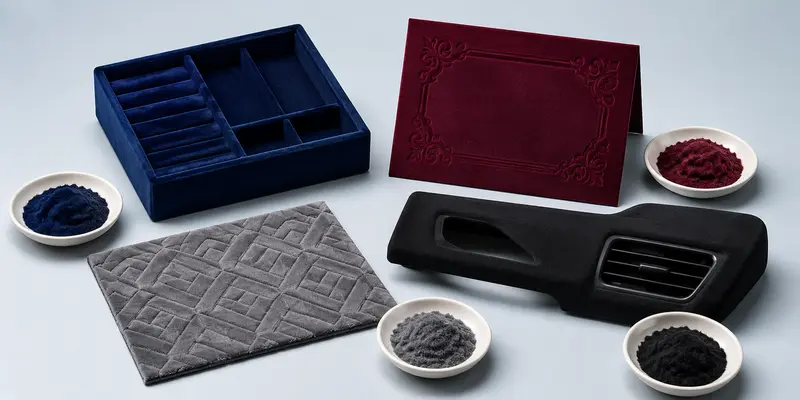
The substrate changes the way a flock specification performs. Paperboard, fabric, plastic, rubber and metal differ in surface energy, flexibility, heat tolerance and adhesive requirements. The same flock powder may stand well on one substrate but show poor coverage, weak bonding or an uneven pile on another. Selection should therefore combine application and substrate instead of using a material-only decision.
Flock Powder for Packaging and Decorative Surfaces
Flock powder for packaging is often selected to improve perceived quality, protect a product and create color contrast. Jewelry boxes and cosmetic inserts typically need a smooth, dense surface with few visible gaps. Shorter, finer fibers are a logical starting point, but the adhesive color and substrate tone also affect coverage. A darker board under a light flock can reveal thin areas, so a compatible adhesive color may improve visual density.
Decorative products and ornaments may use a longer pile or a more noticeable texture. The right answer depends on viewing distance, handling and edge detail. Complex shapes need trials because recessed areas and sharp corners can receive fibers differently in an electrostatic field.
Flock Powder for Textile and Garment Decoration
Flock powder for textile and flock powder for garment applications must be evaluated with the movement of the fabric. A soft surface is only useful if the adhesive layer can flex without cracking or releasing fiber. The buyer should state fabric construction, printing or coating steps, curing limits and intended care conditions. For a closer look at these end uses, review Zhangs’ apparel and fabric flocking applications.
Fine fibers can support sharp printed detail, while longer fibers create a stronger tactile effect but may reduce the clarity of very small graphics. Sampling on the actual textile is essential because absorbency, stretch and prior surface treatments can change adhesive hold and final appearance.
Flock Powder for Automotive Trim and Car Interiors
Flock powder for automotive trim is commonly used where a soft-touch finish, noise reduction or controlled friction is needed. Glove compartments, storage trays and molded interior parts are high-touch applications, so nylon is often the first material evaluated. The decision should also consider the geometry of the part, abrasion target, temperature range, odor or emissions requirements and the selected automotive adhesive.
A flat test panel cannot fully represent a deep storage bin or narrow corner. Process approval should include the real molded part whenever possible. Zhangs’ car interior flocking applications provide additional context for these components.
Flock Powder for Industrial Applications and Technical Parts
Flock powder for industrial applications may serve a functional purpose rather than a purely decorative one. On seals, channels and moving components, flock can help manage sliding behavior, noise or surface contact. The fiber specification must be considered together with adhesive strength, part tolerance and operating conditions. Review the relevant technical parts flocking applications before defining the test plan.
How Fiber Length and Dtex Affect Flocking Powder Selection
Material identifies the fiber chemistry; cut length and dtex determine much of the visible and tactile result. Fiber length influences pile height, edge coverage and texture. Dtex expresses linear density: for fibers of comparable construction, a lower dtex indicates a finer fiber. Shorter and finer fibers generally form a smoother, more compact surface, while longer or heavier fibers create a fuller and more pronounced pile.
The two values should never be chosen independently. A long, fine fiber may feel soft but can be more demanding to process. A short, heavier fiber may create a strong texture without the same refinement. Equipment voltage, grounding, fiber conductivity, adhesive open time and ambient humidity all affect whether the fibers stand upright and distribute evenly.
Keyword specifications such as 0.5mm nylon flock fibers, 1.0mm nylon flock fibers or 1.0mm 3.3 dtex nylon flock describe useful starting points, not automatic application rules. If a standard range does not deliver the required result, a custom cut length flock powder or custom denier flock powder can be evaluated. See the detailed guide to flocking powder specifications, dtex, denier and length before approving a purchase specification.
Matching Colored Flocking Powder with Substrate and Adhesive
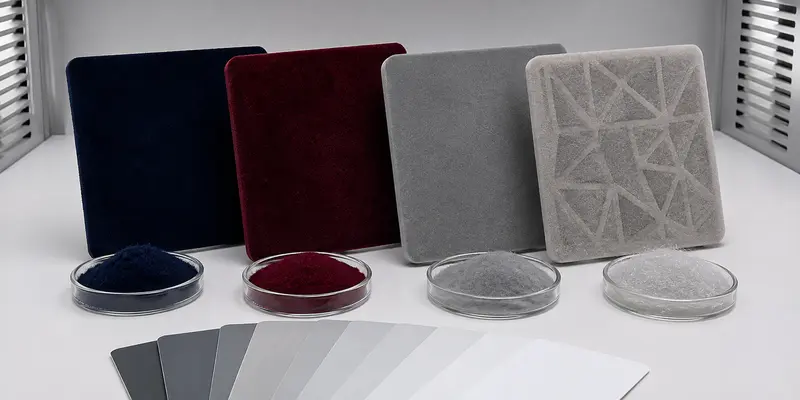
Colored flocking powder should be approved as part of the finished surface, not only as loose fiber. Fiber material, sheen, pile direction, lighting and substrate color can all change the perceived shade. A Pantone number is a useful starting reference, but a physical master sample or approved flocked panel gives a more reliable production target.
Adhesive color matters when full hiding is difficult. A similar adhesive tone can reduce the visual impact of small gaps, particularly with light colors over dark substrates. The adhesive must also suit the substrate, curing temperature, flexibility and required durability. Choosing fiber and glue separately can produce a color-correct sample with weak bonding, or a strong bond with an uneven surface. For color development details, read Can Flocking Powder Colors Be Customized?
Testing Flocking Powder Before Bulk Production
A representative sample trial is the most reliable bridge between a promising specification and stable bulk production. The test should use the actual substrate, adhesive, equipment settings and curing cycle. Evaluate appearance, pile density, fiber orientation, edge coverage, adhesion and any performance requirement relevant to the product, such as rubbing, compression recovery, flexibility or exposure conditions.
Keep the approved sample as a production reference and record the complete specification: material, color standard, cut length, dtex or denier, batch reference and test method. For custom color flock powder or a new substrate, compare more than one trial if the acceptable range is narrow. Bulk approval should be based on agreed tolerances rather than on a photograph, because lighting and screen settings can conceal meaningful shade and texture differences.
Common Flocking Powder Selection Mistakes
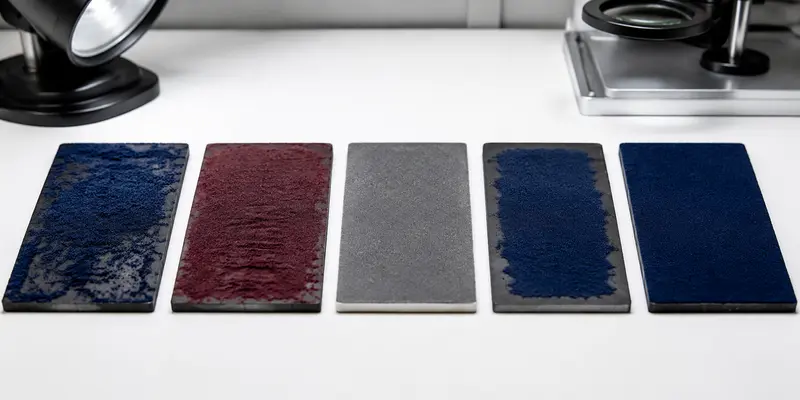
The first mistake is choosing by softness alone. Softness may be important for packaging or apparel, but it says little about recovery, wear or adhesion. The second is treating a fiber name as a full specification. “Nylon flocking powder” does not define length, dtex, color, conductivity treatment or cut consistency. The third is approving loose fiber without a flocked panel. A loose sample cannot show how the pile will look after application and curing.
Another frequent mistake is transferring a successful specification to a new substrate without testing. Changes in plastic grade, coating, fabric finish or adhesive can alter bonding and appearance. Buyers also create unnecessary risk when they send only a color code and omit the target texture, performance level and application method. A complete inquiry allows the supplier to recommend a controlled starting specification and reduces repeated sampling.
Flocking Powder FAQ for Material and Application Selection
What is the best flocking powder material?
There is no universal best material. Nylon is generally favored for durable, high-touch surfaces; viscose for soft decorative finishes; and polyester for balanced project-specific requirements. The best choice is the one that passes appearance, adhesion and performance tests on the actual product.
Is nylon flock powder always better than viscose flock powder?
No. Nylon often provides better resilience and abrasion performance, but viscose can provide the softer, more refined appearance required for gift packaging or display surfaces. The application determines which advantage matters.
Can one flock powder specification be used on paper, textile and plastic?
It may be possible in limited cases, but it should not be assumed. Substrate surface, flexibility, heat tolerance and adhesive compatibility differ. Each new substrate should be tested with the intended production process.
What information should I send a custom flock powder supplier?
Send the application, substrate, flocking method, target material, color reference, desired pile effect, fiber length or dtex if known, performance requirements, estimated quantity and an actual sample when available. This information supports a faster and more relevant recommendation.
Final Flocking Powder Selection Checklist
- Define the finished product, substrate and reason for flocking.
- Rank the required properties: softness, appearance, wear, recovery, flexibility or friction control.
- Select the initial material family: Nylon, Viscose, Polyester or Acrylic.
- Set a trial range for fiber length and dtex instead of choosing one value without comparison.
- Approve color on the actual flocked substrate under the intended lighting.
- Confirm adhesive compatibility, curing conditions and equipment parameters.
- Test the real part for appearance, adhesion and application-specific performance.
- Record the approved sample and complete bulk specification.
If the specification is not yet known, send Zhangs the substrate, finished-product requirement and target sample. A structured trial will identify a more reliable combination of material, length, dtex, color and process conditions than choosing from the fiber name alone. Explore Zhangs flocking powder options and request a sample or quotation.