Abstract
Choosing the right Flocking Powder is not only about color or price. The material itself has a direct impact on texture, durability, appearance, transparency, and end-use performance. In practical production, nylon, rayon, and polyester each offer different advantages, so material selection should match the application rather than rely on one universal option.
This guide explains the differences between nylon flocking powder, rayon flocking powder, and polyester flocking powder in a clear and practical way. It also shows how factors such as surface feel, color effect, transparency, and resistance properties influence the final result. Whether the target application is packaging, paper printing, textiles, decorative surfaces, or specialty coatings, this article helps buyers and product developers choose the most suitable flock powder with greater confidence.
Table of Contents
-What Is Flocking Powder?
-Why Material Choice Matters in Flocking Powder Selection
-What Is the Difference Between Nylon, Rayon and Polyester Flocking Powder?
Nylon Flocking Powder
Rayon Flocking Powder
Polyester Flocking Powder
-Quick Comparison Table: Nylon vs Rayon vs Polyester
-Which Flocking Powder Material Works Best for Different Applications?
Packaging and Printed Paper
Textiles and Fashion Surfaces
Decorative Coatings and Visual Effects
Industrial and Functional Uses
-How Color, Transparency and Texture Affect Flocking Powder Selection
Color Performance
Transparent Flocking Powder and Special Visual Effects
Texture and Touch
-How to Choose the Right Flock Powder Step by Step
-Common Mistakes When Selecting Flocking Powder
-Conclusion
What Is Flocking Powder?

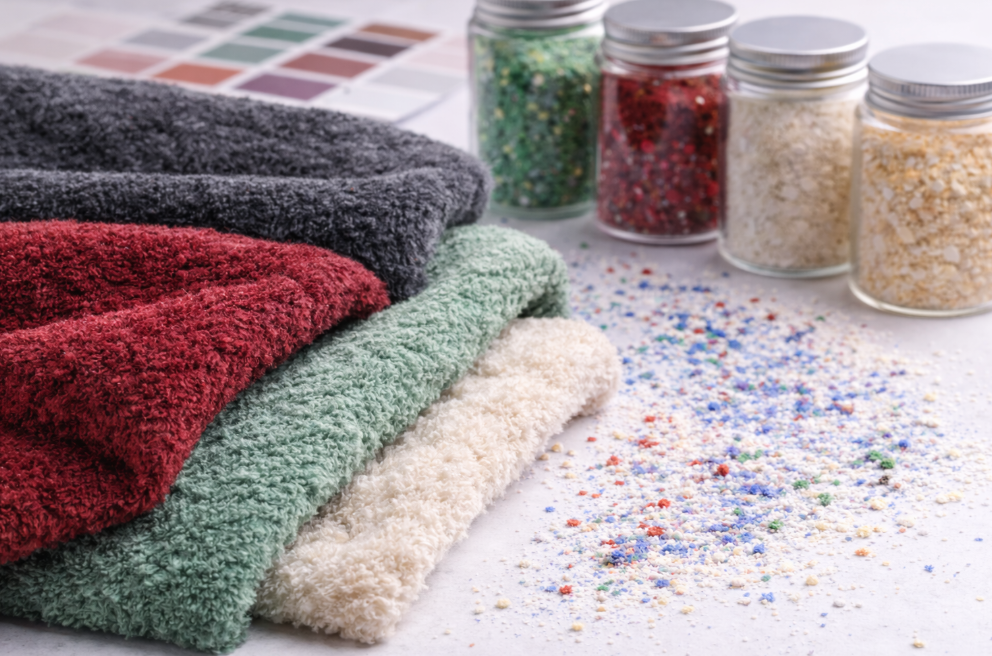
Flocking Powder is a fine fiber material used to create a soft, velvet-like, textured, or decorative surface on substrates such as paper, plastic, textiles, leather, rubber, and coated products. After adhesive is applied, the fibers are deposited onto the surface to produce a raised finish that improves both appearance and touch.
In the market, flock powder is often selected according to fiber material, fiber length, denier, color, transparency, and target application. Among the most common material categories, nylon flocking powder, rayon flocking powder, and polyester flocking powder are widely used because they cover a broad range of decorative and functional needs.
For manufacturers and buyers, understanding the material differences is essential because the same design can look and perform very differently depending on which Flocking Powder is used.
Why Material Choice Matters in Flocking Powder Selection
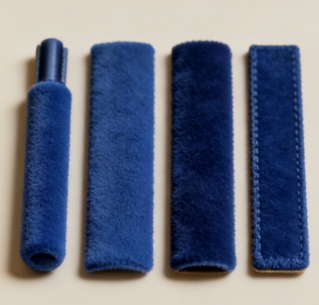
The material of Flocking Powder affects more than the basic texture. It influences:
1.softness and hand feel
2.color brightness and visual depth
3.wear resistance and recovery
4.chemical and moisture resistance
5.heat stability
6.production cost and value balance
A beautiful flocked finish that works well on gift packaging may not be suitable for automotive interiors or durable fabric applications. Likewise, a premium-grade nylon flocking powder may provide excellent resilience, but it may not always be the most cost-effective option for short-life decorative printing.
For this reason, material selection should begin with the application goal: decorative impact, tactile quality, durability, environmental exposure, or production budget.
What Is the Difference Between Nylon, Rayon and Polyester Flocking Powder?
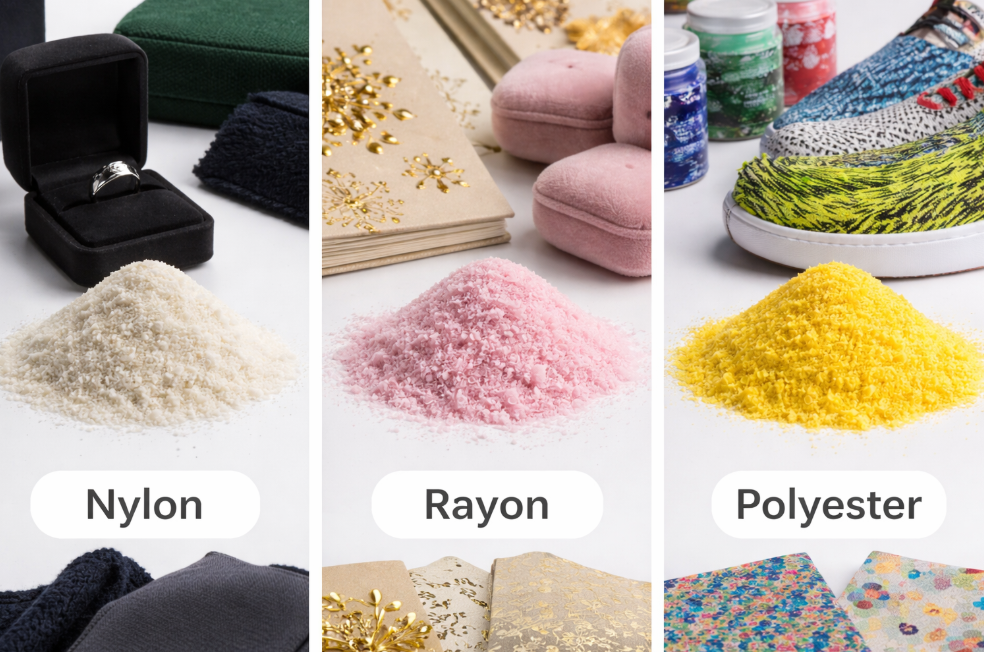
Nylon Flocking Powder
Nylon flocking powder is known for its excellent elasticity, resilience, abrasion resistance, and premium soft touch. It is often chosen for applications where performance and durability matter as much as appearance.
Key characteristics of nylon flocking powder:
1.soft and smooth hand feel
2.good fiber recovery after pressure
3.high wear resistance
4.stable appearance in repeated use
5.suitable for higher-end and durable applications
Because nylon fibers have strong resilience, surfaces made with nylon flocking powder tend to maintain their texture more effectively over time. This makes them useful in products that are touched frequently or exposed to friction.
Typical uses include:
1.automotive interior parts
2.jewelry boxes and premium packaging inserts
3.textiles with soft-touch requirements
4.industrial surfaces needing durable flocking performance
Rayon Flocking Powder
Rayon flocking powder is popular for its soft velvet effect, elegant appearance, and cost-performance balance. It is widely used in decorative applications where a refined finish is needed but extreme durability is not the first priority.
Key characteristics of rayon flocking powder:
1.very soft and delicate surface feel
2.rich, classic velvet appearance
3.strong decorative appeal
4.good color presentation
5.economical for many printing and packaging uses
Compared with nylon, rayon usually offers less resilience and lower abrasion resistance, but it often creates a very attractive and luxurious surface. For visual packaging and paper-based decorative work, rayon flocking powder remains a common choice.
Typical uses include:
1.greeting cards
2.wallpaper details
3.gift boxes
4.printed paper surfaces
5.decorative labels and displays
Polyester Flocking Powder
Polyester flocking powder is valued for its balanced mechanical properties, color stability, and resistance performance. It can be a practical choice for applications that need durability together with efficient production economics.
Key characteristics of polyester flocking powder:
1.good strength and dimensional stability
2.strong resistance to moisture and many environmental factors
3.reliable color consistency
4.practical option for large-scale use
5.suitable for both decorative and semi-functional applications
In some cases, polyester flocking powder can offer a good middle-ground solution between premium nylon performance and economical rayon aesthetics. It is especially useful when the flocked product must face more demanding storage or operating conditions.
Typical uses include:
1.decorative coatings
2.printed products
3.industrial fabric surfaces
4.specialty packaging
5.products exposed to varying environmental conditions
Quick Comparison Table: Nylon vs Rayon vs Polyester
Property | Nylon Flocking Powder | Rayon Flocking Powder | Polyester Flocking Powder |
Surface feel | Soft, smooth, resilient | Very soft, velvet-like | Smooth, balanced |
Durability | High | Medium to low | Medium to high |
Abrasion resistance | Excellent | Moderate | Good |
Recovery after pressure | Excellent | Fair | Good |
Decorative appearance | Premium and refined | Elegant and classic | Clean and stable |
Color effect | Good | Very attractive | Consistent |
Moisture resistance | Good | Moderate | Good |
Cost level | Higher | Economical to mid-range | Mid-range |
Best for | Durable premium products | Decorative paper and packaging | Balanced decorative and functional use |
Which Flocking Powder Material Works Best for Different Applications?

Packaging and Printed Paper
For luxury packaging, display boxes, and printed decorative surfaces, the decision often depends on whether tactile luxury or cost efficiency matters more.
Rayon flocking powder is often preferred for decorative printed paper, greeting cards, and gift packaging because of its elegant velvet appearance.
Nylon flocking powder is more suitable when packaging requires a more premium tactile impression and better wear resistance, such as jewelry presentation boxes.
Polyester flocking powder can work well in packaging lines that need stable quality and practical resistance properties.
For standard decorative printing, rayon flocking powder is often sufficient. For reusable or high-touch packaging, nylon may be the better long-term choice.
Textiles and Fashion Surfaces
In textile-related applications, softness and touch are critical, but durability also matters.
Nylon flocking powder is well suited to garments, accessories, or surfaces that experience repeated handling.
Rayon flocking powder delivers a soft decorative finish for fashion-oriented visual effects.
Polyester flocking powder may be selected for more technical or balanced textile applications.
When the final product needs to preserve a soft feel after repeated use, nylon flocking powder usually performs better.
Decorative Coatings and Visual Effects
Decorative coatings often focus on visual richness, texture, and color effect.
Rayon flocking powder is effective for classic velvet-style decorative surfaces.
Transparent flocking powder or specialty translucent effects may be considered when designers want layered visual depth or unusual surface appearance.
Polyester flocking powder is suitable where the coating must also maintain stable performance.
This category depends heavily on design goals, especially color, gloss interaction, and the desired tactile response.
Industrial and Functional Uses
For industrial applications, mechanical properties and stability become more important.
Nylon flocking powder is often preferred when wear resistance and resilience are essential.
Polyester flocking powder is a practical option when the application requires stable performance under variable conditions.
Rayon flocking powder is usually less suitable for demanding functional environments.
If the flocked surface is exposed to repeated friction, handling, or higher performance requirements, nylon and polyester are generally more reliable choices than rayon.
How Color, Transparency and Texture Affect Flocking Powder Selection
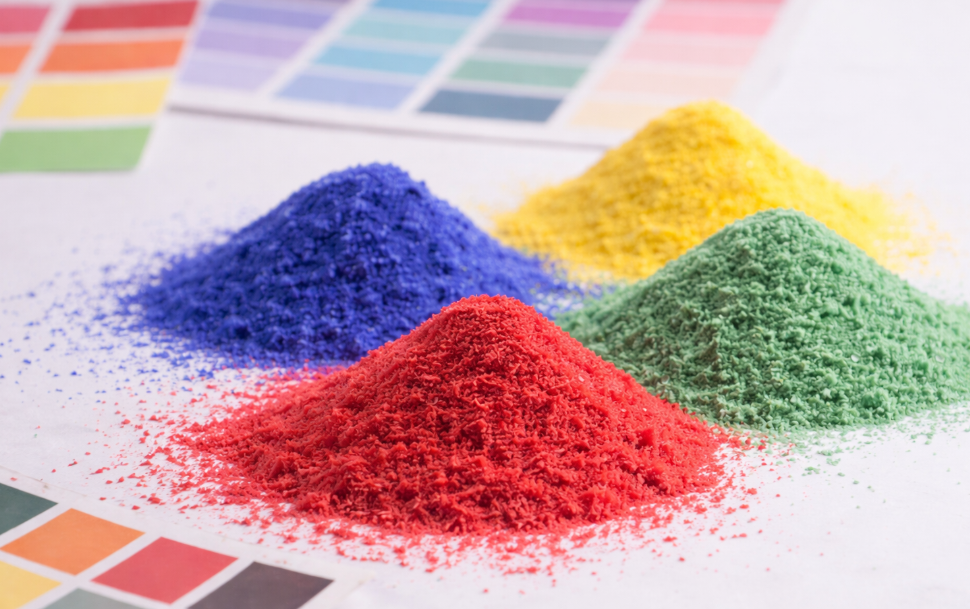
Color Performance
Color is one of the first things end users notice, but color behavior changes with different fiber materials. Some materials display deeper, softer tones, while others give cleaner or brighter effects.
When selecting Flocking Powder, consider:
1.whether the design needs rich velvet depth or a cleaner modern look
2.whether the substrate color influences the final effect
3.whether the finish is intended for luxury packaging, fashion, or industrial presentation
In many decorative uses, rayon flocking powder is appreciated for its rich visual softness. Where consistency and stable production are priorities, polyester flocking powder may offer advantages. Premium tactile products may benefit from the refined balance of nylon flocking powder.
Transparent Flocking Powder and Special Visual Effects
Transparent flocking powder is a more specialized option used when designers want to create layered, light-influenced, or semi-translucent decorative effects. It can add novelty to packaging, printed graphics, and specialty coatings.
It is especially useful when:
1.the background design should remain partially visible
2.a subtle textured effect is preferred over heavy color blocking
3.the surface needs a differentiated premium appearance
This kind of selection is not only about material type, but also about visual strategy. A transparent or semi-transparent flock effect can change how depth, branding, and light interaction are perceived.
Texture and Touch
Texture is one of the strongest reasons to use flock powder at all. However, softness alone is not enough. Buyers should consider:
1.whether the touch should feel luxurious, smooth, or resilient
2.whether the surface must recover after compression
3.whether users will touch the product repeatedly
For example:
1.nylon flocking powder gives a soft yet resilient touch
2.rayon flocking powder creates a delicate velvet feel
3.polyester flocking powder provides a more balanced texture with practical stability
The right texture should match both brand positioning and product use conditions.
How to Choose the Right Flock Powder Step by Step
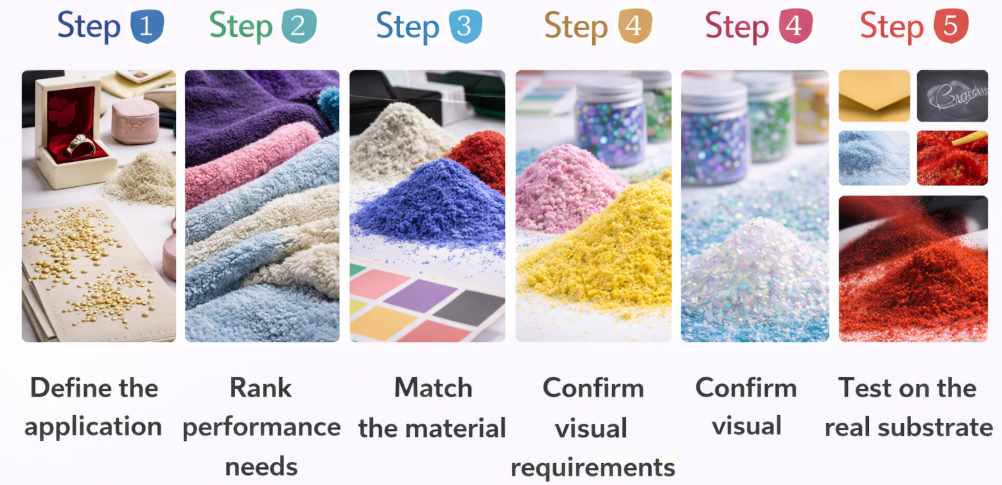
A practical selection process can be simplified into five steps.
Step 1: Define the application
Is the target product decorative, functional, or both? Packaging, fabric, industrial parts, and printed surfaces all require different priorities.
Step 2: Rank performance needs
Decide what matters most: softness, durability, resilience, color effect, transparency, or cost.
Step 3: Match the material
Choose nylon flocking powder for premium feel and durability
Choose rayon flocking powder for elegant decorative appearance
Choose polyester flocking powder for balanced performance and stability
Step 4: Confirm visual requirements
Review color, fiber density, transparency, and desired texture before final approval.
Step 5: Test on the real substrate
The same Flocking Powder can produce different results on paper, plastic, textile, or coated surfaces. Trial evaluation is always recommended before mass production.
Common Mistakes When Selecting Flocking Powder
Many selection problems happen because buyers focus on one factor only.
A few common mistakes include:
1.choosing based on cost alone without considering end-use durability
2.selecting the softest material without checking abrasion resistance
3.ignoring transparency or color interaction with the substrate
4.using decorative-grade material for heavy-use applications
5.assuming all flocking powder materials produce the same tactile effect
The best choice is usually the one that balances aesthetics, technical suitability, and production efficiency.
Conclusion
The best Flocking Powder is the one that fits the real needs of the product. There is no single material that works best for every application.
Nylon flocking powder is ideal for premium, durable, and high-touch applications.
Rayon flocking powder is highly effective for elegant decorative finishes and visually rich packaging or printing projects.
Polyester flocking powder offers a reliable balance between appearance, stability, and practical performance.
When selecting flock powder, manufacturers should evaluate not only material type, but also color effect, transparency, texture, durability, and final use conditions. A more accurate material choice helps improve both product quality and customer satisfaction.
For buyers, designers, and converters, understanding these differences is the most effective way to choose the right Flocking Powder with confidence.