Electrostatic flocking problems rarely have one universal cause. Sparse coverage, fibers lying flat, cloudy areas, bare corners, clumping and weak adhesion can all appear similar on a finished part, but they originate from different combinations of electric-field control, flock condition, adhesive behavior, substrate preparation, geometry and curing.
Effective troubleshooting begins by identifying the visible defect and isolating one variable at a time. Raising voltage, adding more flock or applying more adhesive without checking the baseline can hide the real cause and create a second defect. The goal is not to find a single “best setting,” but to establish a repeatable process window for the actual flocking fibers, adhesive, substrate, equipment and production environment.
This guide provides a practical sequence for diagnosing common failures in industrial and sample-scale flocking. For a refresher on the operating principle, read What Is Electrostatic Flocking? before using the checks below. Always isolate high-voltage equipment and follow the machine manufacturer’s safety and maintenance instructions before inspecting electrodes, cables or grounding connections.
How to Diagnose Electrostatic Flocking Problems Before Changing Settings?
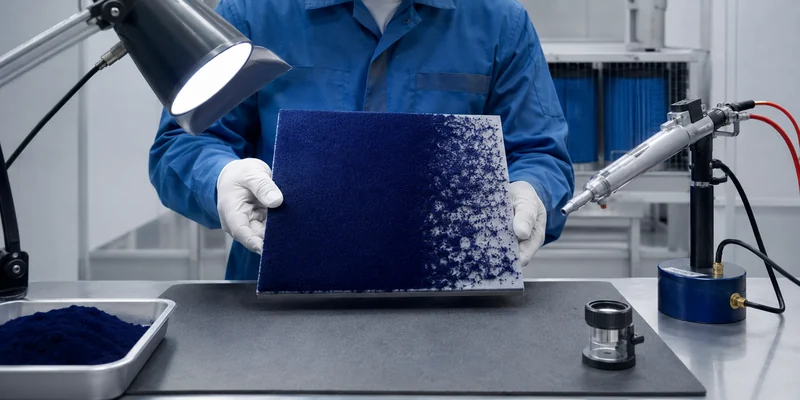
Start by recording the defect before changing the process. Note where it appears, when it began and whether it affects every part, one color, one flock lot, one operator or only a particular geometry. A defect across the entire surface usually points toward grounding, voltage, fiber condition, adhesive timing or the environment. A defect limited to recesses, sharp tips or one side of the workpiece more often points toward field access, applicator angle, distance or electrostatic shadowing.
Next, freeze the baseline. Use one approved substrate, one mixed batch of adhesive and one conditioned flock lot. Record room temperature and relative humidity, adhesive batch and mix time, open time, applicator distance, voltage setting, flocking time, dosing rate, curing conditions and cleaning method. Produce a small control sample before modifying one variable. This prevents a common troubleshooting mistake: changing voltage, distance, adhesive thickness and flock dose together, then not knowing which change improved or damaged the result.
| Visible symptom | First check | Likely process area |
| Sparse or slow coverage | Grounding, distance, fiber condition and adhesive open time | Electric field / material / timing |
| Fibers lie flat or fly irregularly | Ground path, humidity, flock conductivity and dosing | Equipment / environment / flock |
| Cloudy or striped surface | Applicator distance, voltage, movement and field shadow | Electric field / operator motion |
| Clumps or balls | Humidity, flock storage, screen and recycled-fiber condition | Environment / material handling |
| Bare corners or recesses | Part geometry, field access and applicator direction | Geometry / equipment method |
| Fibers release after cure | Adhesive film, open time, compatibility and cure | Adhesive / substrate / drying |
Electrostatic Flocking Problems from Grounding, Voltage and Applicator Distance
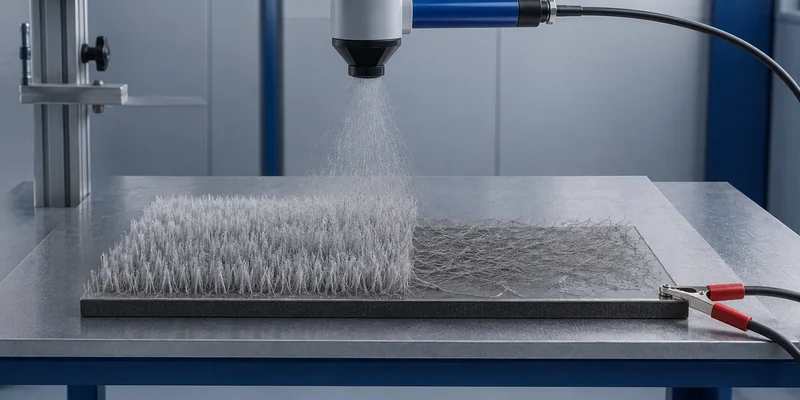
Grounding is the first electrical check because the charged fibers need a stable field between the applicator and the workpiece. A loose clamp, contaminated contact point, painted fixture, insulating substrate or damaged cable can weaken or distort that field. Confirm continuity through the intended ground path and inspect the connection point for adhesive, coating or debris. Do not compensate for an uncertain ground by immediately increasing voltage.
Low effective field strength can produce slow fiber movement, poor standing and sparse coverage. The cause may be a low setting, excessive applicator distance or weak grounding. Conversely, an aggressive setting or a head held too close can contribute to uneven flight, a rough surface or cloudy areas caused by electrostatic shadowing. For manual work, keep the applicator movement controlled and the head as perpendicular as the geometry allows; varying angle and distance across one pass changes the way fibers enter the adhesive.
Treat voltage and distance as a pair. Return to the equipment supplier’s recommended range, verify the ground, then adjust only one factor in small steps while comparing samples. The Zhangs flocking machine range can be reviewed when the current flocking machine cannot provide stable control, suitable output or the application method required by the part geometry.
Electrostatic Flocking Problems from Humidity and Flocking Fiber Condition
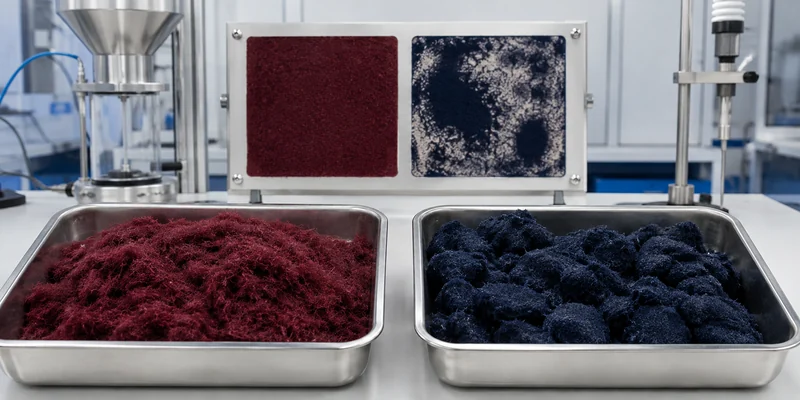
Flocking fibers must flow, accept charge and separate from one another. Very dry conditions can reduce electrical response and make fibers jump poorly, while excessive moisture can cause sticking, clumping and poor dosing. Industry guides commonly cite a relative-humidity range around 55% to 65% for flock processing, with approximately 60% used as a reference in some operations. This is a starting point, not a universal specification; the correct window depends on fiber material, surface treatment, storage history and the supplier’s data.
Condition new and stored flock in the production area before testing. Compare the suspect lot with a retained approved lot under the same settings. Check for agglomeration, contamination, uneven cut length and changes in flow through the screen. Recycled excess flock can also become unbalanced if it contains aged, contaminated or differently conditioned fibers. Keep recovered material segregated and use a defined return ratio rather than adding it without control.
Material selection also matters. Fine or short fibers can behave differently from longer or coarser fibers even when the color is identical. An electrostatic nylon flock powder may require a different process window from viscose or polyester because conductivity treatment, moisture response, length and dtex affect flight and deposition. Use the Flocking Powder Specifications Guide to confirm the specification, then test the actual lot rather than assuming that material name alone predicts performance.
Electrostatic Flocking Problems from Flocking Adhesive and Surface Preparation
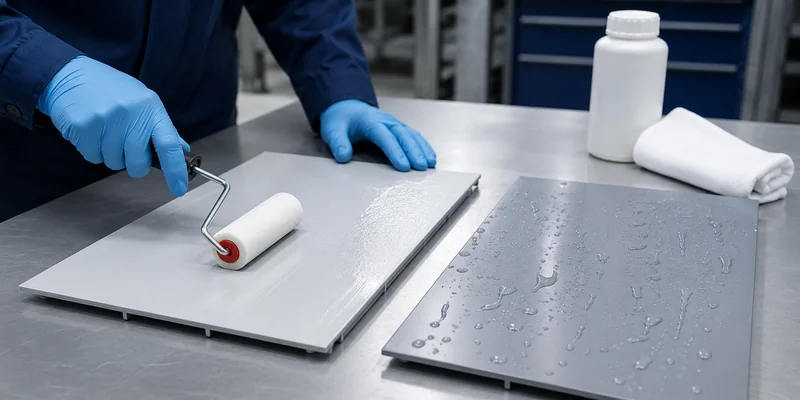
A stable electric field cannot correct an unsuitable or poorly applied flocking adhesive. If the film is too thin, fibers may not anchor deeply enough. If it is excessive, the finished surface can feel hard, adhesive may rise around the fibers and fine details can close. One industry rule of thumb is that the dry adhesive layer may be approximately 10% of the fiber cut length, but the final film must be established through the adhesive supplier’s instructions and application trials.
Open time is equally important. Flock applied after the adhesive begins to skin or dry may appear acceptable before cleaning but release later because the fibers never penetrated the wet film correctly. Record the time from coating to flocking and consider line speed, ambient conditions and part size. For two-component systems, verify mix ratio, hardener, pot life and mixing quality. For spray or screen application, check whether the nozzle, mesh, viscosity and stroke produce an even film instead of thinning the adhesive simply to improve flow.
When adhesion fails at the substrate, inspect cleaning and pretreatment before blaming the flock. Oil, mold release, dust, oxidation and low surface energy can prevent bonding. Maag cites 38 dyn/cm as a practical screening threshold for some pretreatment decisions, but substrate and adhesive requirements vary. Use a suitable surface-energy test and validate cleaning, primer, plasma, flame or other pretreatment with the material supplier. Zhangs’ flocking adhesive products provide a route for matching adhesive chemistry to the real substrate and curing method.
Electrostatic Flocking Problems with Uneven Coverage, Recesses and Bare Edges
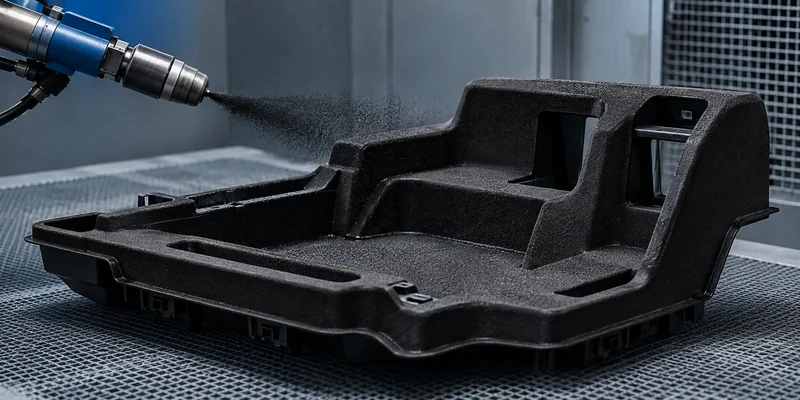
When flat external surfaces are dense but pockets, negative corners or deep recesses remain sparse, the problem may be field geometry rather than insufficient flock. Recesses can act as a Faraday cage: the electric field follows the easier external path and does not carry enough fibers into shielded areas. Increasing voltage alone may over-flock the exposed surface while the recessed area remains weak.
Change the access strategy instead. Reorient the part, alter the applicator angle, reduce unnecessary distance and use an auxiliary electrode or electrostatic-pneumatic method where appropriate. Air-assisted fiber transport can improve access to internal surfaces, although excessive air speed may reduce vertical alignment or disturb the adhesive. The correct balance is a uniform appearance without blowing fibers across the wet film.
Bare tips and sharp edges also require geometric control. Very sharp features concentrate or distort the field and offer little adhesive area for anchoring. Apply an even adhesive film around the feature, change part orientation and test a smaller applicator head or multiple approach angles. If a rounded design option is available, modest radii are generally easier to cover consistently than negative sharp corners.
Electrostatic Flocking Problems: Fiber Loss, Weak Adhesion and Loose Flock
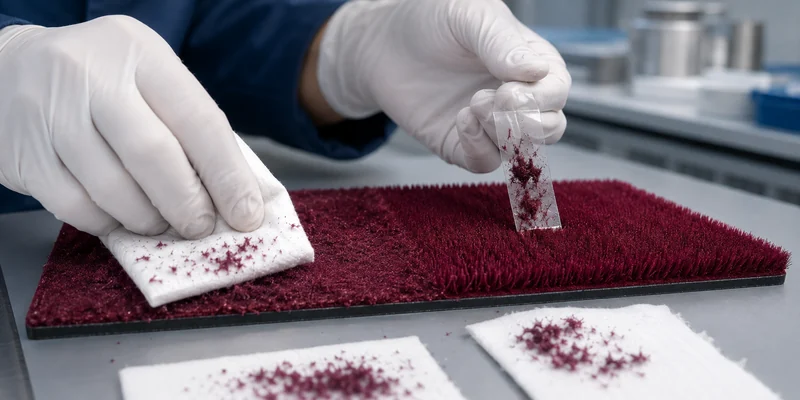
Fiber loss must first be separated into loose surface flock and true bond failure. Loose fibers that were never embedded should be removed after curing by the approved combination of vacuum, reduced compressed air, brushing or washing. If the underlying pile remains dense and stable, the main issue may be cleaning efficiency. If the pile becomes visibly sparse or rubs away, inspect adhesive thickness, open time, substrate bonding and cure.
A double-stock condition can also create a misleadingly dense appearance. Some charged fibers land on already deposited fibers instead of entering the adhesive, then detach during cleaning. Excessive dosing, poor timing or an overloaded fiber cloud can contribute. Reduce the feed to a controlled level and allow fibers to reach the adhesive rather than building a loose layer above it.
Because Zhangs already has a dedicated guide to this narrow defect, use Why Does Flocking Powder Fall Off? Causes and Fixes for the full repair and prevention sequence. This article keeps shedding within the wider diagnostic framework so the two pages support rather than compete with each other.
Electrostatic Flocking Problems After Curing and Cleaning
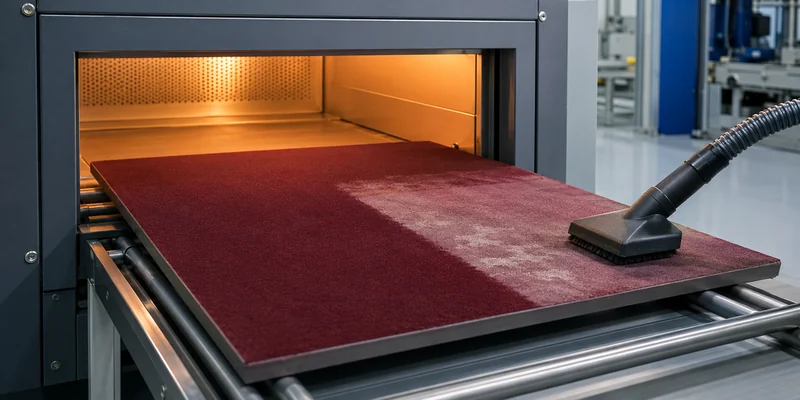
A flocked surface is not finished when the fibers stop moving. Curing must develop the adhesive properties required by the application. Under-curing can leave weak adhesion, residual tack or odor; excessive temperature or time can damage the substrate, change color, harden the adhesive or distort the pile. Record actual part temperature where possible rather than relying only on the oven display, especially when part mass and line loading vary.
Air circulation and exhaust can influence drying, but strong airflow before the adhesive has stabilized may disturb the pile. Keep cure temperature, dwell time and airflow within the adhesive manufacturer’s process window. When the product must resist washing, abrasion or repeated handling, approve the cure through the relevant finished-product test rather than visual inspection alone.
Cleaning should remove unbonded fibers without damaging the anchored pile. A change in vacuum strength, nozzle distance, brush stiffness or compressed-air pressure can make a stable flock look defective. Standardize the cleaning method and inspect the collected material. A sudden increase in loose fiber after an otherwise unchanged cleaning cycle is useful evidence that the preceding flocking or cure step has shifted.
Electrostatic Flocking Process Checks for Repeatable Production

Repeatability improves when the electrostatic flocking process is managed as a linked system rather than a list of independent settings. Create an approved “golden sample” with its material lots and process record. For every production batch, verify the flock specification and conditioning, adhesive batch and mix, substrate cleanliness, ground continuity, equipment condition, room environment, open time, application distance, cure profile and cleaning result.
When a defect appears, compare the current run with that record and change one variable at a time. Use small test panels or actual reject parts where practical. Record both the setting and the result; “higher voltage worked” is not enough unless the ground, distance, humidity, adhesive age and flock lot are also known. This evidence makes supplier support faster and prevents operators from relying on undocumented adjustments.
Incoming control should focus on parameters that can shift production: material identity, cut length, dtex, color, flow, moisture or conditioning status, adhesive shelf life and batch, and substrate surface condition. Periodic maintenance should cover electrodes, cables, grounding fixtures, screens, dosing components, extraction and the cleanliness of the flocking area. A stable process is built by controlling these inputs before defects appear, not only by repairing finished parts.
Electrostatic Flocking Problems FAQ
Why are flocking fibers not standing up?
Fibers may lie flat when grounding is weak, the effective field is insufficient, the applicator is too far away, the flock is poorly conditioned or the adhesive has already lost the right wet state. Check the ground path and material condition before raising voltage. Then test distance and voltage one at a time.
What humidity is best for electrostatic flocking?
Many industry guides use roughly 55% to 65% relative humidity as a reference range, with about 60% often cited as a practical target. The correct value depends on the flock material and surface treatment, so confirm the supplier’s recommendation and condition the flock before comparing settings.
Why does electrostatic flocking look patchy or cloudy?
Patchiness can result from uneven adhesive, poor grounding, unstable distance, dry flock, excessive dosing or expired open time. Cloudy areas may also indicate electrostatic shadowing when the field is too concentrated or the applicator is too close. Compare defect location and pattern before making an adjustment.
Why are recesses sparse while outer surfaces are dense?
The recess may be shielded by a Faraday-cage effect, preventing the electric field from carrying enough fibers into the pocket. Reorient the part, change the approach angle or consider auxiliary electrodes or electrostatic-pneumatic equipment instead of simply increasing voltage.
Why does flocking powder fall off after curing?
True fiber loss usually indicates inadequate adhesive penetration, application after open time, poor substrate bonding or incomplete curing. First remove normal loose flock and evaluate the remaining pile. If it rubs away, review the dedicated Zhangs shedding guide and test the full adhesive-substrate-fiber system.
Should I increase voltage when coverage is poor?
Not automatically. Poor coverage can come from weak grounding, excessive distance, dry or poorly treated fibers, recess geometry, low adhesive film thickness or expired open time. Increasing voltage without identifying the cause may create roughness, shadowing or uneven deposition. Return to a safe approved baseline and isolate the variables.
Solve Electrostatic Flocking Problems with Matched Materials and Process Support
Reliable troubleshooting connects the visible defect to evidence from the electric field, environment, flocking fibers, adhesive, substrate, geometry, cure and cleaning stages. The quickest corrective action is the one that removes the verified cause while preserving the rest of the approved process window.
Zhangs supplies custom flocking powder, flocking adhesive and flocking equipment for nylon, viscose, polyester and application-specific projects. To request technical evaluation, provide the substrate, adhesive, flock specification, equipment type, room conditions, process settings, defect photos and a description of when the problem began. A controlled sample test can then compare material and process changes before the next bulk run.