Choosing flock for a packaging insert is not simply a choice between a soft material and a durable material. The insert geometry, packaged product, handling frequency, storage environment, target color and required surface appearance all affect whether viscose or nylon will produce the better result.
For many decorative gift boxes and short-use presentation packages, viscose offers a refined velvet-like finish at a practical cost. Nylon is generally more suitable when the insert will be touched repeatedly, compressed by the product or expected to retain its appearance over a longer service period.
Quick answer: Choose viscose for decorative, light-duty packaging and nylon for frequently handled or performance-sensitive inserts. Before confirming either material, test the complete construction - including fiber length, dtex, substrate, adhesive and curing conditions - rather than approving loose flock powder alone.
What Packaging Inserts Need from Flock Powder for Packaging?
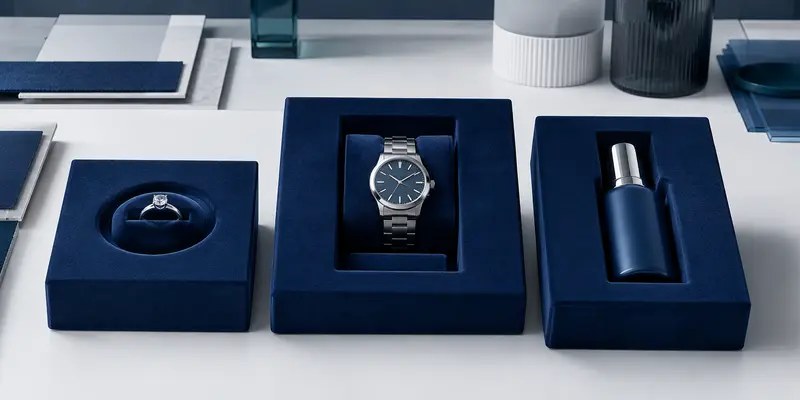
Packaging inserts perform both a visual and functional role. They frame the product when the box is opened, support brand color and create the first tactile contact between the customer and the package. They may also help reduce direct contact between a hard insert and jewelry, watches, cosmetics, collectibles or electronic accessories.
The required performance varies substantially between products. A promotional gift box opened once does not place the same demands on flock powder for packaging as a watch case used for storage over several years. A flat cosmetic tray may only need an even decorative surface, while a ring insert contains narrow slots and compressed areas where the fibers can be repeatedly pushed and rubbed.
The material decision should begin with four questions: how often the insert will be handled, how much pressure or friction it will receive, whether it may encounter humidity, and how long the finished appearance must be maintained. These conditions determine whether the soft decorative character of viscose or the recovery and abrasion resistance of nylon is more important.
For a broader overview of available materials, visit the Zhangs flocking powder product range.
Viscose Rayon Flock Powder for Soft Packaging Inserts
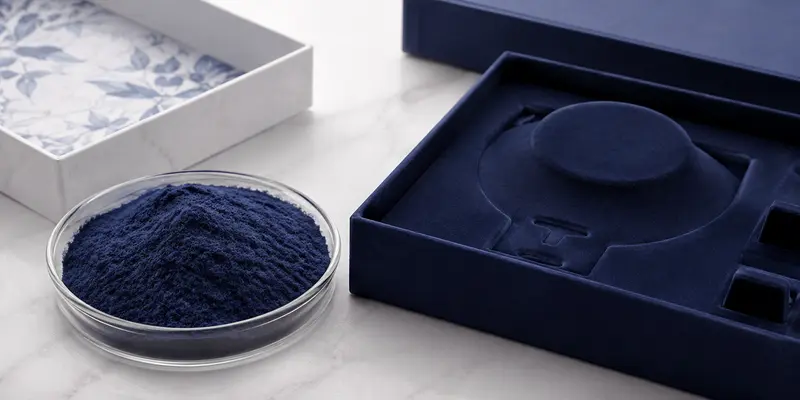
Viscose rayon flock powder is a regenerated cellulose-based flock material commonly selected for decorative packaging, paper surfaces, gift boxes and presentation interiors. Zhangs uses "viscose flock powder" as the main customer-facing name, although some international buyers continue to search for rayon flock.
Viscose creates a delicate, matte and velvet-like surface. It is particularly effective when the packaging should feel visually soft rather than glossy or technical. Short, fine viscose fibers can form an even surface on paperboard, coated board, molded pulp and selected plastic inserts when the adhesive and application process are properly matched.
Its limitations need to be considered at the design stage. Viscose is more pressure-sensitive than nylon, so pile-direction changes and compression marks can remain visible. It also absorbs more moisture and generally provides lower wet-abrasion resistance. These characteristics do not make it unsuitable for packaging; they make it more appropriate for light-duty, appearance-led applications.
Viscose is a practical candidate for limited-use gift packaging, decorative paper inserts, stationery boxes and display trays stored in controlled indoor conditions. It can also be suitable for jewelry packaging when the insert is primarily used for presentation and is not expected to experience repeated rubbing or long-term compression.
Detailed material options are available on the Viscose Flock Powder product page.
Nylon Flock Powder for Durable Packaging Inserts
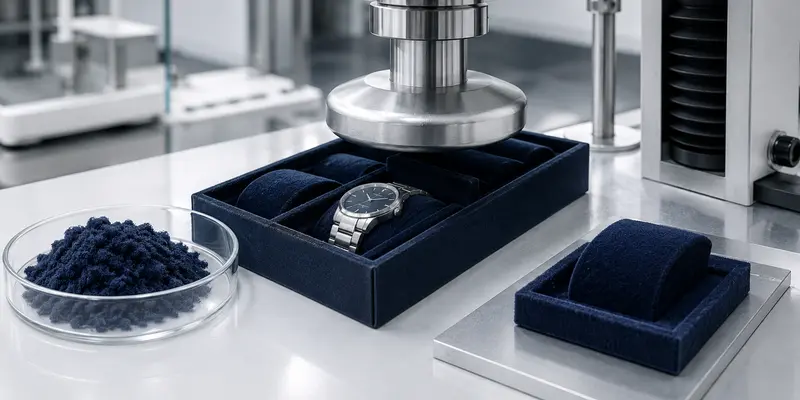
Nylon flock powder is normally selected when the flocked surface needs better recovery after pressure, greater abrasion resistance and more stable performance under repeated handling. Nylon is also described as polyamide flock in technical specifications.
These characteristics are valuable in reusable jewelry boxes, watch cases, premium presentation boxes and display inserts that are repeatedly opened, touched or loaded with products. When a ring, bracelet, watch strap or accessory presses against the same area, nylon fibers are generally better able to recover than viscose fibers.
Nylon does not automatically create a better-looking package. Its surface appearance depends on fiber fineness, cut length, luster, color, pile density and orientation. Some nylon specifications can produce a more reflective or direction-sensitive surface. When a quiet matte appearance is required, the buyer should evaluate dull or semi-dull options and review the flocked sample from multiple viewing angles.
The higher material cost of nylon flocking powder is easier to justify when visible wear, pressure marks or premature surface failure would damage the perceived value of the packaged product. For disposable or lightly handled packaging, that additional performance may not deliver a meaningful commercial benefit.
See the Nylon Flocking Powder product page for available customization directions.
Viscose vs Nylon Flock Powder for Packaging Inserts
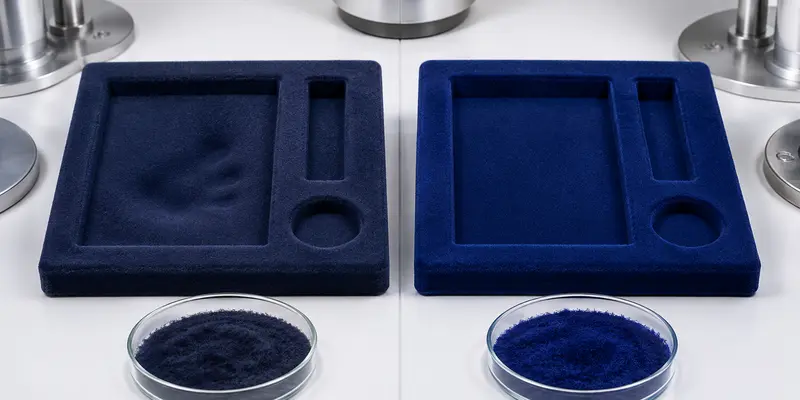
The correct comparison should focus on the finished insert rather than the loose fibers. The following differences are useful starting points, but they are not guaranteed results for every specification.
| Selection factor | Viscose flock powder | Nylon flock powder |
|---|---|---|
| Surface character | Delicate, matte and velvet-like | Soft, resilient and potentially more lustrous |
| Pressure recovery | Lower; directional or compression marks may remain | Better recovery after pressure |
| Abrasion resistance | Suitable for light-duty decorative use | Better suited to repeated handling and friction |
| Moisture behavior | More moisture-absorbent and humidity-sensitive | Lower moisture absorption than viscose |
| Typical packaging role | Decorative interiors and limited-use presentation packaging | Reusable, premium or frequently handled inserts |
| Cost position | Generally more economical | Generally higher material cost |
| Approval priority | Softness, matte appearance and color | Recovery, wear, appearance and handling |
| Main risk | Flattening, pressure marks or humidity-related processing changes | Paying for performance the package may not require |
A fine, short nylon specification may feel different from a longer, coarser nylon fiber. The same is true for viscose. Adhesive stiffness, pile density and substrate shape can change the result enough that two inserts using the same fiber material may perform differently.
Flock Powder for Packaging in Jewelry, Watch and Cosmetic Inserts
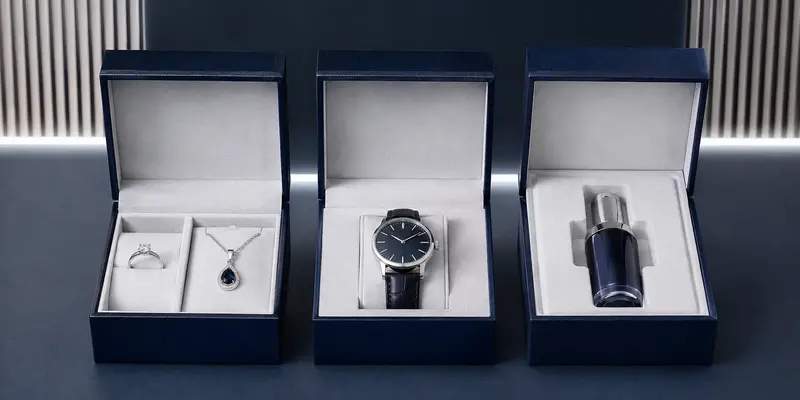
Jewelry inserts often require a fine, visually uniform surface that does not distract from the product. Viscose can be effective for earrings, pendants and promotional jewelry boxes used primarily for presentation. Nylon should be considered for ring slots, bracelet holders and reusable jewelry cases where localized compression occurs repeatedly.
Watch packaging places more pressure on the insert because of the weight of the watch, the shape of the cushion and repeated removal. In these conditions, nylon flock powder is usually the stronger starting point, particularly around fitted recesses and contact edges. Testing should show whether the pile remains even after the watch or cushion has been stored in place.
Cosmetic packaging varies. A fragrance presentation box may prioritize color and a soft opening experience, making viscose a practical option. A reusable makeup organizer or high-contact display tray may benefit from nylon. Possible exposure to moisture, oils or product residue should also be considered.
For electronics or precision accessories, flock should not be assumed to provide complete scratch protection, antistatic performance or particle control. These functions require specific testing of the complete packaging construction. Material names alone do not confirm them.
Length and Dtex for Flock Powder for Packaging
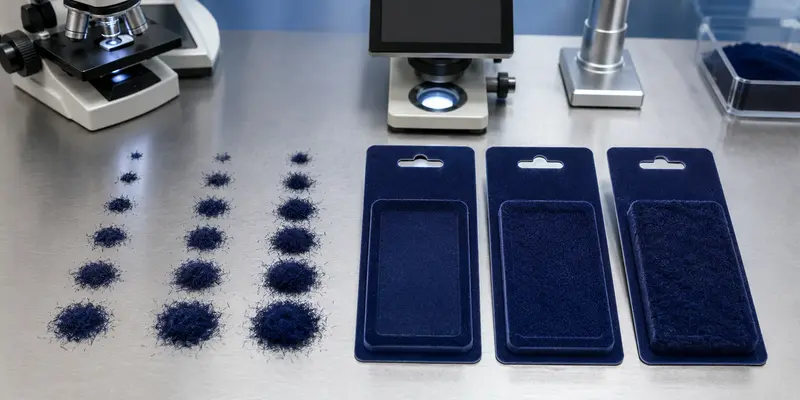
Material selection is only the first part of the specification. Fiber length determines visible pile height and affects how well the flock follows narrow slots, corners and molded contours. Dtex indicates linear fiber fineness and influences density, touch and visual texture.
Shorter precision cut flock fibers are generally easier to evaluate for small compartments, fine edges and low-profile packaging inserts. Longer fibers can create a deeper velvet effect but may make narrow details less distinct or require tighter control of adhesive thickness and electrostatic application.
Lower dtex means a finer fiber, but it does not automatically guarantee a softer finished insert. Surface feel also depends on length, density, adhesive penetration and whether the fibers stand vertically. A fine fiber embedded too deeply in a heavy adhesive layer may not produce the intended touch.
A custom cut length flock powder or custom denier flock powder should be approved on the actual insert geometry. Flat laboratory cards are useful for initial comparison, but they do not reveal coverage problems inside recesses, around sharp edges or on vertical walls.
The Flocking Powder Specifications Guide explains how length, dtex, material and finish work together.
Colored Flocking Powder for Packaging Color Matching
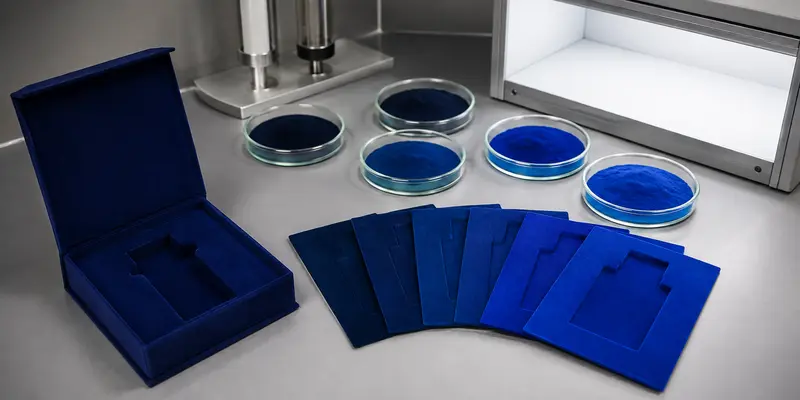
Color approval should be completed after flocking, not from a bag of loose fibers. Fiber orientation, pile density, substrate color, adhesive color and viewing angle can all change the perceived shade.
Viscose often creates a soft, matte color effect, while nylon may appear brighter or more direction-sensitive depending on the fiber finish. This matters when an insert must match a printed box, brand color or product surface. A black flocked insert, for example, may look neutral under one light source and slightly blue or warm under another.
When ordering colored flocking powder, provide a Pantone or RAL reference if available, but also state the substrate, adhesive color and intended display lighting. For higher-value packaging, approve the color inside the finished box with the actual product in position.
A custom dyed flock powder sample should be assessed for shade, luster, directional appearance and batch consistency. The Custom Color Flocking Powder Guide provides a more detailed color approval process.
Adhesive and Substrate Testing for Flock Powder for Packaging
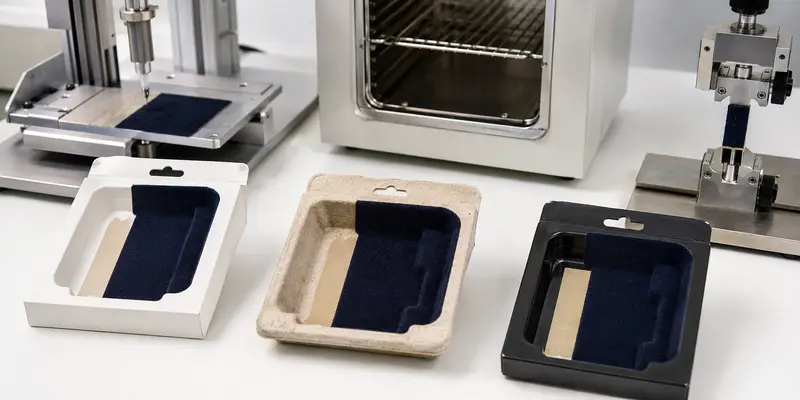
A suitable fiber cannot compensate for an unsuitable adhesive or poorly prepared substrate. Paperboard may absorb adhesive and create an uneven base. Plastic trays may contain release agents or have low surface energy. Molded pulp and foam can produce different coating thicknesses across peaks, recesses and cut edges.
The adhesive must bond to the substrate, hold the fibers securely and cure without creating a hard or visibly uneven surface. Its color should also support the flock shade. When the adhesive contrasts strongly with the fiber, small gaps in coverage become easier to see.
The test panel should reproduce the actual coating weight, curing conditions and application method. Electrostatic flocking can improve vertical orientation and density, but grounding, humidity, fiber conductivity and applicator distance must be controlled. Viscose may require more careful moisture management, while nylon still needs an appropriate electrostatic preparation to perform consistently.
If the packaging structure is already available, follow the preparation principles in How to Flock a Box with Flocking Powder.
Sample Testing Flock Powder for Packaging Before Bulk Orders
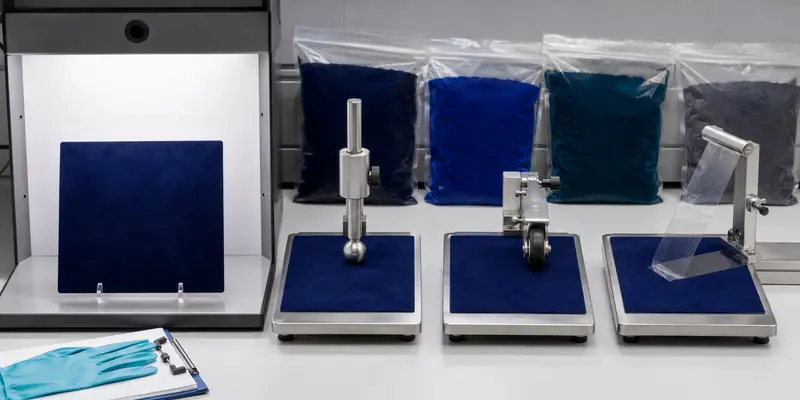
A sample should answer defined acceptance questions rather than simply "look good." Begin by comparing viscose and nylon in the same color, similar length and similar dtex wherever possible. If every variable changes at once, it becomes difficult to identify why one sample performs better.
Review appearance under the lighting used for retail display or product photography. Check color uniformity, exposed adhesive, pile direction and coverage around corners. Press the surface with the actual packaged product and inspect whether the fibers recover after removal.
Conduct a controlled dry-rub test on the areas customers are most likely to touch. Check for visible flattening, shedding and color transfer. If the packaging may encounter humid storage or shipping conditions, condition samples under an agreed environment and repeat the inspection.
The final test should use production-representative substrates and adhesives. Record material, fiber length, dtex, color reference, adhesive, curing time and flocking settings for the approved sample. This creates a usable standard for bulk production and makes later batch comparisons more reliable.
FAQ About Flock Powder for Packaging Inserts
Is viscose or nylon flock powder softer for packaging inserts?
Viscose usually creates a delicate, classic velvet-like surface, while nylon combines softness with better resilience. Actual softness depends on fiber length, dtex, density and adhesive penetration, so material name alone is not sufficient.
Which flock powder for packaging is better for jewelry boxes?
Viscose can work well for light-duty presentation boxes. Nylon is generally preferable for reusable jewelry boxes, ring slots and inserts exposed to repeated pressure or rubbing.
Does nylon flock powder prevent jewelry from scratching?
A nylon-flocked surface can provide a softer contact layer than bare plastic or board, but scratch protection depends on pile density, trapped particles, insert design and product movement. It should be verified with the actual jewelry item.
Is viscose flock powder suitable for humid storage?
Viscose absorbs more moisture than nylon and can be more sensitive during storage and processing. If humidity exposure is expected, sealed material storage and conditioned finished-package testing are recommended.
Can viscose and nylon use the same packaging adhesive?
They may sometimes use the same adhesive system, but compatibility should not be assumed. The adhesive must match the fiber preparation, substrate, coating method, open time and curing conditions.
What information should I send when requesting packaging flock samples?
Provide the insert substrate, product type, expected handling frequency, target color, preferred texture, insert dimensions, flocking method and any abrasion or humidity requirements. Sending a physical insert or drawing makes the recommendation more reliable.
Choosing the Right Flock Powder for Packaging Inserts
Choose viscose when the packaging is primarily decorative, lightly handled and intended to create a refined matte velvet effect at a practical cost. Choose nylon when the insert must recover after pressure, withstand repeated contact or maintain its surface in reusable premium packaging.
Neither decision should be made from material descriptions alone. Approve the fiber material together with length, dtex, color, finish, adhesive and production conditions. Testing the real insert with the packaged product is the most reliable way to balance appearance, durability and cost before a bulk order.