Last updated: 2026-10-10
The right flock printing material should preserve the design while delivering the required texture. A full, soft pile may suit a decorative surface, but the same specification can soften small lettering or hide narrow gaps. A compact finish may retain detail yet feel less plush than the buyer expects.
Selecting flock material for printing therefore requires more than choosing a fiber name or color. Material, length, fineness, conductive preparation, substrate and adhesive must work together.
This guide helps buyers compare those variables, understand the trade-offs and define a sample that answers a practical question: which material combination best matches the intended design and use?
1. Choose Flock Printing Material by the Required Design Effect
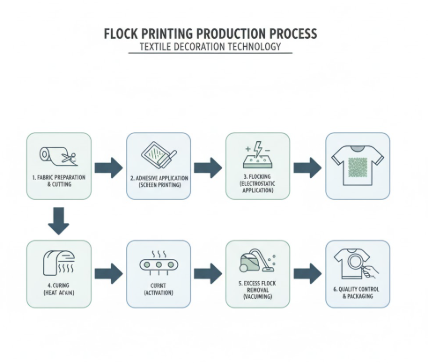
Start by ranking the finish requirements. If edge clarity is essential, it should not be sacrificed simply to make the surface feel fuller. If a visibly plush texture is central to the design, evaluate how much detail the increased pile can obscure.
Use the smallest lettering, narrowest gap or most difficult contour as part of the sample—not only a large, easy-to-cover area.
| Design requirement or sample issue | What to compare first | What else to check |
|---|---|---|
| Small lettering loses definition | Shorter lengths and suitable fineness combinations | Adhesive boundaries and clarity after loose-fiber removal |
| A fuller pile hides product contours | Lower-pile alternatives against the current specification | Whether the gain in fullness justifies the loss of detail |
| Light-colored flock reveals a dark substrate | Coverage and the complete fiber–adhesive–substrate combination | Background color and fiber orientation |
| The surface looks attractive but flattens after contact | Fiber material and recovery under comparable conditions | The handling conditions expected in use |
| Flat samples pass but recessed areas remain uneven | The current material on the actual product geometry | Adhesive access and application conditions |
Treat these comparisons as a way to narrow the options. A visible defect does not automatically identify a fiber problem, and changing material alone may not resolve it.
2. Compare Nylon, Rayon, Polyester and Cotton Flock
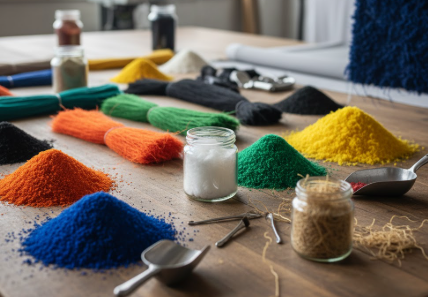
Fiber composition helps establish the initial shortlist. The final choice still depends on the complete specification and the finished-product test.
| Flocking material | Main selection consideration | What the sample should establish |
|---|---|---|
| Nylon flock powder | Commonly considered where resilience and resistance to repeated contact matter | Required hand feel, wear performance and recovery |
| Rayon flock powder | Viscose rayon is often considered for soft decorative surfaces; resistance to pile deformation differs from nylon | Appearance, touch and suitability for the expected handling |
| Polyester flock powder | Can offer better UV resistance than polyamide, although finished color and durability depend on the complete system | Relevant exposure performance, texture and recovery |
| Cotton flock powder | Absorbs moisture and has relatively low wear resistance | Moisture behavior and suitability for the intended contact conditions |
These are material-level tendencies, not guarantees for every flocked product. Length, fineness, treatment and adhesive can change the result within each fiber category.
For a deeper fiber comparison, see our nylon, rayon and polyester flocking powder guide.
3. Balance Fiber Length with Detail, Hand Feel and Coverage
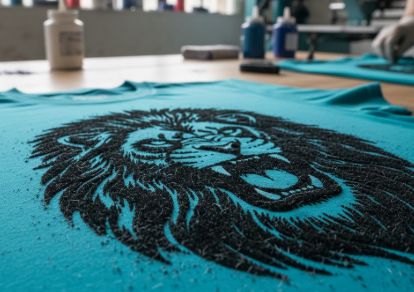
Fiber length influences the surface profile, while fineness and adhesive construction also affect appearance and touch. Selecting length alone cannot establish how soft or full the finished surface will feel.
For detailed prints, compare candidates around the smallest design features. Inspect letter openings, spacing between lines and the boundary between flocked and unflocked areas.
For fuller decorative finishes, check whether the pile preserves the intended shape. A surface can feel attractive while obscuring a small molded feature or reducing contrast between adjacent areas.
The pink designer-toy example specified as 5D × 2 mm illustrates a finish targeting soft touch, full pile coverage and uniform color. When adapting that effect to another design, check contour visibility as well as fullness. The specification does not identify the fiber composition, so the material must still be confirmed.
For individual length comparisons, use our flock fiber length guide.
4. Use Dtex and Denier to Compare Fineness and Coverage
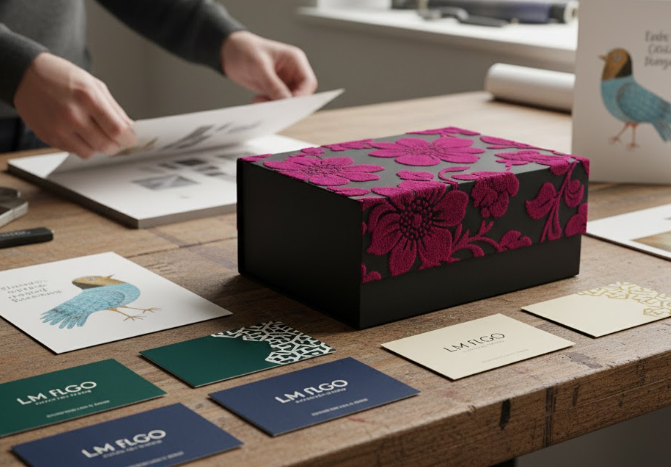
Dtex and denier measure fiber mass per unit length:
Dtex: grams per 10,000 meters.
Denier, or D: grams per 9,000 meters.
Dtex = Denier ÷ 0.9
Therefore, 5D is approximately 5.56 dtex, rather than 5 dtex. Quotations and purchase specifications should state the unit explicitly.
For comparable fibers of the same material and cross-section, a lower dtex generally indicates a finer fiber. However, finer flock does not automatically produce better hiding, sharper edges or a softer finished surface.
Compare fineness together with length. Where detail and fullness compete, keep the material and color constant and compare alternative length–fineness combinations. Judge the finished print rather than the appearance of loose fibers.
Our flocking powder specification guide explains how to read and record the complete specification.
5. Confirm Conductivity, Moisture and Electrostatic Stability
For electrostatic application, conductive preparation is part of the flocking material specification. Fiber composition alone does not establish how effectively the flock will charge, separate and orient.
Moisture conditions also affect application behavior. Excessively dry conditions can reduce conductivity, while excessive moisture can encourage clumping. Fiber moisture content and ambient relative humidity are different measurements and should not be treated as interchangeable.
Before sampling, ask the supplier to confirm the intended application grade, storage guidance, conditioning recommendations and the conditions used to assess electrostatic behavior.
At Zhangs, flock preparation includes cutting, dyeing with conductivity and electrostatic treatment, drying with moisture control, and sieving. These stages address different aspects of consistency, from cut length to material condition and separation of unsuitable lengths.
When comparing samples, record material conditioning and application conditions. This helps distinguish a specification difference from a change in the environment or production setup.
6. Match Flock Printing Material with the Substrate and Adhesive
Select the flock with the actual surface in mind. A material approved on a flat paperboard panel should not be assumed to perform identically on stretch fabric or a coated plastic part.
Confirm the substrate precisely, including any coating, surface treatment or finish. For textiles, include flexibility and care requirements. For rigid parts, include geometry and the conditions the surface will encounter.
The adhesive must suit the substrate and the intended finish. Follow the adhesive supplier’s technical guidance for compatibility, open time and curing. If the adhesive forms a surface skin before flock application, proper fiber embedding can be impaired.
Keep two questions separate during evaluation:
Does the material combination create the required appearance and hand feel?
Does the completed construction meet the required bonding and use conditions?
Both should be answered before bulk approval. Explore our flocking adhesive options when reviewing a new substrate.
7. Material Selection Priorities for Fabrics, Packaging, Plastics and Automotive Parts
Products within the same industry can require different specifications. Use the table below to identify what should drive the comparison, rather than assigning one fiber to every application.
| Application | Design priority | Material variables to compare | Main limitation | Sample check |
|---|---|---|---|---|
| Fabrics and printed garments | Clear graphics with the required touch | Fiber type, length, fineness and adhesive compatibility | A visually suitable finish may not tolerate fabric movement or care conditions | Smallest printed detail, flexibility and specified care performance |
| Packaging and display inserts | Uniform color, controlled edges and tactile presentation | Fiber type, pile profile, color and coverage | Loose-fiber color may not represent the finished surface | Appearance, shedding and contact with the packaged product |
| Plastic products and designer toys | Full coverage without losing shape | Length–fineness combination, material and adhesive fit | Flat samples may not represent recesses and contours | Actual geometry, detail visibility and handling performance |
| Automotive components | Required surface behavior within component constraints | Material, pile profile and the complete bonded system | Decorative appearance alone cannot establish functional suitability | Customer-defined wear, exposure and functional tests |
For a packaging-specific comparison, see viscose vs nylon flock for packaging inserts.
8. Material Specifications and Tests to Define Before Sampling
Agree on the comparison before producing samples. Define which requirements are essential, which variables will change and how the results will be evaluated.
| Evaluation area | Define before sampling | Verify on the material or finished sample |
|---|---|---|
| Fiber identity and specification | Composition, nominal length, fineness, units and agreed variation | Whether the supplied material matches the trial specification |
| Color and hiding | Reference sample, actual substrate and viewing conditions | Finished color, visible background and uniformity |
| Detail and pile effect | Smallest feature, required fullness and tactile reference | Edge clarity, gap visibility, contours and hand feel |
| Application behavior | Material conditioning and recorded production conditions | Separation, orientation and repeatability |
| Bonding and handling | Relevant evaluation method and acceptance criteria | Adhesion, shedding and recovery under agreed conditions |
| End-use performance | Applicable care, wear or environmental requirements | Results on the completed fiber–adhesive–substrate construction |
A useful trial answers one question at a time. For example, compare a shorter and longer candidate while keeping material, color and fineness constant where suitable grades are available. Evaluate the same lettering or contour under comparable conditions.
If the fuller candidate reduces detail too much, compare another fineness combination in a separate trial. Changing color, material, adhesive and length together makes the cause of an improvement or failure harder to identify.
Keep the approved finished sample and its complete specification as the reference for procurement. For artwork files and broader project preparation, use our custom flock printing project checklist.
9. FAQs About Buying Flock Printing Material
Why can flock with the same fiber length produce different printed edges?
Length is only one variable. Fineness, material, orientation, adhesive boundaries and loose-fiber removal also influence the visible edge. Compare complete specifications on the same design before attributing the difference to length.
Is 5D × 2 mm a complete flock printing material specification?
No. It identifies fineness in denier and nominal cut length. It does not identify fiber composition, color reference, treatment or agreed variation. Add those details and the intended substrate before requesting a matching material.
What should I specify when applying light-colored flock to a dark substrate?
Provide the actual substrate and define the required hiding effect. Confirm the adhesive combination and approve color on the finished surface. Do not assume that matching the loose-fiber shade will also produce sufficient coverage.
How should I compare edge clarity and pile fullness before a bulk order?
Include the smallest design feature and a larger flocked area in each sample. Compare both under consistent viewing and handling conditions. Rank the requirements beforehand so the preferred sample reflects the design priorities.
Which material parameters should remain fixed during a sample comparison?
Keep all parameters outside the comparison question unchanged where practical. For a length comparison, retain material, color and fineness, along with comparable application conditions. Record any unavoidable differences so the results remain interpretable.
When should an approved flock printing material be sampled again?
Review the combination when the fiber specification, treatment, substrate, adhesive or product geometry changes. Changes in production conditions may also require another trial. Approval should apply to the documented combination rather than the fiber name alone.
Zhangs supplies polyamide, rayon, polyester and cotton flocking fibers, with colors and specifications developed around project requirements. Share your target finish, actual substrate and the design features that must remain visible. Explore our flocking powder options to discuss suitable material candidates for sampling.