Moisture-prone applications are not all the same. A display insert stored in a humid warehouse, an automotive component exposed to condensation, and a technical surface that receives repeated splash or cleaning place very different demands on a flocked finish. Polyester flock is often considered for these projects because PET fibers absorb relatively little moisture and retain a stable appearance. That advantage is useful, but it does not make the finished surface waterproof.
The flock is only one part of the system. Adhesive chemistry, substrate preparation, curing, edge design, fiber specification and production conditions determine whether the surface remains bonded and visually consistent after moisture exposure. This guide explains how to translate the application environment into a practical polyester flock powder specification and a test plan before bulk production.
Why Polyester Flock Works in Moisture-Prone Applications
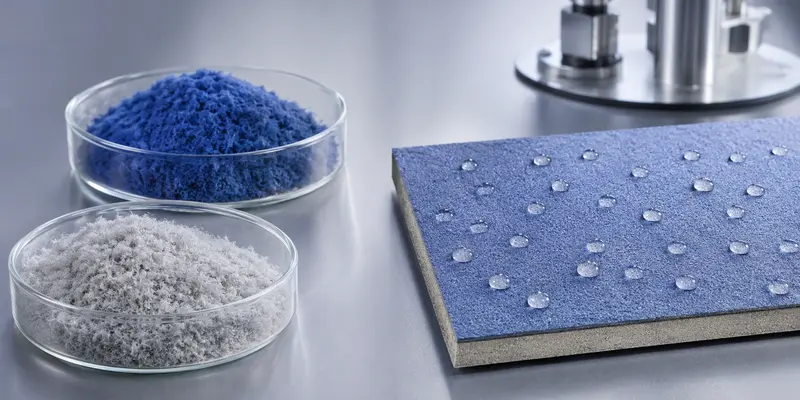
Polyester flock is made from short-cut PET fibers. Compared with more moisture-sensitive cellulosic flocking material, PET has low moisture regain, so the fiber itself is less likely to swell or change dimension as ambient humidity rises. Industry fiber references commonly place polyester moisture regain below one percent under standard conditions, while nylon and rayon absorb more. This helps polyester flock fibers maintain more stable handling, pile shape and color appearance during storage and service, provided the product is correctly processed.
Low absorption should be interpreted carefully. Water can still remain between fibers, reach the adhesive layer, enter a porous substrate or collect at unsealed edges. A polyester pile can look dry while the bond line beneath it is being weakened. The appropriate claim is therefore low moisture absorption and good dimensional stability—not inherent waterproofing. For projects that require water exclusion, the design must rely on a tested adhesive, sealed construction or another engineered barrier rather than the flock fiber alone.
Polyester Flock vs Nylon and Viscose Flocking Material
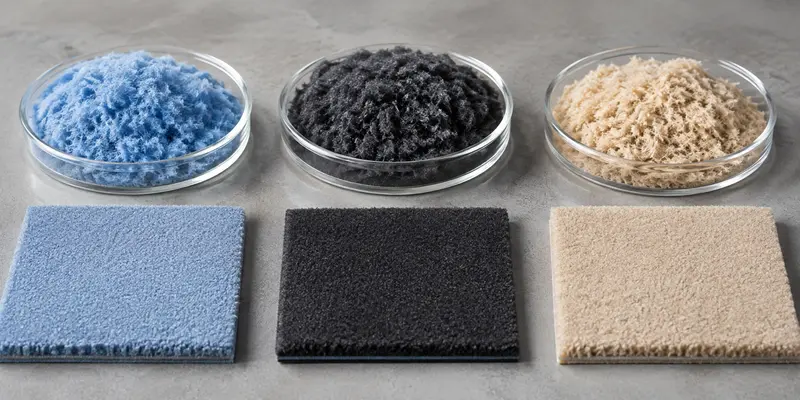
Material selection should start with the dominant failure risk. Polyester flock is a strong candidate when low moisture uptake, color consistency and surface stability matter. Nylon flock normally offers better resilience and recovery where the pile is repeatedly compressed or rubbed, but nylon absorbs more atmospheric moisture than polyester. Viscose flock powder creates a soft, rich decorative surface, yet its cellulosic structure is more sensitive to humidity and wetting. It is often a better aesthetic choice for dry, appearance-led packaging than for repeated damp exposure.
This is not a universal ranking. A high-touch component may still need nylon because abrasion and pile recovery outweigh moisture uptake. A short-life decorative insert kept indoors may justify viscose because softness matters more than wet stability. Polyester becomes the logical starting point when the product must balance a clean synthetic texture, repeatable color and moderate environmental exposure. For the broader material decision, review Zhangs’ guide to choosing flocking powder by material.
Match Polyester Flock Powder to the Actual Moisture Exposure
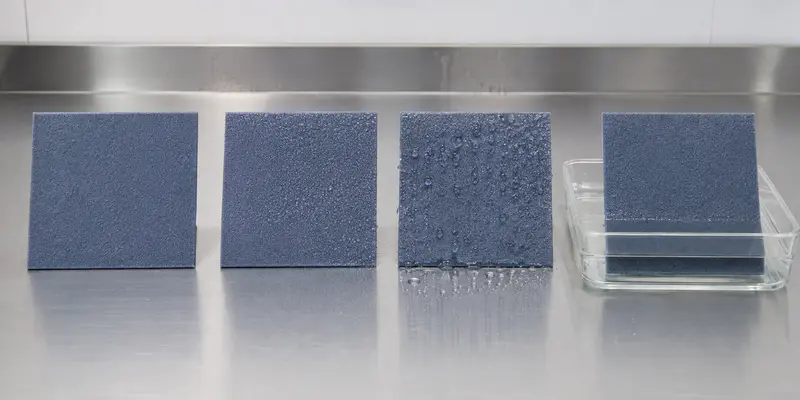
A useful specification begins with an exposure profile, not the word “humid.” Separate the project into four practical levels. High ambient humidity without direct wetting mainly challenges storage stability and electrostatic processing. Intermittent condensation adds water at the surface and can expose cold parts or edges. Splash and wipe-clean use repeatedly challenge the pile, adhesive and substrate. Continuous immersion, hydrostatic pressure or aggressive washdown is a much more severe condition and should never be approved from fiber properties alone.
| Exposure | Primary risk | Minimum validation |
|---|---|---|
| High-humidity storage | Flow, clumping, color or process variation | Condition loose flock and finished panels; inspect flow, density and appearance. |
| Condensation cycles | Water reaching bond line; edge lifting | Wet/dry or temperature/humidity cycling followed by adhesion and visual checks. |
| Splash / wipe-clean | Repeated wetting plus abrasion | Defined liquid exposure, drying, rub test and bond inspection. |
| Immersion / washdown | Adhesive failure, substrate swelling, trapped water | Application-specific system test; redesign or barrier may be required. |
Also define the liquid. Clean water, detergent solution, salt-containing moisture, oil-water mixtures and acidic or alkaline cleaners do not create the same risk. Record temperature, contact time, number of cycles and drying conditions. Without these details, “moisture resistant” is too vague for a supplier to recommend a dependable flock powder for industrial applications.
Choose Polyester Flock Fiber Length and Dtex for Surface Performance
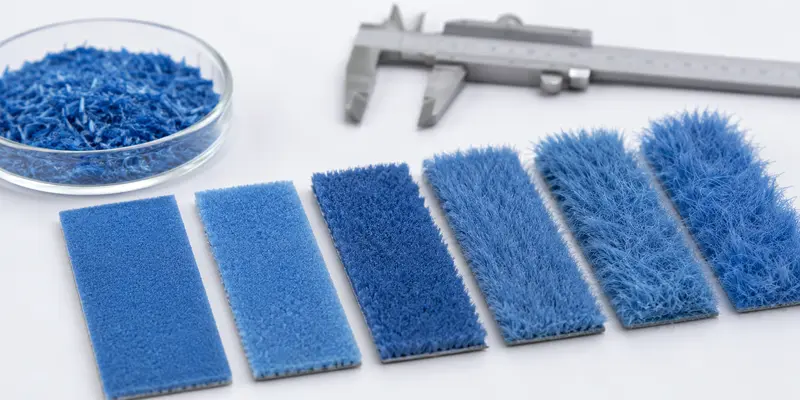
Fiber length controls pile height and visual texture; dtex describes fiber fineness. Shorter and finer polyester flock fibers generally create a smoother, denser-looking surface with less leverage on the adhesive bond. Longer or coarser fibers create a stronger tactile profile, but they need adequate adhesive depth and more careful control of fiber standing. In a moisture-prone application, an unnecessarily tall pile can retain more surface water and increase mechanical stress during wiping, even though the PET fiber itself absorbs little moisture.
Do not choose length or dtex from a generic chart alone. Curved components, narrow channels, molded details and porous substrates may produce different density from a flat sample. Approve the combination on the actual substrate, with the production adhesive and intended electrostatic equipment. Zhangs’ flocking powder specifications guide explains the measurement terms in greater depth, while the current article focuses on how those choices interact with moisture exposure.
Specify Precision Cut Polyester Flock Fibers and Surface Treatment
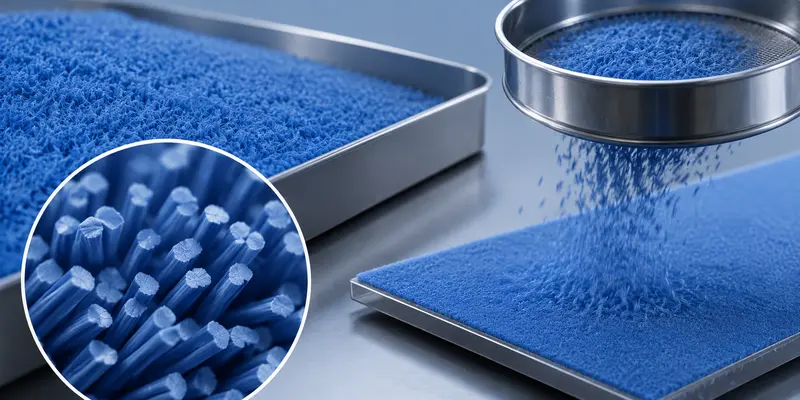
Cut quality matters because irregular fiber length creates an uneven pile, inconsistent coverage and variable adhesive penetration. Precision cut flock fibers give a more controlled surface and make it easier to compare samples across batches. Ask the supplier for the nominal length, accepted tolerance, dtex, material grade, luster and color reference. For branded surfaces, custom dyed flock powder should be approved on a finished flocked panel rather than as loose fiber, because density, adhesive color, substrate color and viewing angle change the apparent shade.
Electrostatic polyester flock normally requires a suitable conductive and flowability treatment. PET is naturally insulating, so the surface finish helps the fibers charge, separate and stand in the electric field. The treatment must match the equipment and production environment; a finish that processes well under one humidity range may behave differently in another. For this reason, “100% polyester” is not a complete flock specification. The surface treatment and verified process window belong in the approval record.
Match Polyester Flock with Adhesive, Substrate and Curing Conditions
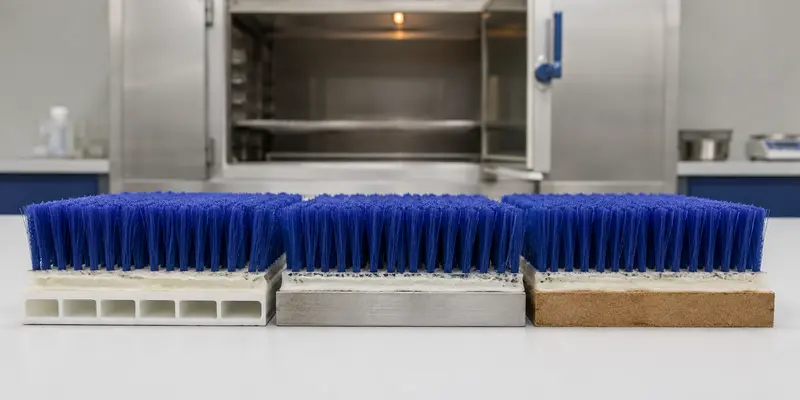
The adhesive is usually the decisive component in wet performance. It must wet the substrate, remain open long enough for fiber penetration, cure fully and retain bond strength after the specified moisture cycle. Paperboard can swell, some plastics have low surface energy, coated metal may carry oils, and flexible textiles move during use. Each substrate can fail even when the same polyester flock powder performs well elsewhere.
Run adhesion tests on production-cleaned parts, not ideal laboratory coupons. Confirm pretreatment, adhesive coat weight, open time, fiber penetration, cure temperature and cure duration. If heat is used, verify that the substrate tolerates the cure without distortion. If an air-dry adhesive is used, confirm that the center of the bond line reaches full cure before wet testing. A dark or color-matched adhesive can also reduce visible gaps when pile density changes. For substrate-specific selection principles, see Zhangs’ guide to the best glue for flocking powder.
Control Humidity When Processing Polyester Flock Powder
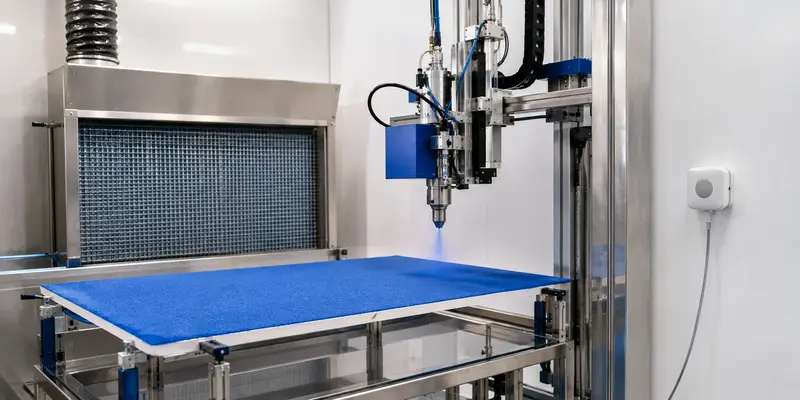
Low fiber moisture absorption does not remove the need for humidity control during electrostatic flocking. Electrostatic transfer depends on fiber conductivity, grounding, voltage, adhesive open time and environmental conditions. Industry process guidance commonly places the flocking area near 60% relative humidity at about 20°C as a useful reference, while warning that very dry air can prevent adequate charging and excessive humidity can cause clumping and poor flow. The correct window must be validated for the actual fiber treatment and line.
Condition the flock in the production room, keep bags sealed until needed, record temperature and relative humidity, and avoid mixing material that has been stored under sharply different conditions. If density changes, do not immediately blame the polyester flock fibers. Check grounding, high-voltage stability, feed rate, adhesive tack, screen condition and the time between coating and flocking. Zhangs’ electrostatic flocking overview provides a broader explanation of the process.
Test Polyester Flock Powder Before Bulk Production
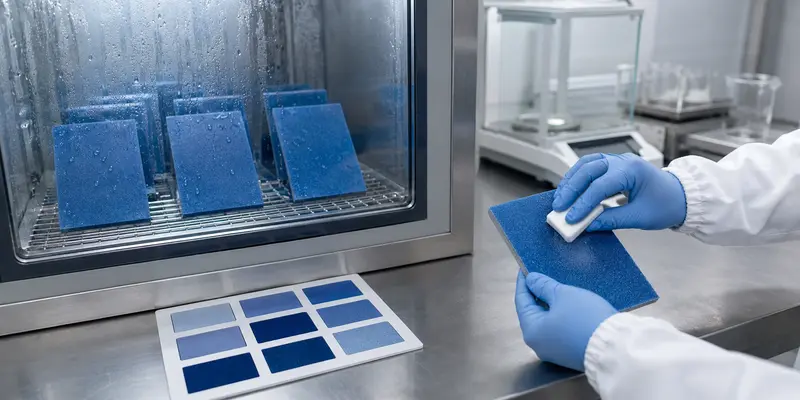
A useful sample program compares an approved dry control with conditioned and moisture-exposed panels. Begin by checking initial color, density, pile direction, hand feel and adhesion. Expose panels to the defined humidity, condensation, splash or cleaning cycle. Allow the specified recovery or drying time, then repeat visual inspection, adhesion, rubbing or abrasion and compression recovery checks. Photograph the same area under consistent lighting so small color or density changes can be compared.
Acceptance criteria must be written before testing. Examples include no edge lifting, no visible blistering, no substrate warping, no unacceptable color change and no flock loss beyond an agreed limit after rubbing. If the application includes repeated handling, combine moisture conditioning with mechanical wear rather than testing them separately. A sample that survives humidity while untouched may still fail when wiped or compressed. For critical products, ask a qualified laboratory to select recognized methods that match the material and end use instead of inventing a pass/fail test after production.
What to Send a Polyester Flock Supplier Before Ordering?
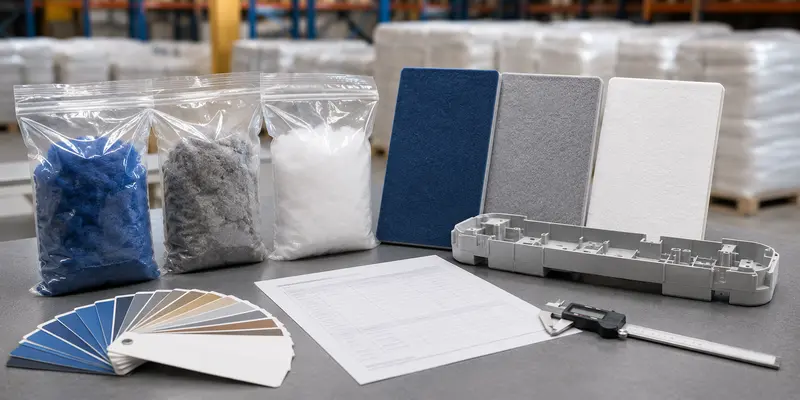
A supplier can recommend custom cut length flock powder only when the application is defined. Send the substrate material and surface treatment, part geometry, adhesive system, flocking method, target color and luster, preferred length and dtex if known, and the finished surface requirement. Add the moisture exposure profile: relative humidity range, temperature, condensation risk, liquid type, contact time, cleaning method and expected cycles. State any abrasion, lightfastness, chemical or regulatory requirement that applies to the finished product.
For bulk orders, approve a flocked sample and retain it as the visual and tactile standard. Confirm the specification code, batch color tolerance, packaging, storage conditions, shelf-life guidance for treated flock, certificate or test-document needs and the change-control process. View Zhangs’ polyester flocking fiber options or browse the full flocking powder range before requesting a sample or quotation.
FAQ About Polyester Flock for Moisture-Prone Applications
Is Polyester Flock Waterproof?
No. Polyester flock absorbs little moisture, but water can pass through the pile and reach the adhesive or substrate. Waterproof performance requires a tested system or barrier, not a fiber-only claim.
Is Polyester Flock Better Than Nylon in Humidity?
Polyester normally absorbs less atmospheric moisture than nylon, which can improve dimensional and handling stability. Nylon may still be better when pile resilience and abrasion recovery are the main requirements. Select by the complete performance profile.
Can Polyester Flock Powder Be Used Where Condensation Occurs?
It can be considered, but the finished construction must be tested through relevant condensation or wet/dry cycles. Pay particular attention to adhesive retention, edges, cold surfaces and porous substrates.
Which Polyester Flock Fiber Length Is Best for Damp Areas?
There is no universal length. A short, fine pile is often easier to keep uniform and may retain less surface water, but texture, coverage, geometry and adhesive depth must also be considered. Test the proposed length and dtex on the actual part.
Does Electrostatic Polyester Flock Need Humidity Control?
Yes. PET’s low moisture uptake does not guarantee correct electrical behavior. Stable relative humidity, grounding, voltage, fiber conditioning and adhesive open time are all necessary for repeatable density and fiber standing.
How Should Custom Dyed Polyester Flock Be Approved?
Approve color on a finished flocked sample made with the production substrate, adhesive, density and cure. Loose fiber alone does not show the final shade, depth or luster accurately.
Conclusion: Choosing Polyester Flock for Moisture-Prone Applications
Polyester flock is a practical choice when low moisture absorption, stable color and controlled surface appearance are important, but fiber selection is only the beginning. Define the real exposure, choose an appropriate length and dtex, specify precision cutting and surface treatment, then validate the adhesive, substrate and cure as one system. Control humidity during electrostatic processing and approve bulk production against a documented, moisture-conditioned sample. This approach prevents a useful material property from becoming an unsupported waterproof claim—and gives buyers a specification that can be manufactured and tested repeatedly.