A color reference alone does not define how a flocked surface will look. The same blue, black or red can appear calm and velvety in a dull grade, softly luminous in a semi-dull grade, or visibly reflective in a bright grade. Under retail spotlights, daylight or camera flash, those differences can change the perceived color depth and even the apparent quality of the product.
For buyers, the practical question is not which finish is best. It is which level of luster supports the product, substrate and viewing environment without creating glare, flattening the color or revealing surface variation. This guide explains how to select colored flocking powder in dull, semi-dull or bright form, and how to approve the final effect before bulk production.
What Dull, Semi-Dull and Bright Mean for Colored Flocking Powder
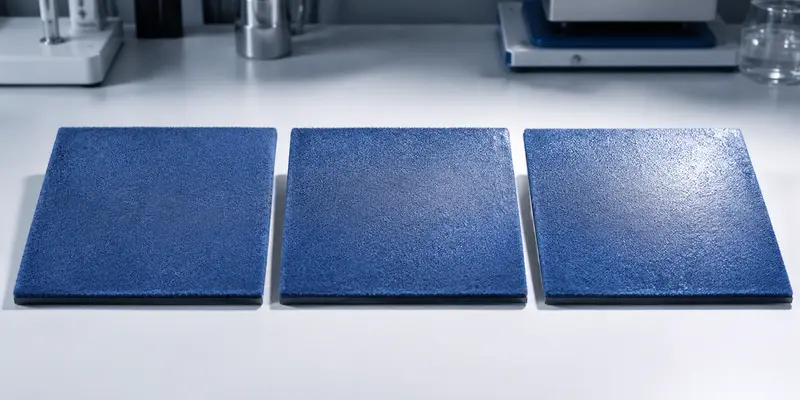
Dull, semi-dull and bright describe how strongly the flock fibers reflect and scatter light. In synthetic fibers such as nylon and polyester, manufacturers commonly control luster with a delustrant such as titanium dioxide. More light scattering creates a flatter, more opaque appearance; less delustrant allows a clearer, more reflective surface. The exact formulation and naming boundary can vary by polymer, fiber producer and supplier, so a label is not a substitute for a physical sample.
Dull flock produces the lowest-glare effect and usually makes the finished pile look matte, calm and dense. Semi-dull retains a restrained sheen that changes gently with viewing angle. Bright flock reflects more direct light and can make color appear livelier or more decorative. These are optical categories, not quality grades. A bright flock is not automatically stronger, and a dull flock is not automatically more durable or expensive. Material, cut quality, color fastness, surface treatment and the adhesive system remain separate specifications.
How Colored Flocking Powder Finish Changes the Final Surface
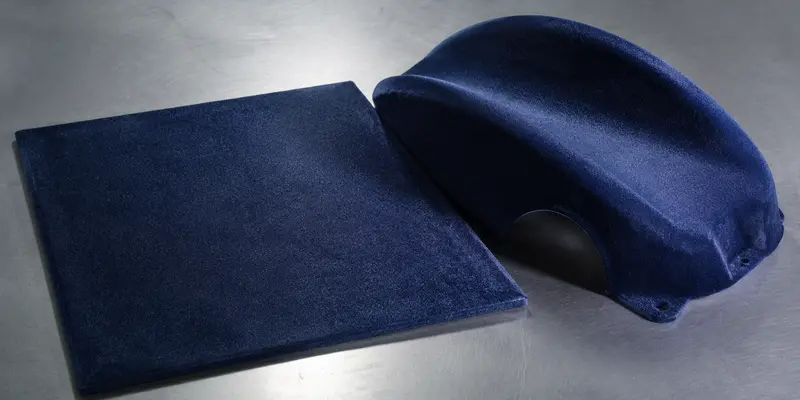
Loose fibers in a sample bag do not show the final appearance reliably. After flocking, fiber orientation, pile density and adhesive penetration change the way light reaches the surface. Upright, evenly packed fibers often create a more uniform visual field, while low density exposes the substrate and creates mixed reflection. A dark adhesive beneath dark custom dyed flock powder can make the surface look deeper; a contrasting adhesive may make small gaps more visible.
The viewing angle also matters. Bright fibers may show directional highlights when the pile leans or the part curves. Dull fibers can suppress those highlights, but they may also make a dark shade appear flatter in low light. Semi-dull is often easier to control because it preserves some depth without producing a strong glare line. Color approval should therefore use a finished panel viewed from several angles—not a loose-fiber photograph or a single Pantone reference.
Choose Dull Colored Flocking Powder for Low-Glare Products
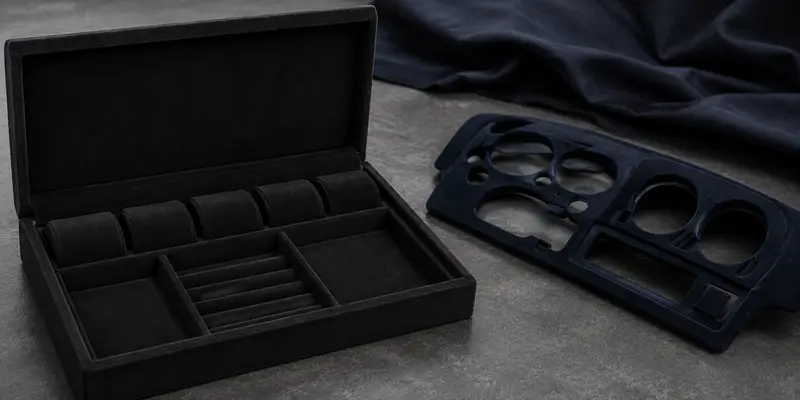
Dull colored flocking powder fits products that need a quiet, non-reflective or soft-touch appearance. Premium packaging inserts, jewelry boxes, instrument surfaces, automotive compartments and technical parts often benefit from reduced glare because the flock should support the product rather than compete with it. Matte pile can also help hide minor variation in a broad area when lighting is strong and directional.
Dull does not mean colorless. A well-developed dull black can look deep and controlled, while a dull brand color can communicate restraint and consistency. The risk is that an overly flat finish may reduce visual energy in promotional displays, toys or decorative graphics. On products photographed for ecommerce, test whether the matte surface keeps enough tonal separation to show texture. For packaging-focused selection, compare the result with Zhangs' packaging flocking powder options.
Choose Semi-Dull Colored Flocking Powder for Balanced Luster
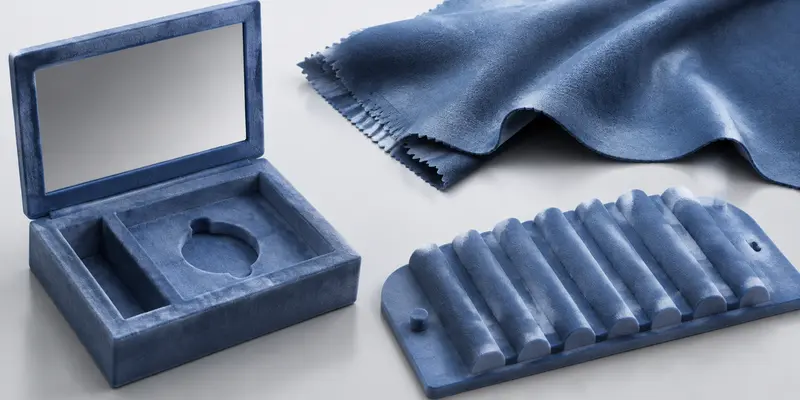
Semi-dull colored flocking powder is the practical middle option when a product needs a refined surface without appearing completely flat. It retains a soft change in tone as the viewer moves, which can give packaging, textile graphics, displays and molded parts more depth than a full matte surface. At the same time, it is less likely than a bright grade to create harsh highlights or expose pile-direction differences.
Semi-dull is a sensible starting sample when the brand brief uses words such as soft, clean, modern or premium but does not specify a measurable gloss target. It should not be treated as a universal default, however. A semi-dull nylon grade and a semi-dull polyester grade may not look identical because polymer, dye, cross-section, dtex and surface treatment also affect reflection. Approve the specific material and color combination rather than approving “semi-dull” as a standalone description.
Choose Bright Colored Flocking Powder for Decorative Impact
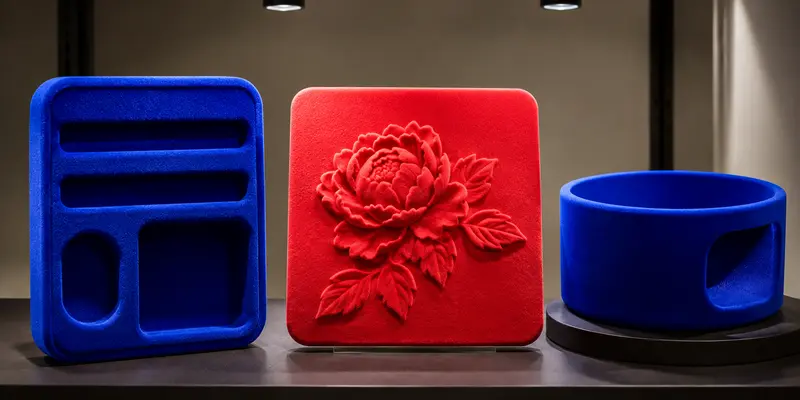
Bright colored flocking powder is suited to surfaces that are intended to catch light. Decorative displays, toys, fashion graphics, promotional packaging and selected textile details can use the stronger reflection to make saturated colors feel more vivid. Bright flock may also work where contrast between a flocked logo and a matte background is part of the design.
The same reflectivity that creates impact can reveal uneven density, fiber lean, curved-part highlights or small adhesive gaps. Bright grades therefore need disciplined sample preparation and stable production settings. Evaluate them under the actual retail or exhibition lighting, not only under diffuse factory lights. When the product will be photographed, test flash and directional light because a highlight can shift the apparent shade. For a color-led product example, review Zhangs' blue flocking powder customization.
Match Flocking Material and Finish to the Product Requirement
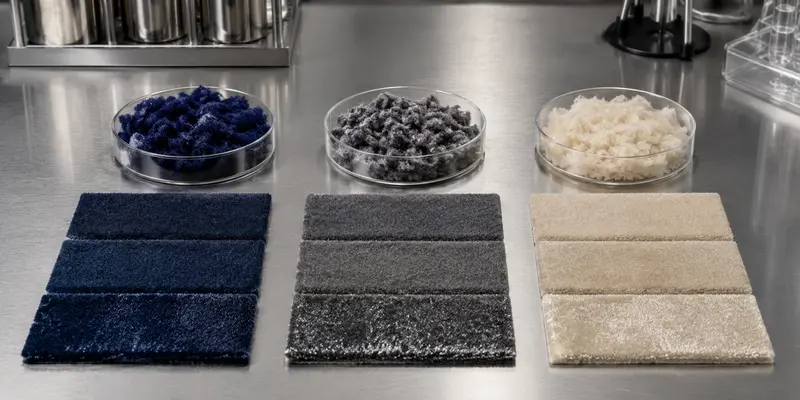
Luster should be selected after the base flocking material is chosen. Nylon flocking powder is commonly used when resilience, abrasion resistance and recovery are important, and Zhangs lists dull, semi-dull and bright surface-finish options for selected nylon specifications. Polyester flock is useful when dimensional stability, color consistency and low moisture absorption matter; its product specification also includes bright, semi-dull and dull luster choices. Viscose flock powder is generally selected for soft decorative surfaces and naturally suits matte or restrained visual effects, although available options must be confirmed by grade.
Do not change material only to obtain a finish. If a component needs nylon performance, replacing it with a softer decorative fiber may solve the visual brief but create a wear problem. First set the mechanical and environmental requirements, then choose the available luster within that material family. Zhangs' flocking powder material selection guide provides the broader material comparison.
How Precision Cut Flock Fibers, Length and Dtex Affect Finish
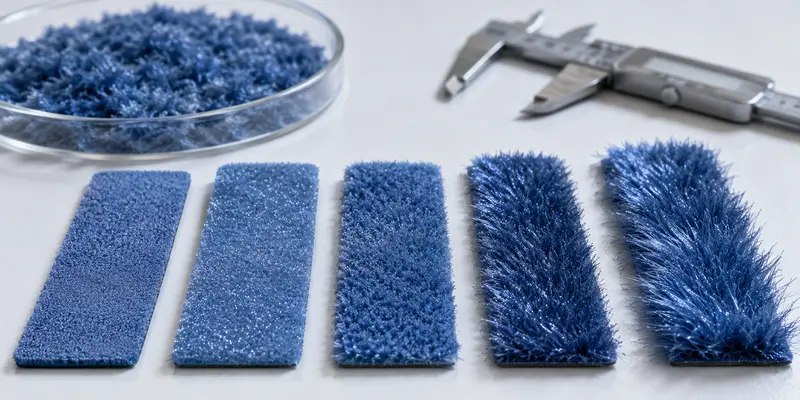
Luster cannot be evaluated separately from fiber geometry. Shorter, finer precision cut flock fibers normally create a smooth and dense-looking field with many small reflection points. Longer or coarser fibers produce a more visible pile and stronger directional texture. On a bright grade, that directional texture may create pronounced highlights; on a dull grade, it may read more as softness or depth.
Cross-section can also affect light behavior. A trilobal or otherwise shaped fiber may reflect differently from a round fiber even when both are described as bright. Density, electrostatic standing and cut consistency determine whether that effect looks intentional or patchy. A complete specification should therefore state material, color, luster, length, dtex, cross-section if relevant, and surface treatment. For measurement details, use Zhangs' flocking powder specifications guide.
Approve Custom Dyed Flock Powder Under Real Lighting
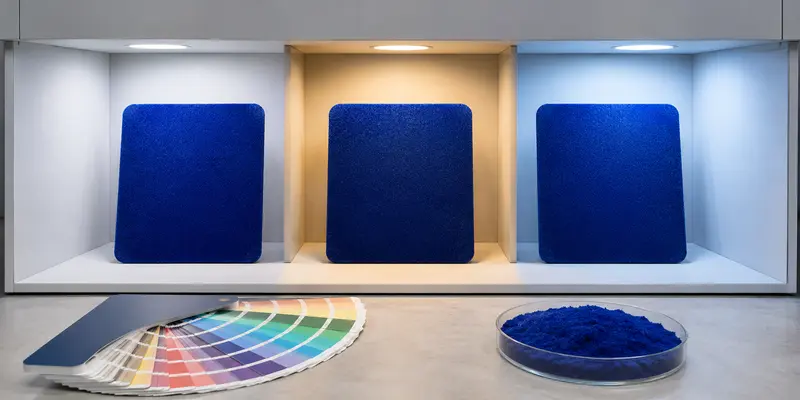
Custom dyed flock powder should be approved as a system. Supply the target color, but also define whether the appearance should be matte, softly luminous or reflective. Prepare samples on the production substrate with the intended adhesive color, coating thickness, pile density and cure. A color that matches under daylight can shift under warm retail LEDs, cool office lighting or camera flash because luster changes the distribution of reflected light.
Use at least two relevant light environments and view the panel face-on and at oblique angles. Compare a master standard and the trial sample side by side. Record the material, luster term, color code, length and dtex on the approval sheet. If visual tolerance is critical, agree on the lighting booth condition and an instrument method with the supplier, while recognizing that ordinary gloss meters may not fully describe a soft, directional flocked pile. Human visual approval remains important for the finished texture.
Test Colored Flocking Powder Before Bulk Production
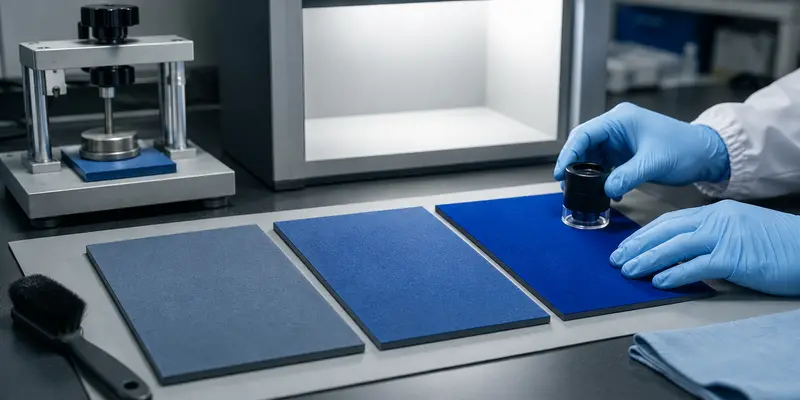
The sample plan should isolate finish from other variables. Flock dull, semi-dull and bright candidates on identical substrates using the same adhesive coat, equipment settings, density target and cure. Inspect color, glare, uniformity, pile direction and substrate show-through. Then test the performance requirements that actually matter—adhesion, rub or abrasion, compression recovery, moisture or cleaning exposure and light stability—because the preferred optical finish still needs to survive the end use.
For curved or molded parts, include a production-shaped sample. Flat cards can hide directional highlights that appear around corners and recesses. For large panels, evaluate more than one area because a small card does not show density bands. Retain the approved panel as the bulk reference and require change control if the fiber source, polymer grade, dye formula, luster grade or surface treatment changes. The full range of available flocking powder specifications and finishes can be used as the pillar-page reference.
What to Send a Colored Flocking Powder Supplier
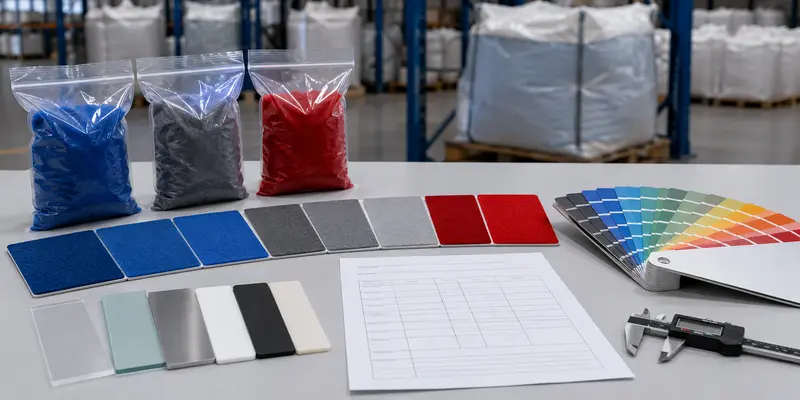
A useful inquiry starts with the product and viewing environment. State whether the surface is packaging, textile, automotive trim, plastic, rubber, display material or an industrial component. Send the substrate, adhesive or process information, target color, material preference, desired luster, length, dtex and expected pile density. Add photographs of the product under realistic lighting and identify whether glare reduction, decorative sparkle, color depth or defect hiding is the priority.
If the exact specification is unknown, send a physical flocked reference rather than describing the target as “not too shiny.” Ask the supplier to prepare controlled dull, semi-dull and bright alternatives on the actual substrate. For repeat orders, confirm the approved sample number, color tolerance, luster designation, batch documentation, packing and storage requirements. This turns a subjective finish request into a specification that can be repeated.
FAQ About Colored Flocking Powder Finish
Is Dull Flock Better Than Bright Flock?
No. Dull and bright describe visual reflection, not overall quality. Dull is better for low-glare or restrained surfaces, while bright is better when visible sheen supports the design. Performance must be assessed separately.
What Is the Difference Between Dull and Semi-Dull Flock?
Dull flock scatters more light and produces a flatter matte appearance. Semi-dull retains a softer, moderate sheen. Because supplier terminology can vary, compare finished samples under the intended lighting.
Does Bright Colored Flocking Powder Change the Color?
The dye color may be the same target, but stronger reflection can make the surface appear lighter, livelier or different at an angle. Approve color and luster together on the final substrate.
Can Nylon and Polyester Flock Use the Same Finish Terms?
Yes, both may be offered as bright, semi-dull or dull, but the finished appearance is not automatically identical. Polymer, fiber shape, dtex, color, density and treatment also influence reflection.
Should Custom Color Flock Powder Be Approved as Loose Fiber?
Loose fiber is useful for preliminary screening, but final approval should use a flocked sample made with the production substrate, adhesive, density and cure. This shows the real color depth and luster.
Which Flock Finish Hides Surface Variation Best?
A dull or restrained finish often reduces strong highlights and can make minor visual variation less obvious. However, poor density, adhesive coverage or fiber standing should be corrected rather than hidden by finish selection.
Conclusion: Choosing the Right Colored Flocking Powder Finish
Dull, semi-dull and bright flock serve different visual goals. Dull supports quiet, low-glare and premium matte surfaces; semi-dull provides controlled depth for versatile commercial products; bright creates decorative impact where reflection is intentional. The correct decision depends on material, color, fiber length, dtex, density, substrate and lighting—not on the luster name alone. Approve the finish on a production-representative flocked sample, document the full specification and keep that sample as the standard for bulk orders.