

NEWS CENTER


ZhangsFlock Your Trusted Flock Powder Manufacturer
Introduction In the world of product customization, flock printing stands out as a unique and valuable technique. Whether you’re looking to add a luxurious feel to apparel, enhance automotive interiors, or create a premium unboxing experience, flock printing offers a soft, velvety texture that can elevate the aesthetic appeal of any product. But where can you find the best flocking supplies and reliable flock powder manufacturing? Enter ZhangsFlock—a leading flock factory committed to providing high-quality flocking solutions tailored to meet the needs of industries worldwide. In this blog, we’ll explore the process behind flock powder manufacturing, the essential supplies needed for flock printing, and why ZhangsFlock should be your go-to partner. What is Flock Printing? Flock printing is the process of applying fine, short fibers (flock) to a surface using an adhesive. These fibers are charged electrostatically and applied to materials like fabric, paper, plastics, and more. The result is a plush, soft texture that provides both visual and tactile appeal. At ZhangsFlock, we specialize in offering flocking supplies that deliver superior results, ensuring your products stand out with luxurious textures that improve both their functionality and aesthetics. Our Flock Powder Manufacturing Process At ZhangsFlock, we take pride in the meticulous process of flock powder manufacturing. Here’s a brief look at how we create the premium flock powders that are used for flock printing: Cutting:We use specialized cutting machines to precisely cut fibers to the desired length for the flock printing process. Dyeing Color:Our dyeing process ensures the flock powder matches the exact color requirements of your project. In this step, we also treat the fibers to enhance their conductivity and electrostatic properties, which are vital for successful flocking. Drying:After dyeing, the flock fibers are carefully dried to ensure optimal moisture content, preserving the fibers’ lightweight nature and preventing clumping or uneven flocking. Sieving:Once dried, the fibers are sieved to separate the standard-size flock from longer fibers. This guarantees a uniform distribution of flock fibers, ensuring the highest quality results. Through this precise flock powder manufacturing process, ZhangsFlock guarantees consistency and quality in every batch, making us your trusted partner for all flocking needs. Why Choose ZhangsFlock for Your Flocking Supplies? As a premier flock factory, ZhangsFlock offers a range of advantages that make us the preferred choice for businesses seeking high-quality flocking supplies: High-Quality Flock Powder:Our flock powder is produced with strict quality control standards, ensuring a smooth, even finish every time. Customization Options:We offer custom flock printing solutions, allowing you to create unique designs with precise colors, textures, and fiber compositions. Fast Lead Times:With a monthly production capacity of 150 tons and a lead time of just 10-15 days, we ensure quick turnaround times, so your project stays on track. Expert Support:Our team provides in-depth technical support and consultation, helping you select the right flock powder and guiding you through the flocking process for optimal results. Sustainability:At ZhangsFlock, we prioritize eco-friendly practices by using sustainable raw materials and ensuring minimal waste during the manufacturing process. Applications of Flock Printing and Flock Powder Manufacturing The versatility of flock printing makes it ideal for a wide range of industries. Here are just a few examples of where flocking supplies can elevate your products: Apparel Automotive Home Décor Packaging Custom flock printing is a popular choice in the fashion industry to add logos, designs, and textured patterns to garments. Flocked designs give clothing a rich, luxurious feel that resonates with high-end markets. Flocked interiors, such as dashboards and door panels, are a staple in the automotive industry. The soft, plush texture not only improves the aesthetics but also provides benefits like sound insulation and anti-slip properties. From cushions to wallpaper, flock printing adds a touch of elegance to home décor items, making them feel more refined and inviting. Flock printing is widely used in premium packaging for luxury products. Adding flocked finishes to packaging materials enhances the unboxing experience and gives a high-end, tactile appeal. The ZhangsFlock Advantage Working with ZhangsFlock for your flocking supplies offers several benefits: Experienced Team: With years of expertise in flock powder manufacturing, our team can provide guidance and insights to ensure the success of your project. Quality Assurance: We maintain strict quality standards in all our processes, ensuring that our products meet industry requirements for consistency, durability, and performance. Customer-Centric Approach: We prioritize customer satisfaction, offering flexible solutions to suit your unique needs. Whether you're looking for custom flock printing or large-scale production, we have the capacity to support your business. Conclusion If you're looking for top-tier flocking supplies and expert flock powder manufacturing, ZhangsFlock is the partner you can trust. With our commitment to quality, fast lead times, and customizable flock printing solutions, we ensure that your products achieve the desired finish, whether it's for fashion, automotive, home décor, or packaging applications. Ready to elevate your products with premium flocking? Contact ZhangsFlock today to learn more about our high-quality flocking supplies and custom flock printing services.
Why Does Flocking Powder Fall Off? Causes and Solutions
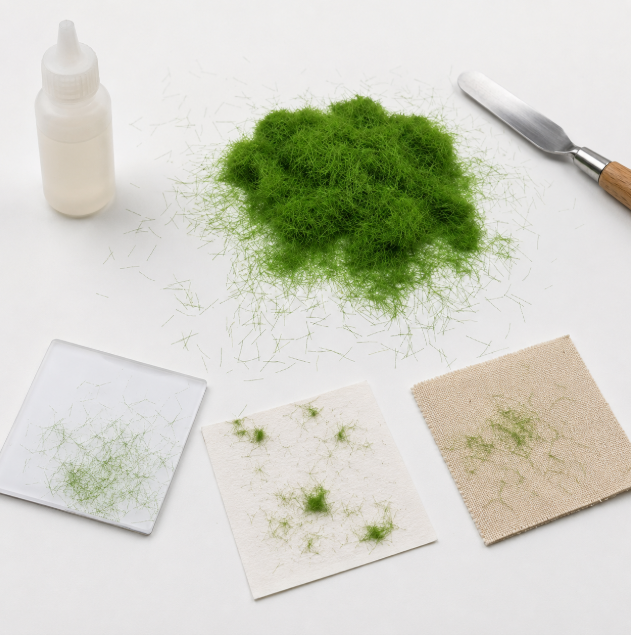
What Does Flocking Powder Falling Off Mean?Why Does Flocking Powder Fall Off After Application?Flocking powder falls off when the flock fibers are not firmly anchored in the adhesive layer. This can happen because the glue is too thin, the surface is dirty, the flock fibers are applied too late, or the material is not suitable for the application.Light loose fibers after flocking can be normal, but heavy shedding is a sign of a bonding problem. After drying, extra flock powder that did not enter the adhesive layer can be brushed or blown away. However, if the flock coating rubs off easily or exposes the base material, the surface needs to be checked. Is Flock Powder Shedding Always a Quality Problem?Flock powder shedding is not always caused by poor flocking powder quality. Adhesive selection, surface preparation, moisture, drying time and process control can all cause the same shedding issue.A good troubleshooting process should check both the flocking material and the application conditions. Even high-quality flock fibers may fall off if the adhesive for flocking is unsuitable or the substrate is not prepared correctly.Reason 1: Wrong Flocking Adhesive Was UsedHow Can a Flocking Adhesive Problem Cause Shedding?A flocking adhesive problem is one of the most common reasons for flocking powder falling off. If the glue cannot bond well to both the substrate and the flock fibers, the finished surface may look fine at first but rub off after drying.The best adhesive for flocking powder should match the surface type and final use. Wood, plastic, fabric, paper, metal and automotive trim all require different adhesive performance, so one glue cannot solve every flocking project.What Happens When the Flock Adhesive Is Too Weak?Weak flock adhesive cannot hold enough fibers inside the adhesive layer. The result may include patchy coverage, loose fibers, poor touch and visible base material after light rubbing.A stronger adhesive is not always the only solution. The glue also needs the right open time, viscosity, flexibility and drying behavior to create a smooth and stable flock coating.Reason 2: Surface Was Not Properly PreparedWhy Does Surface Preparation Affect Flock Coating?Surface preparation affects flock coating because adhesive cannot bond well to dust, oil, moisture or release agents. A dirty or untreated surface can make the flocking powder not sticking even when the glue itself is suitable.The substrate should be cleaned before applying adhesive for flocking. Plastic may need degreasing, metal may need cleaning or primer, and wood or paper may need sealing if they absorb too much glue.Which Surfaces Need More Care Before Flocking?Smooth, coated or low-energy surfaces usually need more careful preparation before flocking. Plastic parts, metal components, glossy paper and coated boards may reject adhesive if the surface is not treated properly.Porous materials also need attention because they may absorb too much glue. If wood, cardboard or paper takes in the adhesive too quickly, there may not be enough glue left on the surface to hold the flock fibers.Reason 3: Not Enough Adhesive Was Applied Why Does a Thin Glue Layer Make Flock Fibers Fall Off?A thin glue layer makes flock fibers fall off because the fibers cannot embed deeply enough into the adhesive. When the adhesive film is too light, the flock powder may only sit on the surface instead of bonding securely.Uneven glue thickness can also create uneven flock coverage. Thin areas may become sparse, while thick areas may look rough, hard or darker after drying.How Much Flocking Glue Should Be Applied?Enough flocking glue should be applied to hold the fibers without flooding the surface. The adhesive layer should be continuous, even and wet enough to capture the short fibers during application.Too much glue can also create problems. A heavy adhesive layer may reduce softness, blur design edges or make the flocked material feel stiff instead of smooth.Reason 4: Flock Fibers Were Applied Too LateWhy Does Timing Matter When Applying Flocking Fibers?Timing matters because flock fibers must be applied while the adhesive still has enough tack. If the glue dries before the flocking fibers are added, the fibers will not anchor properly.Large surfaces should be handled in sections when needed. This helps prevent the adhesive from passing its open time before enough flock powder has been applied.How Can Late Application Cause Flocking Powder Not Sticking?Late application can cause flocking powder not sticking because the glue surface has already started to skin over or dry. Once this happens, the fibers cannot sink into the adhesive layer.The solution is to control the working time between glue application and flocking. For consistent results, the process should be tested on the actual substrate before bulk production.Reason 5: Too Little Flocking Powder Was AppliedCan Too Little Flock Powder Cause Sparse Coverage?Too little flock powder can cause sparse coverage because not enough fibers reach the adhesive layer. A thin application may leave gaps, exposed substrate or a weak velvet effect.Flocking usually needs more loose fiber than the final surface will hold. Extra fibers can be removed after drying, but insufficient application during the wet stage can leave the final surface uneven.How Can You Improve Flock Fiber Coverage?Flock fiber coverage can be improved by applying enough material while the adhesive is still wet. The surface should be fully covered so the fibers can settle into all adhesive areas.Corners, edges and recessed areas often need extra attention. These areas are more likely to show gaps or weak flock coating if powder distribution is not even.Reason 6: Flocking Powder Was Damp or ClumpedWhy Does Moisture Cause Flock Powder Shedding?Moisture can cause flock powder shedding because damp fibers may clump and spread unevenly. When flocking powder absorbs moisture, it may lose flowability and fail to cover the adhesive layer properly.Clumped flocking material can also create rough or patchy surfaces. Instead of forming an even layer, the fibers may gather in small lumps and leave thin areas behind.How Should Flocking Powder Be Stored?Flocking powder should be stored in a dry, sealed and clean environment. Good storage helps prevent moisture absorption, dust contamination and color mixing.Opened flock powder should be closed tightly after use. If the material becomes damp, lumpy or contaminated, it should be tested before being used in production.Reason 7: Wrong Flock Material or Fiber Length Was ChosenHow Can Flocking Material Affect Shedding?The wrong flocking material can increase shedding when the fiber type does not match the application. A decorative flock material may not perform well in a high-friction or frequently handled environment.Nylon flock fibers are often selected for stronger handling resistance, while softer fibers may be better for decorative surfaces. The choice should depend on touch, durability, abrasion requirement and final product use.Can Fiber Length Make Flock Fibers Fall Off?Fiber length can affect how firmly flock fibers sit in the adhesive layer. Longer fibers may create a plush look, but they may also need stronger adhesive support and better process control.Shorter fibers are often easier to use for smooth, detailed and low-profile surfaces. If the product needs a stable fine texture, a shorter flocking fiber may reduce the risk of uneven bonding.Common Causes and Solutions for Flocking Powder Falling OffQuick Troubleshooting TableMost shedding problems can be solved by checking adhesive, surface preparation, timing and material condition. ProblemPossible CausePractical SolutionFlocking powder rubs offGlue is too thin or weakUse a suitable flock adhesive and apply an even layerSurface looks sparseToo little flock powder was appliedApply enough flock fibers while the glue is tackyFlock coating is patchySurface is dirty or unevenClean, dry and prepare the substrate before flockingFlock fibers falling offAdhesive dried before flockingApply fibers within the adhesive open timePowder forms lumpsFlocking powder is damp or clumpedStore material dry and test before useSurface feels hardToo much glue was appliedReduce glue thickness and test a smoother coatingPoor bonding on plastic or metalSurface is too smooth or oilyClean, degrease, prime or treat the surfaceHow to Fix Flocking Powder Falling Off? How Can You Repair a Weak Flock Coating?Flocking powder falling off can be fixed by removing loose fibers, checking the adhesive layer and reapplying the correct glue and flock powder. The repair method depends on whether the issue is light shedding or full coating failure.If only extra loose fibers are present, the surface can often be cleaned after full drying. If the bonded flock coating is peeling or rubbing off, the surface may need to be stripped, cleaned and flocked again.What Is the Best Way to Stop Flocking Powder from Shedding?The best way to stop flocking powder from shedding is to match the glue, substrate and flocking fiber before production. A small sample test can confirm whether the flock powder, adhesive and surface work together.Testing should include rubbing, brushing and handling checks. For packaging, fabric, decorative parts or industrial components, the finished flocked material should be tested under the conditions it will actually face.How to Prevent Shedding Before Mass Production?What Should Buyers Check Before Bulk Flocking?Buyers should check the adhesive, substrate, flock material, fiber length and drying condition before mass production. These factors decide whether the flock coating will stay stable after handling.A pre-production sample is the safest way to confirm performance. It helps verify color, coverage, touch, bonding strength and the chance of shedding before full production begins.Flocking Powder Shedding Prevention ChecklistA simple checklist can reduce the risk of flock powder shedding in production.Checklist ItemWhat to ConfirmAdhesiveIs it suitable for the substrate and final use?SurfaceIs it clean, dry and properly prepared?Glue layerIs the adhesive applied evenly and thick enough?Application timingAre fibers applied before the adhesive dries?Flock materialIs the material suitable for friction and handling needs?StorageIs the flock powder dry and free from clumps?Sample testHas the flocked surface passed rubbing and handling checks? FAQ About Flocking Powder Shedding1.Why Does Flocking Powder Fall Off?Flocking powder falls off when the fibers do not bond firmly into the adhesive layer. The most common causes are unsuitable glue, poor surface preparation, too little adhesive, late application or damp flock powder.2.Why Is My Flocking Powder Not Sticking?Flocking powder may not stick because the adhesive is too dry, too thin or unsuitable for the substrate. The surface may also be dirty, oily, too smooth or not properly prepared.3.How Do You Stop Flocking Powder from Shedding?You can stop flocking powder from shedding by using the right flock adhesive, cleaning the substrate and applying enough fibers while the glue is still tacky. Full drying and sample testing are also important.4.What Is the Best Adhesive for Flocking Powder?The best adhesive for flocking powder is the one that matches the substrate and final application. Wood, plastic, fabric, paper and metal usually need different adhesive properties.5.Is Some Loose Flock Powder Normal?Some loose flock powder is normal after application because not all fibers enter the adhesive layer. After the surface is fully dry, extra fibers can usually be removed by light brushing, blowing or vacuuming.6.Can Damp Flocking Powder Cause Shedding?Damp flocking powder can cause shedding because moisture makes fibers clump and spread unevenly. Dry storage helps maintain better flow, coverage and adhesion.7.Can Wrong Fiber Length Cause Flock Fibers to Fall Off?Wrong fiber length can contribute to shedding if the adhesive cannot support the selected flock fibers. Longer fibers may need stronger bonding and more careful process control than shorter fibers.
0.5mm, 0.75mm, 1mm and 2mm Flocking Fiber: Which Length Should You Choose?
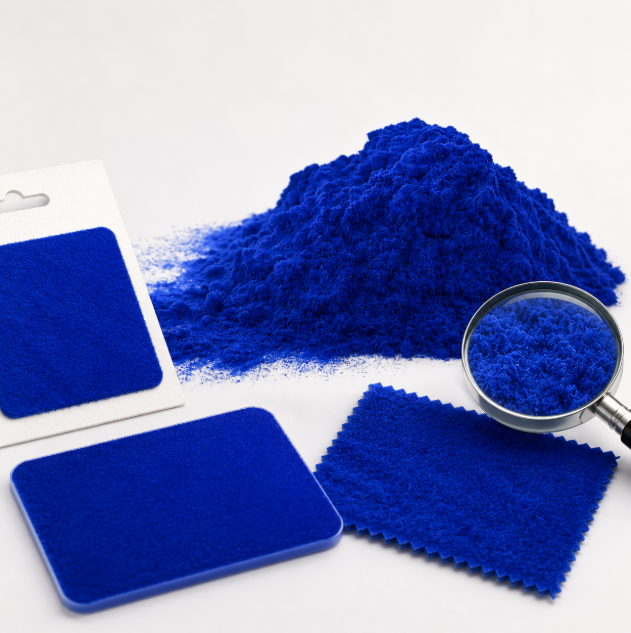
Why Does Flock Fiber Length Matter for Surface Texture?How Do Flocking Fibers Affect Coverage and Touch?Flock fiber length determines whether the final surface looks fine, dense, velvet-like or plush. Short flock fibers usually create a smoother and more controlled texture, while longer flock fibers make the surface look fuller and more tactile.Flocking fibers should be selected according to the final product effect. A paper box, jewelry insert, textile logo, decorative card or plastic part may all require a different flock fiber size to achieve the right appearance, coverage and hand feel.Why Should Flock Fiber Size Match the Application?Flock fiber size should match the application because length affects both appearance and performance. A fine decorative pattern may need 0.5mm flock fibers, while a display prop or craft surface may need 2mm nylon flock fibers for a stronger visual effect.The best flocking material is not decided by length alone. Material type, cutting quality, adhesive, base surface and production method can all change how the same flock powder material performs in real use.Flock Fiber Length Comparison: 0.5mm, 0.75mm, 1mm and 2mmQuick Guide to Short and Long Flock FibersDifferent cut flock fibers create different surface effects and should be chosen by texture requirement. The table below gives a practical overview for buyers comparing common lengths.Flock Fiber LengthSurface EffectSuitable ApplicationsCommon Keyword Forms0.5mm flock fibersFine, smooth, low-profilePaper packaging, printed designs, labels, small crafts0.5mm nylon flock fibers, short cut flock powder0.7mm / 0.75mm flock fiberBalanced, soft, controlledGift boxes, cosmetic packaging, decorative cards0.7mm nylon flock fibers, 0.75mm flock fiber1.0mm nylon flock fibersClear velvet texturePackaging inserts, plastic parts, textile decoration1mm flocking fibers, velvet flock powder2mm nylon flock fibersPlush, raised, visibleCrafts, displays, decorative surfaceslong flock fibers, soft flock powder4mm nylon flock fibersStronger pile effectSpecial decoration, model making, custom effectscustom cut length flock powderWhich Flocking Powder Length Creates the Best Surface Effect?The simplest way to choose flocking powder length is to start from the desired surface effect.0.5mm Nylon Flock Fibers for Fine, Smooth SurfacesWhy Choose Short Cut Flock Powder for Detailed Designs?0.5mm nylon flock fibers are best for fine, smooth and low-profile flocked surfaces. This length is often used when the design needs a clean velvet effect without a thick or raised fiber layer.Short cut flock powder is suitable for detailed graphics, small patterns and paper-based products. Because the fibers are short, they help maintain clearer edges on logos, labels, cards, packaging surfaces and decorative prints.Where Is Fine Flock Powder Commonly Used?Fine flock powder is commonly used when packaging needs a smooth and refined surface. It can be applied to gift boxes, cosmetic cards, stationery, display cards and decorative paper products.Short flock fibers reduce the risk of an uneven or bulky appearance. However, the final result still depends on adhesive thickness, base color, surface treatment and the density of the applied flocking material.0.75mm Flocking Fibers for Balanced DecorationAre 0.7mm Nylon Flock Fibers and 0.75mm Flock Fiber the Same?0.7mm nylon flock fibers and 0.75mm flock fiber are very close in practical application. Some suppliers use 0.7mm as a specification, while others use 0.75mm depending on production tolerance and cutting standards.The small difference between 0.7mm and 0.75mm is usually less important than material quality. For most packaging, display and decorative uses, buyers should compare real samples instead of judging only by the number.Why Use Soft Flock Powder for Gift Boxes and Displays?0.75mm flocking fibers create a balanced surface between fine smoothness and visible softness. This length works well for gift boxes, cosmetic packaging, greeting cards, decorative inserts and display boards.Soft flock powder at this length can provide a velvet-like touch without making the surface too heavy. It is a practical middle option for products that need both a premium feel and a clean appearance.1.0mm Nylon Flock Fibers for Classic Velvet TextureWhy Is Velvet Flock Powder Suitable for Packaging Inserts?1.0mm nylon flock fibers are a common choice for products that need a clear velvet texture. This length creates more visible softness than 0.5mm or 0.75mm fibers, but it is still easier to control than longer pile materials.Velvet flock powder around 1mm is often used for packaging inserts, jewelry trays and display surfaces. It gives the product a soft visual layer while keeping the texture relatively neat and stable.How Do Flocking Fibers Work on Plastic Parts and Panels?1mm flocking fibers work well when the surface needs decorative appeal and practical coverage. They can be used on molded plastic parts, box inserts, display panels, decorative cards and selected textile surfaces.This length may not be ideal for extremely fine details. Compared with 0.5mm flock fibers, 1mm flock fiber creates richer texture but may reduce sharp edge definition on small patterns or thin lines.2mm Flock Fibers for Plush and Visible EffectsWhen Should You Choose 2mm Nylon Flock Fibers?2mm nylon flock fibers are better for products that need a plush, visible and tactile surface. This length creates a fuller effect than short flock fibers and gives the surface a stronger texture.Long flock fibers are suitable for crafts, display props, decorative panels and special visual effects. They are useful when the flocked surface should look soft, raised and easy to notice.Why Use Custom Cut Length Flock Powder for Special Texture?Custom cut length flock powder is useful when standard flock fiber sizes cannot achieve the required texture. Buyers can request a specific length to control softness, height, coverage and visual effect.Longer fibers require better adhesive control and sample testing. If the adhesive layer is too thin or uneven, 2mm flock fibers may not bond well or may shed more easily during handling.Short Flock vs Long Flock FibersWhich Is Better for Smooth Coverage: Short Flock Fibers or Long Flock Fibers?Short flock fibers are better for smooth coverage, detailed designs and refined decorative surfaces. They are commonly used for paper packaging, printed effects, labels, stationery and small craft products.Shorter flocking material usually creates a cleaner and flatter surface. This makes it suitable when the design requires subtle softness rather than a strong plush appearance.Which Is Better for Plush Texture: Longer Flocking Fibers or Short Fibers?Longer flocking fibers are better for plush, suede-like or visibly raised texture. They can make a product look softer, fuller and more tactile, especially in crafts and decorative applications.Long flock fibers usually need stronger process control than short fibers. The substrate, adhesive and fiber density must work together to prevent patchy coverage, weak bonding or excessive shedding.Short Flock vs Long Flock ComparisonShort and long flock fibers should be compared by texture, detail and handling requirements.Comparison ItemShort Flock FibersLong Flock FibersSurface lookFine, smooth, controlledPlush, visible, raisedDetail performanceBetter for small patternsLess suitable for fine linesTouch feelingSoft but low-profileSofter and more tactileCommon lengths0.5mm, 0.75mm1mm, 2mm, 4mmTypical usesPackaging, labels, cardsCrafts, displays, decorative surfacesProcess requirementEasier to controlNeeds stronger adhesive control How to Choose Flock Fiber Length by Application?Which Flock Fibers Are Best for Packaging and Display?Packaging usually needs short to medium flock fibers for a clean and premium surface. For paper boxes, cosmetic packaging, jewelry inserts and gift boxes, 0.5mm, 0.75mm or 1mm flocking fibers are usually more suitable than longer options.Display inserts can use slightly longer fibers when a richer texture is needed. For example, 1.0mm nylon flock fibers may work better than fine flock powder when the product needs stronger visual presence.Which Flocking Fibers Are Suitable for Textile and Decoration?Textile and decorative products can use medium or longer flock fibers depending on the design. A simple decorative surface may use 0.75mm flock fiber, while a craft or plush effect may require 2mm nylon flock fibers.The same flock powder material can perform differently on fabric, paper, plastic or coated board. This is why sample testing on the actual substrate is necessary before mass production.When Should You Use Milled Nylon Flock or Custom Length Options?Milled nylon flock is often used when shorter fiber particles or specific texture requirements are needed. The exact meaning may vary by supplier, so buyers should confirm material, fiber size and intended application before ordering.Custom cut length flock powder is the best option for projects with strict texture or coverage requirements. It allows the buyer to control fiber length, color, material and surface effect more accurately.Buyer Checklist for Flock Powder Length SelectionWhat Should Buyers Confirm Before Choosing Flock Fiber Length?A buyer should confirm application, surface effect, material and testing requirements before choosing flock fiber length.Checklist ItemQuestion to ConfirmFinal applicationIs it for packaging, textile, craft, display or industrial use?Surface effectDo you need smooth, balanced, velvet or plush texture?Fiber lengthShould it be 0.5mm, 0.75mm, 1mm, 2mm or custom length?MaterialDo you need nylon flock, rayon flock or polyester flock?Cutting qualityDo you need precision cut flock fibers?Adhesion testHas the flock powder been tested on the actual substrate?Bulk consistencyCan the supplier keep length, color and texture stable? FAQ About Flock Fiber Length1.What Is the Best Flock Fiber Length?The best flock fiber length depends on the desired texture and final application. 0.5mm is better for fine smooth surfaces, 0.75mm is balanced, 1mm creates a clear velvet effect, and 2mm gives a more plush texture.2.Are 0.7mm and 0.75mm Flock Fibers the Same?0.7mm and 0.75mm flock fibers are very similar in most practical applications. The final result depends more on material, cutting quality, adhesive and sample testing than the small length difference.3.What Are 1.0mm Nylon Flock Fibers Used For?1.0mm nylon flock fibers are commonly used for packaging inserts, plastic parts, display surfaces and textile decoration. They provide a balanced velvet texture with practical coverage.4.When Should I Choose 2mm Nylon Flock Fibers?2mm nylon flock fibers should be chosen when the surface needs a stronger plush or visible fiber effect. They are suitable for crafts, decorative surfaces, display props and special texture applications.5.What Is Custom Cut Length Flock Powder?Custom cut length flock powder is flock material cut to a specific fiber length for a particular application. It helps control surface height, texture, softness and final appearance.6.Why Are Precision Cut Flock Fibers Important?Precision cut flock fibers are important because they create a more uniform and consistent surface. They reduce rough texture, clumping and uneven coverage in visible flocked products. 7.Is Milled Nylon Flock the Same as Cut Flock Fibers?Milled nylon flock usually refers to nylon flock processed into shorter fiber particles, while cut flock fibers are normally controlled by defined cutting length. Because suppliers may use these terms differently, buyers should confirm the actual length, material and application before ordering.
What Glue to Use for Flocking Powder? Adhesive Guide for Wood, Plastic, Fabric and Metal
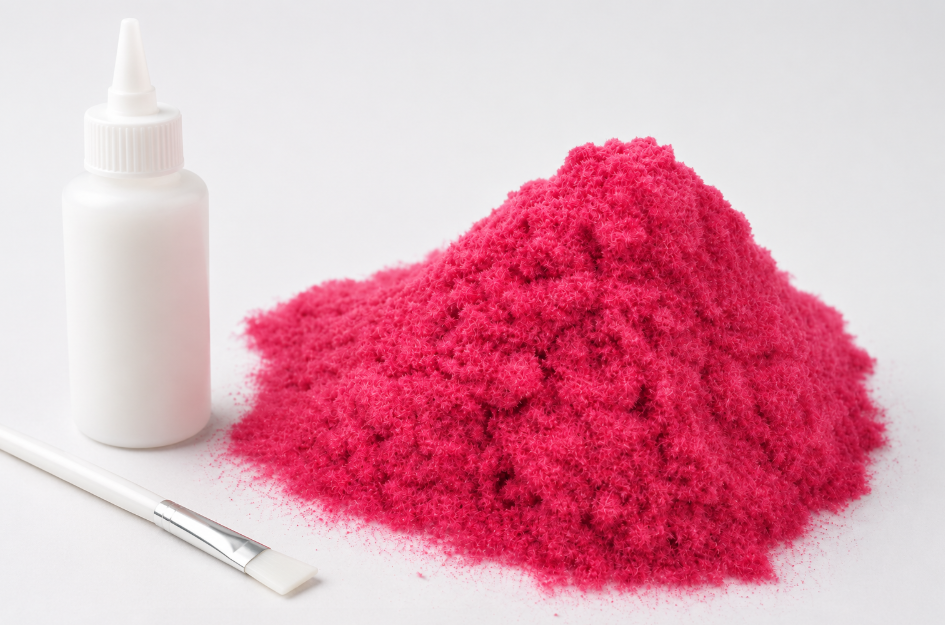
Why Does Flocking Adhesive Matter?How Does Flock Adhesive Affect the Final Flocked Surface?Flock adhesive determines whether flocking powder can form a stable, even and durable surface. Even when the flock powder has good fiber quality, the final result may still shed, rub off or look patchy if the glue does not match the substrate.A good flocking adhesive needs to bond both the base material and the short flock fibers. The glue should attach well to wood, plastic, fabric, paper, cardboard or metal, while keeping enough tack on the surface for the fibers to embed before drying.Why Is Flocking Glue Different from Regular Glue?Flocking glue is different from regular glue because it is designed to hold fine fibers evenly on a coated surface. Ordinary glue may dry too quickly, soak too deeply into porous materials or become too hard after curing.The right adhesive for flocking depends on the surface, application method and final use. A flexible textile surface, a paper gift box and a plastic automotive trim part all require different glue performance.What Is the Best Glue for Flocking Powder?Best Glue for Flocking Powder by ApplicationThe best glue for flocking powder is the one that matches the surface material and the required finish. It should provide good wet tack, enough open time, stable bonding and the right level of flexibility after drying.There is no single best glue for flocking that works perfectly on every surface. Wood, plastic, fabric, paper and metal have different absorption, surface energy and movement, so the adhesive should always be selected by material and tested before bulk use. Flock Adhesive Selection Table by SurfaceQuick Guide to Choosing Flocking GlueThe easiest way to choose flock adhesive is to start with the base surface. Each material needs a different adhesive property to achieve good bonding and surface quality.Surface TypeSuitable Adhesive DirectionMain RequirementCommon UsesWoodFlock glue for porous surfacesControl absorption and keep surface tackBoxes, crafts, panels, displaysPlasticFlock adhesive for plasticStrong bonding on smooth surfacesTrays, molded parts, insertsFabric / TextileFlexible flocking adhesiveSoft hand feel and rub resistanceGarments, logos, textile decorationPaper / CardboardPackaging-suitable flocking glueLow soak-in and clean finishGift boxes, cards, cosmetic packagingMetalFlock glue for metalDegreasing, primer or strong bondingIndustrial parts, trims, componentsAutomotive trimDurable flock adhesiveAbrasion resistance and stable bondingCar interiors, trim parts, sliding areasBest Flock Adhesive for WoodWhat Flocking Glue Works Best on Wood?The best flocking glue for wood should control absorption and leave enough adhesive on the surface to hold the fibers. Wood is porous, so some glue may sink into the material instead of staying on the surface.A sealed or primed wood surface usually gives a cleaner flock coating. If the wood absorbs too much adhesive, the flock powder may look thin, dry or uneven after application.Can You Use PVA Glue for Flocking on Wood?PVA glue for flocking can work for simple wood, paper and craft projects. It is easy to apply and can bond well to porous surfaces, especially for small decorative work.PVA glue is not always the best choice for professional flocking applications. For products that need stronger durability, water resistance, flexibility or consistent batch production, a dedicated flocking adhesive is usually more reliable.Best Flock Adhesive for PlasticWhat Glue Works for Flocking Powder on Plastic?Flock adhesive for plastic must match the plastic type and surface condition. Many plastic materials are smooth, coated or low-energy surfaces, which makes bonding more difficult than on wood or paper.Plastic surfaces should be cleaned before applying flock glue. Dust, oil, release agents and fingerprints can weaken adhesion and cause the flocking powder to rub off after drying.How Can Flocking Glue Bond Better to Plastic?Flocking glue can bond better to plastic when the surface is properly cleaned, treated or primed. Some plastic parts may need surface activation or a compatible primer before flocking.Flock powder for decorative plastic surfaces needs both good coverage and handling resistance. This is especially important for molded parts, trays, display components, cosmetic inserts and decorative plastic panels.Best Flock Adhesive for Fabric and TextileWhat Flock Glue Should Be Used for Fabric?Flock glue for fabric should remain flexible after drying so the textile does not become too stiff. Fabric bends, moves and stretches more than rigid materials, so the adhesive layer should not crack or feel uncomfortable.Soft flock powder for fabric should be matched with a soft and flexible adhesive system. This helps keep the textile hand feel while allowing the flock fibers to stay attached during use.How Does Flock Adhesive Screen Printing Work?Flock adhesive screen printing applies glue in a designed pattern before flock fibers are added. This method is commonly used for garment decoration, textile logos, raised graphics and decorative patterns.Screen-printing flock adhesive needs suitable viscosity and clean edge control. If the adhesive spreads too much, the pattern may blur; if it is too thin, the fiber coverage may be weak.Best Flocking Glue for Paper, Cardboard and PackagingWhat Glue Is Suitable for Flock Powder Packaging?Flocking glue for packaging should stay on the surface instead of soaking too deeply into paper or cardboard. If the adhesive penetrates too much, the flock coating may appear thin, uneven or less premium.Flock powder for packaging usually needs a clean look, soft touch and consistent color. Gift boxes, jewelry boxes, cosmetic packaging and display cards often require a smooth flocked surface rather than a heavy glue layer.Can PVA Glue Be Used for Flocking Paper?PVA glue can be used for some paper flocking and DIY card projects. It works best on simple porous paper surfaces where high durability is not the main requirement.Professional packaging usually needs a more controlled adhesive for flocking. A dedicated flocking glue can help keep sharper edges, smoother coverage and more stable surface quality on paper or cardboard.Best Flock Glue for MetalWhat Flock Glue Works on Metal?Flock glue for metal requires strong surface preparation because metal is smooth and non-porous. Oil, oxidation, dust and coating residues can reduce bonding strength.Metal surfaces should be cleaned and degreased before applying flock adhesive. Depending on the part, primer or surface treatment may also be needed to improve adhesion.How Should Flock Powder Be Applied to Industrial Metal Parts?Flock powder for industrial applications needs an adhesive that can meet the working environment. Industrial parts may require abrasion resistance, stable bonding and consistent flock coating.Metal flocking should be tested under real use conditions. Samples should be checked for rubbing, peeling, handling performance and environmental exposure before mass production.Flock Glue for Manual and Production FlockingWhich Flocking Adhesive Is Better for Production?Production flocking needs adhesive with stable viscosity, open time and repeatable bonding performance. Large-scale work requires more consistent glue control than small hand projects.The adhesive layer should stay workable long enough for flock fibers to be applied evenly. If the glue dries too quickly, the finished surface may become sparse, patchy or weak.Which Glue for Flocking Powder Is Better for Manual Use?Manual flocking can use simpler glue methods, but the adhesive still needs to match the surface. Small craft projects may tolerate some variation, while packaging, textile and automotive products need stronger process control.Manual application should avoid glue that dries too fast or forms an uneven layer. If the adhesive loses tack before the flock powder is applied, the fibers cannot embed properly.Common Flock Adhesive Mistakes Why Does Flocking Powder Fall Off?Flocking powder often falls offbecause the glue is too thin, too dry, unsuitable for the surface or applied to an unclean substrate. Poor bonding is usually related to the adhesive system rather than the flock powder alone.Another common mistake is applying fibers after the flock adhesive has passed its open time. Once the glue surface loses tack, the fibers cannot bond well to the adhesive layer.Why Does the Flock Coating Look Uneven?A flock coating looks uneven when the adhesive layer, flock powder amount or surface preparation is inconsistent. Thin glue areas create sparse coverage, while overly thick areas may look rough or hard.Uneven flocking glue application is especially visible on packaging, textile and decorative surfaces. For premium products, the sample should be checked for both appearance and adhesion before bulk production. Flocking Glue Selection FlowchartHow to Choose Flock Glue by Surface?The best way to choose flock glue is to match the adhesive to the substrate first, then confirm the final performance requirement.Buyer Checklist for Flocking GlueWhat Should Buyers Confirm Before Choosing Glue for Flocking Powder?Buyers should confirm the surface, glue type, application method and final performance before choosing glue for flocking powder.Checklist ItemQuestion to ConfirmSubstrateIs the surface wood, plastic, fabric, paper, cardboard or metal?Glue typeDo you need flocking glue, flock glue, PVA glue or adhesive for flocking?Application methodIs it brush, spray, roller, screen printing or production coating?Surface effectDo you need a soft, smooth, dense or durable flock coating?Flock materialIs the flock powder nylon, rayon, polyester or another fiber?Final useIs it for packaging, garment, automotive trim or industrial applications?TestingHas the glue been tested with the actual flock powder and substrate?FAQ About Flocking Glue1.What Is the Best Glue for Flocking Powder?The best glue for flocking powder is a flocking glue matched to the substrate and final use. Wood, plastic, fabric, paper and metal need different adhesive properties.2.Is Flock Glue the Same as Flocking Adhesive?Flock glue and flocking adhesive usually refer to the same type of adhesive used to bond flock fibers. Flock adhesive, flock glue and adhesive for flocking are often used to describe the same product category.3.Can I Use PVA Glue for Flocking?PVA glue can be used for some simple wood, paper and craft flocking projects. For plastic, fabric, metal, packaging production or high-durability applications, a dedicated flocking adhesive is usually more reliable.4.Can I Use Spray Glue for Flocking Powder?Spray glue can be used for simple craft projects, but it is not always suitable for durable or professional flocking. For packaging, textile or industrial products, a proper adhesive for flocking is usually safer.5.What Is the Best Flock Glue for Fabric?The best flock glue for fabric should be flexible and able to hold fibers without making the textile too stiff. It should also be tested for rubbing, bending or washing requirements when needed.6.What Flock Adhesive Is Used for Plastic?Flock adhesive for plastic should be selected according to the plastic type and surface treatment. Cleaning, primer or surface activation may be needed for better bonding.7.Why Is My Flock Powder Not Sticking?Flock powder may not stick because the glue is unsuitable, too thin, too dry or applied to a dirty surface. The fibers should be applied while the flocking glue still has enough tack.8.What Is Flock Adhesive Screen Printing?Flock adhesive screen printing is a method of printing adhesive in a pattern before applying flock fibers. It is often used for garment decoration, textile logos, paper products and decorative designs.9.Do Car Interiors Need Special Flock Glue?Car interiors usually need more durable flock glue than simple decorative products. The adhesive should support stable bonding, abrasion resistance and long-term surface performance.
Flocking Powder Specifications: How to Read Dtex, Denier, Length and Material?
Learn how to read flocking powder specifications, including dtex fiber, denier, flock fiber length, nylon flock powder, rayon flock powder, polyester flock fibers and custom flocking materials. What Is Flocking Powder Flocking Powder DefinitionFlocking powder is a short-cut fiber material used to create a soft, velvet-like surface on an adhesive-coated substrate. Although it is called “powder,” it is not the same as pigment, glitter or dust. In most applications, flocking powder is made from tiny fibers that are applied to paper, plastic, fabric, wood, metal or other surfaces.The final flocked surface is created by bonding these small fibers to a prepared base. This gives the surface a soft touch, decorative texture or functional coating, depending on the material and application.Flock Powder vs Flocking FiberFlock powder, flocking fiber and flock fibers usually describe the same product category from different angles. “Flock powder” is a common commercial term, while “flocking fiber” is more technical and focuses on the fiber form of the material.Buyers often use flock powder when searching for products and flocking fiber when comparing specifications. For example, a product page may say “nylon flock powder,” while a technical sheet may describe the same item as nylon flocking fiber with a specific length and dtex.Flock Material MeaningFlock material means the short fibers used to form a soft or textured flocked surface. The fibers can be made from nylon, rayon, polyester, viscose, cotton or microfiber.Flocking material meaning can also refer to the complete surface system. In some contexts, it may include the fiber, adhesive, substrate and final flock coating, so the term should be explained clearly in buyer-facing content.Flocking Powder Specification at a GlanceMain Specification ItemsA complete flocking powder specification usually includes material, fiber length, dtex or denier, color, cutting quality and application. These details decide whether the final surface feels smooth, plush, soft, durable or decorative.Specification ItemWhat It MeansWhy It MattersMaterialNylon, rayon, polyester, viscose, cotton or microfiberAffects softness, durability and appearanceFiber lengthUsually measured in mmAffects surface height, texture and coverageDtex / DenierFiber fineness measurementAffects softness, thickness and densityColorStandard or custom dyed flock powderAffects brand matching and final lookCutting qualityStandard cut or precision cut flock fibersAffects surface consistencyApplicationPackaging, textile, automotive, craft or industrial useDetermines the best specificationHow to Read a Flock Powder Specification?The best way to read a flock powder specification is to check material first, then length, fineness and application. A product described only as “flocking powder” is not specific enough for accurate selection.A useful specification should answer what the fiber is made of, how long it is and how fine it is. It should also show whether the product is standard color, custom dyed flock powder, standard cut or precision cut flock fibers. What Is Flocking Powder Made Of?Common Flocking Material OptionsFlocking powder is usually made from precision-cut synthetic, semi-synthetic or natural fibers. Common choices include nylon flock powder, rayon flock powder, polyester flock powder, viscose rayon flock powder, cotton flock and microfiber flock powder.The right flocking material depends on the final product requirement. A jewelry box may need a soft decorative finish, while an automotive trim part may need stronger wear resistance.Nylon Flock Powder for Durable SurfacesNylon flock powder is usually selected when durability, resilience and abrasion resistance are important. It is suitable for packaging inserts, automotive trim, plastic parts, industrial components and decorative products that are touched frequently.Nylon flocking powder may also appear as nylon flock, nylon flock fibers or polyamide 66 flock powder. These terms are often used when the buyer needs a stronger flocked material for practical use.Rayon Flock Powder for Soft DecorationRayon flock powder is usually chosen when softness and a refined visual effect are more important than heavy wear resistance. It is common in gift boxes, jewelry packaging, craft products, stationery and decorative surfaces.Viscose rayon flock powder can create a smooth velvet-like appearance. It is a good option for premium packaging and display products, but it should be tested if the item will face frequent rubbing.Polyester Flock Powder and Microfiber Flock PowderPolyester flock powder is often used when color stability and material consistency are important. Polyester flock fibers can be suitable for textile decoration, packaging and selected industrial surfaces.Microfiber flock powder is suitable for fine and delicate surface effects. It can help create a premium texture for cosmetic boxes, display props and decorative products that require a smooth touch. Dtex Fiber and Decitex Meaning in Flocking PowderWhat Does Dtex Fiber Mean?Dtex fiber describes how fine or thick the flocking fiber is. Dtex stands for decitex and measures the weight in grams of 10,000 meters of fiber.A lower dtex usually means a finer fiber, while a higher dtex usually means a thicker fiber. This affects the softness, texture, density and coverage of the finished flocked material.Decitex Meaning for BuyersDecitex meaning is important because it helps buyers compare fiber fineness across flocking powder specifications. It does not directly tell you whether a product is good or bad, but it helps explain the expected surface effect.Dtex should be reviewed together with material and fiber length. A fine nylon flock fiber and a fine rayon flock fiber may not create the same touch because the materials behave differently.Dtex Selection GuideDtex should be selected according to the desired surface effect, not by number alone.Dtex LevelSurface EffectBetter ForLower dtexFiner, softer and smoother surfaceLuxury packaging, cosmetics, display boxesMedium dtexBalanced softness and coverageGeneral packaging, crafts, decorative partsHigher dtexStronger texture and fuller appearanceIndustrial parts, visible texture effectsDtex vs Denier: What Is the Difference?Dtex vs Denier MeasurementDtex and denier are both fiber fineness measurements, but they use different reference lengths. Dtex measures grams per 10,000 meters of fiber, while denier measures grams per 9,000 meters of fiber.The same flocking fiber will have different dtex and denier values because the calculation basis is different. This is why buyers should always confirm which unit a supplier is using.Custom Denier Flock PowderCustom denier flock powder is used when buyers need a specific fiber fineness for a defined surface effect. A finer denier can create a softer finish, while a thicker denier can create a more textured or fuller surface.Denier should not be compared without checking the fiber material and length. A short polyester flock fiber with one denier value may perform differently from a longer rayon flock fiber with a similar value.Dtex vs Denier Comparison TableThe main difference between dtex and denier is the length used in the measurement.TermMeasurement BasisWhat It Tells YouDtexGrams per 10,000 metersFiber fineness or thicknessDenierGrams per 9,000 metersFiber fineness or thicknessCustom denier flock powderBuyer-specific denier requirementCustomized surface effect How Flock Fiber Length Affects Texture and Coverage?Flock Fiber Length ExplainedFlock fiber length determines how smooth, dense or plush the final surface will look. Common lengths include 0.5mm, 0.75mm, 1mm and 2mm, though custom cut length flock powder is also available.Shorter flock fibers usually create a smoother and more even surface. They are often used for paper packaging, printed designs, small crafts, labels and fine decorative details.0.5mm, 0.75mm, 1mm and 2mm Flock FibersDifferent flock fiber lengths create different surface effects and application results.Fiber LengthSurface EffectCommon Applications0.5mmFine and smoothPaper packaging, printed designs, small crafts0.75mmBalanced and softGift boxes, decorative parts, general packaging1mmClear velvet texturePlastic parts, packaging inserts, display surfaces2mmMore plush and visibleCrafts, special decoration, stronger texture effectsPrecision Cut Flock FibersPrecision cut flock fibers help create a more uniform and consistent flocked surface. When the fibers are cut to a stable length, the surface looks cleaner and feels more controlled.Poor cutting quality can cause clumping, rough texture or uneven coverage. This is why precision cut flock fibers are important for premium packaging, display items and visible decorative surfaces.Custom Cut Length Flock PowderCustom cut length flock powder is useful when standard fiber lengths cannot meet the desired surface effect. Shorter fibers can create a fine velvet look, while longer fibers can create a plush or suede-like texture.Fiber length should be tested on the actual substrate before bulk production. The same flock powder may look different on paper, plastic, fabric or metal. Nylon vs Rayon vs Polyester Flock PowderMaterial Comparison OverviewNylon, rayon and polyester flock powder should be selected according to durability, softness and color performance. No single material is best for every application.Flocking MaterialMain AdvantageTypical Surface FeelCommon UsesNylon flock powderDurable and resilientSmooth to slightly firmAutomotive trim, packaging inserts, industrial partsRayon flock powderSoft and elegantVelvet-like and delicateGift boxes, jewelry packaging, craftsPolyester flock powderStable appearanceClean and consistentTextile decoration, packaging, technical surfacesCotton flockNatural fiber feelSoft and matteSpecial textile or decorative applicationsMicrofiber flock powderVery fine textureRefined and premiumCosmetic packaging, display surfacesWhen to Choose Nylon Flocking Powder?Nylon flocking powder is better for applications that require strength and handling resistance. It is often used for automotive trim, industrial parts, packaging trays and decorative components.Nylon is a practical option when the flock coating must remain stable during use. It is usually preferred when friction, touch or repeated handling is expected.When to Choose Rayon Flock Fibers?Rayon flock fibers are better for soft, decorative and premium-looking surfaces. They are suitable for gift boxes, jewelry packaging, stationery, crafts and visual displays.Rayon is not always the best choice for high-friction applications. If the product will be rubbed frequently, nylon flock powder may be more suitable.When to Choose Polyester Flock Fibers?Polyester flock fibers are useful when stable color and consistent appearance are important. They may be used in textile decoration, packaging or selected technical applications.Polyester flock powder should still be tested with the actual adhesive and substrate. A good material choice can still perform poorly if the production conditions are not suitable. How to Choose the Right Flocking Powder Specification?Step 1: Match Flocking Material to ApplicationThe right flocking powder specification should start with the final application. Packaging, textile, automotive trim, craft items and industrial parts may all require different fiber materials and lengths.Soft decorative products usually need finer and softer materials. Rayon flock powder, viscose rayon flock powder or microfiber flock powder may be suitable for this type of finish.Durable products usually need stronger materials. Nylon flock powder or polyester flock powder may be better when handling, friction or long-term stability matters.Step 2: Match Dtex, Denier and Length to Surface EffectDtex, denier and fiber length should be matched to the desired surface texture. A fine and short fiber usually creates a smooth velvet effect, while a thicker or longer fiber creates a stronger texture.Custom denier flock powder and custom cut length flock powder are useful when standard specifications cannot meet the project requirement. They allow buyers to control the final touch, appearance and coverage more accurately.Step 3: Confirm Color with Custom Dyed Flock PowderCustom dyed flock powder is recommended when the flocked surface must match a brand color. It is often used for cosmetic boxes, jewelry packaging, display props, promotional items and decorative products.Color should be checked on the actual substrate before mass production. The same colored flocking powder may look different on black paper, white plastic or fabric.Step 4: Test Flock Powder Before Bulk OrderSample testing is the most reliable way to confirm a flock powder specification. A sample can show real color, texture, coverage, softness and adhesion performance.Bulk orders should be based on approved samples rather than specification numbers alone. Dtex, denier, length and material are useful guides, but the final result depends on the full combination of fiber, adhesive, substrate and process. Flocking Powder Selection FlowchartQuick Selection ProcessThe easiest way to choose flocking powder is to start with the application, then match material, length and fiber fineness. Buyer Checklist for Flock Powder SpecificationsA buyer should confirm all key specification points before ordering flock powder.Checklist ItemQuestion to ConfirmMaterialDo you need nylon, rayon, polyester, viscose, cotton or microfiber?LengthDo you need 0.5mm, 0.75mm, 1mm, 2mm or custom length?FinenessIs the requirement listed in dtex or denier?ColorDo you need standard color or custom dyed flock powder?Cutting qualityDo you need precision cut flock fibers?ApplicationIs it for packaging, textile, automotive, craft or industrial use?SampleHas the flock powder been tested on the actual substrate? FAQ About Flocking Powder Specifications1.What Is Flocking Material?Flocking material is the short fiber material used to create a soft flocked surface. It can be made from nylon, rayon, polyester, viscose, cotton or microfiber.2.Is Flock Powder the Same as Flocking Powder?Flock powder and flocking powder usually refer to the same type of short fiber product. “Flocking powder” is often used in product descriptions, while “flock powder” is a shorter commercial expression.3.What Does Dtex Mean in Flocking Fiber?Dtex means the weight in grams of 10,000 meters of fiber. It helps describe whether a flocking fiber is fine, medium or thick.4.What Is the Difference Between Dtex and Denier?The difference between dtex and denier is the reference length used for measurement. Dtex is based on 10,000 meters, while denier is based on 9,000 meters.5.Which Is Better: Nylon Flock Powder or Rayon Flock Powder?Nylon flock powder is better for durability, while rayon flock powder is better for softness and decorative appearance. The better choice depends on the final application.6.Why Are Precision Cut Flock Fibers Important?Precision cut flock fibers are important because they help create a more even and consistent surface. They reduce irregular texture, clumping and patchy coverage.7.Can Flocking Powder Be Customized?Flocking powder can be customized by color, material, length, dtex or denier. Common options include custom dyed flock powder, custom denier flock powder and custom cut length flock powder.
How to Choose the Right Flocking Powder for Different Applications?
Quick AnswerThe right Flocking Powder depends on where it will be used. For garments, prioritize softness and color consistency; for automotive parts, choose higher abrasion resistance, stronger adhesion, and better heat stability.Key TakeawaysFlocking Powder should be selected by application, substrate, and required performance.Nylon flocking powder is ideal for high-wear, premium-touch surfaces.Rayon flock powder is well suited to soft and decorative finishes.Polyester flocking powder is a practical choice for moisture resistance and color stability.Flocking powder for textile should balance hand feel, color, and process consistency.Flocking powder for automotive trim should focus on durability, low fiber loss, and long-term appearance. AbstractChoosing the right Flocking Powder is essential for achieving the desired texture, appearance, and durability. Different applications require different flock characteristics. A garment surface needs softness and visual richness, while automotive trim requires strong wear resistance and stable adhesion. This guide explains what to evaluate before selection, compares the best flock options for textiles and car interiors, and shows whether nylon, rayon, or polyester is the better fit for your project. Table of ContentsWhat to Consider Before Selecting Flocking Powder1.1 Core factors that affect performance1.2 Why substrate and adhesive compatibility matterBest Flocking Powder for Textile and Garment Applications2.1 What textile projects need most2.2 Recommended choices for garment decorationBest Flocking Powder for Automotive Trim and Car Interiors3.1 Why automotive applications require tougher fibers3.2 Typical interior uses and material prioritiesNylon, Rayon, or Polyester: Which Flock Powder Fits Your Project Best?4.1 Side-by-side fiber comparison4.2 Fast selection guideFinal Selection Checklist for BuyersWhat to Consider Before Selecting Flocking PowderSelecting Flocking Powder is not simply a matter of color or price. The right choice depends on how the flocked surface will be used, what substrate it will be applied to, and what finish the product must deliver over time. A suitable flock creates an even, elegant, and durable surface. An unsuitable one can lead to fiber shedding, inconsistent appearance, weak adhesion, or premature wear.Core factors that affect performanceBefore choosing flock powder, review the following factors carefully:Selection FactorWhat It AffectsWhat to CheckFiber materialSoftness, durability, finish qualityDo you need comfort, strength, or a balance of both?Fiber lengthSurface texture and visual depthShould the finish feel velvety, dense, or subtle?Color consistencyProduct appearance and brand matchingDoes the project need accurate and repeatable color?Abrasion resistanceService life in high-contact areasWill the surface be rubbed, touched, or used frequently?Adhesion compatibilityFlock retention and application stabilityIs the flock suitable for your adhesive and process?Environmental resistanceHeat, moisture, and aging performanceWill the product face humidity, temperature, or friction? A good selection process starts with performance requirements first, then material type, then cost. This helps avoid problems later in production.Why substrate and adhesive compatibility matterThe same colored flocking powder can perform very differently depending on the base material. Fabric, plastic, paperboard, rubber, wood, and molded interior parts all respond differently during flocking. This is why flocking powder for decorative surfaces and flocking powder for ornaments must be chosen together with the correct adhesive, curing condition, and electrostatic process settings. Even a high-quality fiber may fail if it is not matched to the right system. Best Flocking Powder for Textile and Garment ApplicationsTextile and garment projects usually require softness, rich surface appearance, and stable color. In these applications, flocking powder for textile should create a comfortable touch while maintaining enough bonding strength for normal use and handling.What textile projects need mostFor apparel and fabric decoration, buyers usually focus on these priorities:RequirementWhy It Matters in TextilesSoft hand feelImproves comfort and perceived qualityFine visual effectCreates depth and a premium decorative finishColor uniformityKeeps logos, graphics, and patterns consistentReliable adhesionReduces fiber loss after handling or useProcess stabilitySupports clean application in bulk productionRayon is often used when the main goal is a soft, elegant, velvet-like result. This makes rayon flock powder a strong choice for fashion graphics, decorative panels, and brand applications on garments. Nylon can also be used when a softer premium feel is needed together with better wear resistance.Recommended choices for garment decorationThe following table offers a practical overview for flocking powder for garment projects:Textile ApplicationRecommended Flock TypeMain ReasonFashion graphics and logosRayon flock powderSoft touch and rich decorative appearancePremium upholstery fabricsNylon flocking powderBetter durability and refined surface feelUtility textile surfacesPolyester flocking powderGood color stability and moisture resistanceDecorative fabric panelsRayon flock powderSmooth finish and strong visual texture When selecting flocking powder for textile, do not focus only on price. Softness, cut quality, and color consistency usually have a greater effect on the final result. Best Flocking Powder for Automotive Trim and Car InteriorsAutomotive interiors are more demanding than garments. Flocking powder for automotive trim must endure repeated contact, vibration, temperature variation, and long-term use without losing its finish. Parts such as glove boxes, dashboard compartments, window channels, seals, and storage inserts require more durable fibers and stronger retention.Why automotive applications require tougher fibersAutomotive surfaces are frequently touched and exposed to friction. They may also face dust, heat buildup, and ongoing movement. Because of this, flocking powder for car interiors should provide:Performance NeedWhy It MattersAbrasion resistanceHelps maintain appearance in daily useStrong adhesionReduces shedding under frictionHeat stabilitySupports performance in enclosed vehicle interiorsSurface consistencyKeeps the finish uniform over timePremium touchImproves the perceived quality of the interiorIn many cases, nylon flocking powder is preferred because it combines durability with a refined tactile feel.Typical interior uses and material prioritiesAutomotive UseRecommended Flock TypePriorityGlove box liningNylon flocking powderWear resistance and low noiseStorage compartmentsNylon flocking powderStrong adhesion and long service lifeInterior decorative insertsNylon flocking powderPremium finish and durabilityLow-stress decorative partsPolyester flocking powderBalanced cost and stabilityFor automotive projects, performance consistency is more important than achieving the softest possible texture. Nylon, Rayon, or Polyester: Which Flock Powder Fits Your Project Best? The most common material question is whether to choose nylon, rayon, or polyester. Each has clear strengths, and the right answer depends on the balance between appearance, touch, durability, and environment.Side-by-side fiber comparison Fast selection guideProject GoalBest ChoiceNeed premium durabilityNylon flocking powderNeed soft decorative textureRayon flock powderNeed moisture resistance and stable colorPolyester flocking powder Final Selection Checklist for Buyers Before placing an order for Flocking Powder, use this checklist:Checklist ItemPurposeConfirm the end applicationDefines the core material requirementsIdentify the substrateHelps ensure process compatibilityMatch the adhesive systemImproves fiber retentionDecide between softness and durabilityGuides material selectionTest color and fiber lengthVerifies appearance and textureRun a sample trialReduces risk before full production In conclusion, the best Flocking Powder is the one that matches the practical needs of the finished product. For soft and decorative surfaces, rayon flock powder is often the best fit. For demanding interior parts and flocking powder for automotive trim, nylon flocking powder is usually the stronger option. For projects needing balanced moisture resistance and stable color, polyester flocking powder offers a dependable alternative. A careful material choice leads to better finish quality, more stable production, and longer-lasting results.Choosing the right Flocking Powder is not only about fiber type, but also about finding a supplier that understands your application, substrate, and production goals. Whether you need a softer finish for garments, higher abrasion resistance for automotive trim, or more stable color and moisture performance for decorative and industrial uses, working with an experienced supplier can make the selection process much easier. Zhangsflock provides a wide range of flocking materials, together with related adhesives, machines, and customized flocking solutions for different industries. If you are evaluating the best flocking powder for your next project, contacting Zhangsflock for product details, technical support, or sample testing can be a practical next step toward achieving better surface quality and more consistent production results.

How Automotive Interior Flocking Helps Reduce Noise, Glare, and Wear in EV Cabins
Quick AnswerLearn how Automotive Interior Flocking improves EV cabin comfort by reducing noise, glare, and wear on key interior parts for OEM and tier suppliers.Summary As EVs become quieter and more design-focused, interior surface performance matters more than ever. This article explains how Automotive Interior Flocking helps OEMs, tier suppliers, and interior component manufacturers reduce cabin noise, glare, and surface wear in high-contact EV interior parts. It also outlines where flocking works best, what buyers should evaluate in materials and adhesives, and how Zhangsflock supports automotive flocking projects with powders, adhesives, equipment, and custom solutions.Table of Contents-How Automotive Interior Flocking Helps Reduce Noise, Glare, and Wear in EV Cabins-Why EV Cabins Need Better Interior Surface Solutions-What Is Automotive Interior Flocking?-How Automotive Interior Flocking Improves Performance in EV Interiors-Where It Is Used in EV Interior Parts-What Buyers Should Check Before Choosing a Flocking Solution-How Zhangsflock Supports Automotive Interior Flocking Projects How Automotive Interior Flocking Helps Reduce Noise, Glare, and Wear in EV Cabins Automotive Interior Flocking is becoming more valuable in EV programs because quieter cabins make small problems more obvious, from rattles and reflections to scratch-prone storage areas.In internal combustion vehicles, engine and road noise can mask many minor interior issues. In EVs, the reduced powertrain noise makes squeaks, contact noise, and vibration easier for drivers to notice. At the same time, larger screens, panoramic glass, and minimalist dashboards increase sensitivity to reflected light and visible wear. That is why interior surface engineering now plays a more strategic role in perceived quality.Why it matters: In EV interiors, a small material decision can have an outsized effect on comfort, premium feel, and long-term durability. Why EV Cabins Need Better Interior Surface Solutions EV cabins need better surface solutions because noise, glare, and wear are more exposed in low-noise, high-visibility interiors.The shift to electric mobility has changed what occupants notice first. With less engine masking, interior contact points such as door seals, bins, consoles, and glove boxes are more likely to generate objectionable sound. Flocked surfaces can help dampen noise and vibration on these parts, while matte finishes can reduce reflections on dashboards and other visible trim. Zhangsflock specifically highlights soundproofing, vibration damping, anti-glare, and abrasion resistance in automotive interior applications.For manufacturers, the challenge is not just appearance. It is also about functional performance across repeated use cycles, temperature changes, and sunlight exposure. What Is Automotive Interior Flocking? Automotive Interior Flocking is the process of applying short fibers onto a surface coated with adhesive to create a soft, matte, uniform finish.In most automotive interior flocking applications, the process uses electrostatic flocking. The fibers are electrically charged and projected onto the adhesive-coated substrate so they stand upright and distribute evenly. This creates the velvet-like surface associated with anti-rattle interior solutions and anti-glare interior surfaces. Zhangsflock describes this process as including surface preparation, adhesive application, electrostatic fiber deposition, drying or curing, and quality control.Typical substrates include:l ABS and other plasticsl PVC, PP, and PE-based partsl Rubber and seal componentsl Metal or composite technical partsZhangsflock states that its flocking adhesive systems can be matched to plastics, steel, wood, glass, leather, foam, and rubber-based materials, which is important for multi-material interior assemblies. How Automotive Interior Flocking Improves Performance in EV Interiors Automotive flocking improves EV interiors by addressing three visible pain points at once: noise, glare, and wear.Instead of functioning only as a decorative finish, flocking adds performance value where components slide, touch, seal, or reflect light.EV Interior IssueCommon CauseFlocking BenefitNoise / rattleSurface-to-surface contact, vibration, movement in seals or binsCushions contact points and helps dampen minor vibration noiseGlareLight reflection from dashboards or trimCreates matte, non-reflective, anti-glare interior surfacesWearRepeated handling, friction, and object abrasionAdds a protective, wear-resistant layer to high-contact partsNoise reductionFlocked fibers create a soft interface between parts that might otherwise rub or chatter. This is why flocking is often used as part of anti-rattle interior solutions in door seals, storage compartments, and sliding or contacting assemblies. Zhangsflock notes improved noise insulation and vibration damping for interior panels and seals.Glare controlA flocked finish is typically matte and non-reflective. On dashboards and visible trim, this helps reduce reflected sunlight and screen-related glare, improving both driver comfort and perceived sophistication. Zhangsflock specifically positions flocked dashboards as non-reflective and anti-glare.Wear resistanceHigh-contact parts wear out fast when surfaces are hard, glossy, or easily scratched. Flocking adds a soft but protective layer that helps reduce scuffs, scratches, and cosmetic damage in glove boxes, center consoles, and storage trays. This supports more wear-resistant automotive interiors over longer service life.Key takeaway: Flocking is most effective when it is specified as a functional surface treatment, not just a visual upgrade. Where It Is Used in EV Interior Parts Flocking is used where EV interior parts face repeated contact, visible reflection, or friction-related wear.Zhangsflock identifies dashboards, glove boxes, center consoles, and door seals as core automotive interior flocking applications, with benefits including reduced glare, scratch resistance, and better noise insulation.EV Interior PartMain Pain PointFlocking BenefitDashboardSun glare and visible reflectionsMatte finish improves anti-glare performanceGlove boxScratch marks and object noiseSoft, protective lining reduces abrasion and impact noiseCenter console / storage binWear from repeated useBetter surface protection and premium feelDoor sealsFriction, squeak, vibrationSupports quieter sealing and smoother contactInterior panels / contact trimMinor vibration and scuffingAdded damping and improved durabilityThese applications are commercially attractive because they improve perceived cabin quality without requiring major design changes to the full assembly. What Buyers Should Check Before Choosing a Flocking Solution B2B buyers should check material compatibility, adhesive performance, process control, and supplier support before approving a flocking solution.For OEM, ODM, and tier suppliers, the wrong flocking system can create inconsistency, fallout, poor bonding, or appearance defects. The right supplier should help align fiber type, fiber length, adhesive, substrate, and curing conditions to the application.A practical buyer checklist includes:1.Substrate compatibilityConfirm whether the part is ABS, PP, PVC, rubber, metal, or a mixed-material assembly.2.Flock fiber selectionFiber type, denier, and length affect touch, wear behavior, and appearance consistency.3.Automotive flocking adhesive fitAdhesive must match the substrate, environmental exposure, and production method.4.Electrostatic flocking consistencyUniform fiber orientation and surface coverage are essential for OEM-grade appearance.5.Durability expectationsAsk about abrasion resistance, UV resistance, and long-term bonding performance.6.Scale and supply reliabilityProduction support matters as much as material performance in multi-program sourcing.Why it matters: In B2B automotive sourcing, process stability is often the difference between a premium solution and a warranty risk. How Zhangsflock Supports Automotive Interior Flocking Projects Zhangsflock supports automotive interior flocking projects by supplying the full flocking system, from powders and adhesives to machines and application expertise.Zhangsflock positions itself as an OEM/ODM flocking solution provider serving automotive, apparel, and industrial uses. Its offering includes flocking powders, flocking adhesives, flocking machines, and car interior accessory solutions. The company also emphasizes industry expertise, custom solutions, electrostatic performance, and annual powder production capacity, which is relevant for buyers looking for both development support and supply continuity.
How to Evaluate Flocking Powder Suppliers: Color, MOQ, Consistency and Safety
Quick Answer:Choosing reliable Flocking Powder Suppliers means checking four things first: color consistency, MOQ, batch stability, and safety compliance. A qualified supplier should provide clear sample testing, stable fiber quality, realistic lead times, and documentation for your target market. Key Takeaways:Check color, quality, MOQ, compliance, and samples first. Good Flocking Powder Suppliers offer stable batches, practical customization, and test support that reduces sourcing risk and improves production consistency. SummaryChoosing among Flocking Powder Suppliers is not only a price decision. For importers, converters, printers, and brand owners, the real challenge is whether the supplier can deliver the same color, fiber performance, and safety level across repeated orders. In practice, sourcing problems usually come from inconsistent shade, unstable fiber length, unclear MOQ policy, delayed lead time, or missing compliance documents. That is why buyers should evaluate suppliers with a structured checklist before placing mass orders.This guide explains what to check before choosing a flock powder manufacturer, how to review color consistency and batch stability, what to confirm about customization and lead time, and why sample testing and compliance matter when buying flocking powder quality products for export markets. Table of Contents What Should You Check Before Choosing a Flocking Powder Supplier? How to Evaluate Color Consistency, Fiber Quality and Batch StabilityMOQ, Lead Time and Customization: What Buyers Need to ConfirmWhy Safety, Compliance and Sample Testing Matter When Buying Flocking Powder Common Buyer Questions About Flocking Powder SuppliersFinal Supplier Evaluation ChecklistWhat Should You Check Before Choosing a Flocking Powder Supplier? When buyers compare Flocking Powder Suppliers, they often start with quotation, but the better starting point is supply reliability. A usable supplier evaluation should include product fit, technical consistency, compliance readiness, and communication efficiency. In other words, the best supplier is not always the one with the lowest unit price. It is the one that can support repeat orders with fewer surprises.1. Confirm the actual product specificationBefore comparing offers, define what “qualified” means for your application. For example, are you buying flock powder for packaging, textile printing, decorative coating, automotive parts, or consumer products? Different end uses may require different fiber length, denier, color tolerance, adhesion behavior, and compliance level. A serious custom flock powder supplier should ask about substrate, adhesive system, target color, and export market before giving a final recommendation.2. Ask for sample history, not just a current sampleA single attractive sample does not prove stable production. Buyers should ask whether the supplier can provide a current lab dip, a retained previous batch sample, and a reference production standard. This helps assess whether the supplier manages repeatability rather than only making one good pre-sale sample.3. Evaluate communication speed and technical clarityA capable flock powder china supplier should be able to explain technical differences in plain terms: what affects color match, how batch variation is controlled, what testing is available, and what lead time assumptions are realistic. If answers are vague before payment, coordination after payment often becomes more difficult.4. Review whether the supplier understands destination-market requirementsIf the product may be used in textiles, toys, children’s goods, or items with skin contact, compliance matters early. OEKO-TEX states that STANDARD 100 is a label for textiles tested for harmful substances, and every certified item bearing the label has passed safety tests for harmful substances. That does not automatically mean every flock powder is certified, but it shows what many buyers now expect in textile-related supply chains.Supplier Pre-Check TableEvaluation areaWhat to askWhy it mattersProduct fitFiber length, denier, color system, end usePrevents mismatch between sample and productionBatch controlRetained samples, color standards, QC recordsReduces reorder riskMOQ policyStandard MOQ and custom color MOQAffects trial cost and cash flowLead timeSample lead time and bulk lead timeHelps production planningComplianceREACH, OEKO-TEX, customer RSL supportReduces market-entry riskServiceTechnical response speed, complaint processImproves long-term cooperationHow to Evaluate Color Consistency, Fiber Quality and Batch Stability For many buyers, the most important issue is not whether the first batch looks good. It is whether the second, third, and fifth batches still match the approved standard.Color consistency: ask how it is measuredOne common Google-style buyer question is: “How do I know if flock powder color is consistent?” A practical answer is to ask for both visual approval and instrument-based color control. X-Rite defines Delta E as the generic name for total color difference and uses it to indicate how much two colors differ. In supplier terms, this means color should be checked against an agreed standard, not judged only by eye.A reliable flock powder manufacturer should be able to explain:l whether they use spectrophotometer-based color controll what tolerance range they follow for approvall whether master standard samples are retained for reordersl how they handle lighting condition differences in evaluationFiber quality: consistency is more than shadeColor is visible, but fiber quality affects production performance. Buyers should also confirm fiber length distribution, fineness, cleanliness, and dispersion behavior. Poorly controlled fibers can create uneven visual effect, unstable touch, or process waste even when the color looks correct.A useful supplier discussion should include:l target fiber specificationl acceptable variation rangel whether the powder is optimized for the buyer’s adhesive or processl how defects such as agglomeration or contamination are controlledBatch stability: the real test of supplier qualityIf the first order is approved but later batches drift, the sourcing cost rises quickly. That is why flocking powder quality should be judged over repeated lots, not a single delivery. Ask whether the supplier has lot traceability, retained batch records, and corrective-action procedures.Practical comparison chartQuality factorBasic supplierStrong supplierColor approvalVisual onlyVisual + instrument controlBatch referenceNo retained standardRetained approved standardQC recordLimitedBatch-based QC recordComplaint handlingCase by caseRoot-cause and corrective actionReorder confidenceUnclearHigher consistency expectationWhy color fastness and rub performance may matterDepending on the final application, buyers may also need testing linked to rubbing or washing conditions. ISO states that ISO 105 includes methods for textile color fastness, including rubbing tests and laundering procedures. That matters when flocked surfaces are expected to keep appearance during use. While the exact required test depends on the final product, a supplier that understands these standards is generally easier to work with for export-oriented projects. MOQ, Lead Time and Customization: What Buyers Need to Confirm Another common buyer question is: “Why is the MOQ for custom flock powder higher than standard colors?” The answer is simple: custom shades, special fiber specifications, and non-standard packaging all increase setup complexity.MOQ: understand standard vs custom requirementsMany Flocking Powder Suppliers offer lower MOQ for stock grades and higher MOQ for custom colors. Buyers should separate these two cases when comparing offers. A quotation is only meaningful when MOQ, tolerance, and packaging basis are clearly stated.Ask for:l stock color MOQl custom color MOQl sample cost and whether it is refundablel packaging unit and pallet policyLead time: confirm what the number includesA stated “15-day lead time” may or may not include lab sample approval, raw material preparation, dyeing, QC, packaging, and shipping readiness. This is where many sourcing misunderstandings begin. A capable custom flock powder supplier should break lead time into stages so the buyer can plan realistically.Customization: define what is actually customizableCustomization may include color matching, fiber size, packaging format, labeling, or application-specific adjustment. Do not assume all suppliers define “custom” the same way. Some only support color customization; others can also optimize for process compatibility.MOQ and lead time decision tableItem to confirmWhy buyers should askStock vs custom MOQPrevents misleading quotation comparisonSampling timelineHelps scheduling internal testsBulk lead time by order sizeImproves purchase planningReorder lead timeImportant for repeat businessPackaging optionsAffects storage and freight costCustom color processClarifies whether shade matching is realistic Why Safety, Compliance and Sample Testing Matter When Buying Flocking Powder Safety and compliance are no longer optional talking points. They are practical purchasing conditions, especially for products sold into regulated markets.Compliance should match the end marketIf flock powder is used in textile-related products, buyers often ask for restricted-substance support. OEKO-TEX says STANDARD 100 sets a benchmark for textile safety from yarn to finished product. For EU-facing products, REACH obligations can also matter in the supply chain, and ECHA notes that companies have legal obligations regarding substances on the Candidate List under REACH.If the end product is intended for children in the U.S., regulatory requirements may become stricter. The CPSC states that accessible components of children’s products must not contain more than 100 ppm total lead. That requirement applies to the final product context, but it affects how buyers screen upstream materials and suppliers.Sample testing is cheaper than production failureOne of the most practical sourcing rules is this: test small, then buy big. Before approving a supplier, buyers should request sample testing for:l color match against approved standardl application performance on the real substratel rubbing or handling performance if relevantl odor, cleanliness, and appearancel compliance documents or third-party testing where requiredThis is especially important when switching from one flock powder manufacturer to another, because even similar-looking products can behave differently in production.What documents buyers can requestDepending on the application, buyers may ask for:l product specification sheetl SDS or safety data support where applicablel test report from third-party labl declaration related to REACH or customer RSLl OEKO-TEX-related support where relevant to the product chainThe key point is not collecting documents for formality. It is confirming whether the supplier can support long-term export business.Common Buyer Questions About Flocking Powder Suppliers 1. How do I compare Flocking Powder Suppliers fairly? Compare them on the same basis: approved sample, tolerance, MOQ, compliance scope, packaging, and lead time. Price without these conditions is incomplete.2.Is China a good source for flock powder?For many categories, flock powder china sourcing can be competitive on scale and customization, but the buyer should verify batch stability, export communication, and compliance readiness rather than assuming all factories operate at the same level.3.What is the most important quality indicator?For repeat purchasing, the top indicators are consistent color, stable fiber quality, and reproducible batch performance.4.Should I choose the lowest MOQ supplier?Not always. A very low MOQ can help testing, but if color control or delivery reliability is weak, the otal sourcing cost may become higher.5.Why does sample approval still matter when the supplier has test reports?Because reports do not replace application fit. Your adhesive, substrate, and target appearance should still be tested with a real production sample. 6.Final Supplier Evaluation Checklist Before placing a formal order, buyers should confirm the following points with Flocking Powder Suppliers:l Is the product specification clearly matched to the final application?l Can the supplier explain color control with retained standards or instrument data?l Is there evidence of stable flocking powder quality across batches?l Are MOQ and custom color conditions clearly separated?l Is lead time broken down into sample, production, and shipment stages?l Can the supplier support required compliance or testing documents?l Has the sample been tested on the actual substrate and process?l Is there a clear complaint-handling and reorder-control process?In short, choosing the right Flocking Powder Suppliers means reducing uncertainty before mass production. Buyers who check color, MOQ, consistency, and safety in a structured way are more likely to find a supplier that supports repeat business rather than one-time transactions.
10 Key Applications of Flocking: From Automotive Interiors to Home Textiles and Packaging
Summary:Flocking is a versatile surface finishing method that enhances both the appearance and functionality of a product. By applying fine fibers to an adhesive-coated substrate, manufacturers can create a soft, uniform, and textured surface that improves touch, visual appeal, and performance.Today, flocking technology is used in a wide range of industries, from automotive interiors and apparel to luxury packaging and technical components. In some products, flocking is chosen for its velvet-like decorative finish. In others, it is valued for practical benefits such as noise reduction, anti-slip performance, cushioning, and surface protection. This combination of decorative and functional value is what makes flocking applications so broad and commercially relevant.What Is Flocking and How Does the Process Work? Flocking is a process in which short fibers are applied to a surface coated with adhesive. After bonding, the fibers form a dense layer that gives the substrate a soft and refined texture. The most widely used industrial method is electrostatic flocking, in which electrically charged fibers are projected onto the adhesive-coated surface so that they stand upright and create an even finish.This method can be used on many substrates, including plastic, fabric, paper, rubber, metal, and wood. As a result, flocking is suitable for both decorative products and technical parts.The term flocking powder is often used in the industry to describe the short fibers used in the process. These fibers are commonly made from nylon, rayon, or polyester, depending on the target application, required touch, and durability level.Why Flocking Is Used Across So Many Industries?Flocking is widely used because it adds multiple layers of value to a product in a single process. Visually, a flocked surface looks richer, softer, and more premium than an untreated one. From a functional perspective, the fiber layer can improve grip, reduce friction, soften contact, lower noise, and protect delicate surfaces.This is why flocking appears in products with very different requirements. In home décor and packaging, the focus is often on appearance and tactile quality. In automotive and industrial parts, functional flocking is often selected to improve product performance, durability, and user experience.10 Key Applications of Flocking1. Automotive Interior FlockingOne of the most established flocking applications is in automotive interiors. Flocking is commonly used in glove boxes, dashboards, door panels, storage compartments, seals, and channels. In these areas, it improves surface feel while also helping reduce friction, rattling, and wear.For automotive manufacturers, automotive interior flocking offers both visual and functional advantages. It creates a cleaner, more refined interior appearance and also supports a quieter and more durable user experience.2. Apparel and Fashion Textile Flocking In garment and fashion production, textile flocking is widely used for logos, decorative patterns, raised lettering, and graphic elements. Compared with flat printing, flocking adds more texture and dimension, which gives apparel a stronger visual identity and a softer touch.This application is common in sportswear, casual fashion, promotional clothing, and branded collections. With the right flocking adhesive and fiber selection, flocked fabric designs can achieve both visual impact and practical durability.3. Home Textiles and UpholsteryFlocking is frequently used in curtains, upholstery, cushions, wall décor, and decorative fabrics. In these products, it helps create a more elegant surface with greater depth and softness. It is especially suitable for interior applications where visual warmth and tactile comfort are important.In premium furniture and decorative textiles, home textile flockingcan enhance the perceived quality of a product while making it more distinctive in the market.4. Luxury Packaging and Gift Box InsertsIn high-end packaging, flocking is often used in jewelry boxes, cosmetic packaging, presentation trays, and premium gift boxes. The soft fiber layer protects delicate products from scratches while also creating a more luxurious presentation.This is one of the most commercially valuable uses of packaging flocking. A flocked insert not only improves protection but also contributes to a stronger unboxing experience and a higher-end brand image. 5. Industrial and Technical PartsFlocking also plays an important role in technical and industrial components. Plastic, metal, and rubber parts may be flocked to improve friction control, reduce noise, protect surfaces, or create a cushioning effect between contact points.In these cases, industrial flocking is less about decoration and more about performance. The flocked layer helps components function more smoothly and reliably in demanding environments.6. Medical and Sampling ApplicationsIn the medical field, flocking is often associated with sampling products such as flocked swabs. The fiber structure helps create an effective surface for collection and release, which is why this application has become well established in diagnostic and laboratory use.Beyond swabs, medical flocking can also be relevant in products that require soft-contact surfaces, precision application, and consistent material performance. 7. Footwear and AccessoriesFlocking is widely used in footwear, bags, caps, labels, decorative trims, and other fashion accessories. It adds a premium texture to product surfaces and supports stronger design differentiation.For consumer products, footwear flocking and accessory flocking are often used to create a more fashionable and refined finish without changing the overall product structure.8. Toys, Crafts, and Decorative ProductsToys, ornaments, figurines, models, and handmade decorative items often use flocking to create a soft or realistic texture. In these products, the fiber layer adds both visual interest and tactile appeal.This type of decorative flocking is especially useful for small consumer items where surface feel plays an important role in perceived value.9. Printed Graphics, Transfers, and BrandingFlocking is also used in graphic and branding applications, especially for logos, labels, printed transfers, and decorative branding details. Compared with standard flat printing, flock transfer creates a raised and touchable surface that makes branding elements more memorable.For fashion labels, sportswear, and promotional products, flock graphics provide a more textured and premium alternative to conventional print finishes.10. Functional Surface FinishingIn many industrial and commercial products, flocking is used as a functional surface treatment. It can improve grip, reduce reflection, lower operating noise, and protect delicate surfaces from direct contact damage.This area of functional flocking shows that flocking is not only a decorative solution. It is also a practical engineering option for products that require enhanced touch, protection, or controlled surface interaction. What Materials Are Used in Flocking?The most common flocking materials are nylon, rayon, and polyester. Each offers different performance characteristics and surface qualities.1.Nylon flock is often selected for applications that require higher durability, abrasion resistance, and resilience. This makes it suitable for automotive and industrial use.2.Rayon flock is valued for its softness and decorative appearance. It is often used in applications where visual quality and hand feel are the main priorities.3.Polyester flock can provide a balanced option in terms of cost and performance, depending on the product and processing requirements.Material selection should always be based on the application, substrate, desired finish, and durability target.How to Choose the Right Flocking Adhesive and Fiber SpecificationChoosing the right flocking adhesive is essential to the final quality of a flocked product. Adhesive performance influences bonding strength, durability, wash resistance, flexibility, and long-term stability.The correct adhesive depends on several factors, including substrate type, end-use conditions, and production method. Textile products may require flexibility and wash durability, while industrial components may require stronger bonding and abrasion resistance.Fiber specification also matters. Length, denier, and material type all affect how the final flocked surface looks and feels. Fine fibers may create a smoother and more refined appearance, while other specifications may support better durability or functional performance. Common Challenges in FlockingLike any technical finishing process, flocking can present challenges if materials or process conditions are not properly matched.Common issues include uneven coverage, weak adhesion, fiber shedding, and inconsistent color appearance. These problems are often related to poor surface preparation, unsuitable adhesive selection, inconsistent electrostatic conditions, or incorrect fiber choice.In most cases, successful flocking depends on controlling the full system: substrate preparation, adhesive performance, fiber specification, application method, and curing process. ConclusionFlocking remains one of the most versatile surface finishing technologies in modern manufacturing. It offers a unique combination of softness, texture, visual refinement, and functional performance. From automotive interior flocking and textile flocking to packaging flocking and industrial flocking, its value continues to expand across industries.For manufacturers, designers, and sourcing teams, understanding materials, adhesives, and end-use requirements is essential to selecting the right flocking solution. When properly matched to the application, flocking can improve both product quality and market appeal. Frequently Asked Questions About Flocking1.What is flocking?Flocking is a process that applies short fibers onto an adhesive-coated surface to create a soft, textured finish.2.How does electrostatic flocking work?Electrostatic flocking uses charged fibers that are directed onto a coated surface, allowing them to stand upright and form a uniform layer.3.What is flocking powder made of?It is typically made from short fibers such as nylon, rayon, or polyester.4.What is the difference between nylon, rayon, and polyester flock?Nylon is usually chosen for durability, rayon for softness and decorative quality, and polyester for a balance between performance and cost.5.How do I choose the right flocking adhesive?The choice depends on the substrate, product function, durability target, and processing requirements.
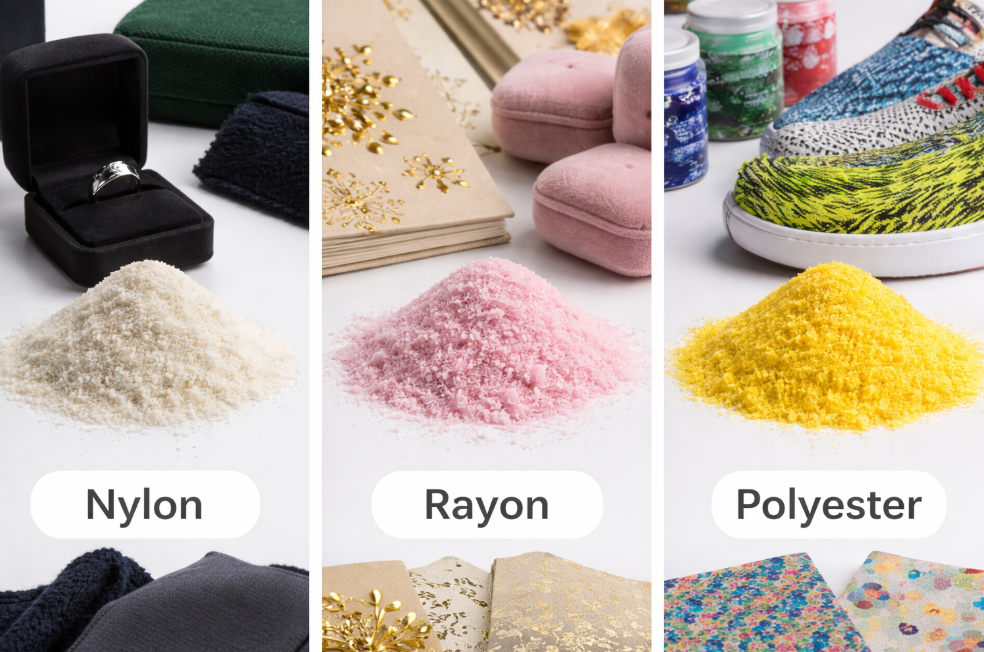
How to Choose Flocking Powder by Material: Nylon vs Rayon vs Polyester
AbstractChoosing the right Flocking Powder is not only about color or price. The material itself has a direct impact on texture, durability, appearance, transparency, and end-use performance. In practical production, nylon, rayon, and polyester each offer different advantages, so material selection should match the application rather than rely on one universal option.This guide explains the differences between nylon flocking powder, rayon flocking powder, and polyester flocking powder in a clear and practical way. It also shows how factors such as surface feel, color effect, transparency, and resistance properties influence the final result. Whether the target application is packaging, paper printing, textiles, decorative surfaces, or specialty coatings, this article helps buyers and product developers choose the most suitable flock powder with greater confidence. Table of Contents-What Is Flocking Powder?-Why Material Choice Matters in Flocking Powder Selection-What Is the Difference Between Nylon, Rayon and Polyester Flocking Powder?Nylon Flocking PowderRayon Flocking PowderPolyester Flocking Powder-Quick Comparison Table: Nylon vs Rayon vs Polyester-Which Flocking Powder Material Works Best for Different Applications? Packaging and Printed Paper Textiles and Fashion Surfaces Decorative Coatings and Visual Effects Industrial and Functional Uses-How Color, Transparency and Texture Affect Flocking Powder Selection Color Performance Transparent Flocking Powder and Special Visual EffectsTexture and Touch-How to Choose the Right Flock Powder Step by Step-Common Mistakes When Selecting Flocking Powder-Conclusion What Is Flocking Powder? Flocking Powder is a fine fiber material used to create a soft, velvet-like, textured, or decorative surface on substrates such as paper, plastic, textiles, leather, rubber, and coated products. After adhesive is applied, the fibers are deposited onto the surface to produce a raised finish that improves both appearance and touch.In the market, flock powder is often selected according to fiber material, fiber length, denier, color, transparency, and target application. Among the most common material categories, nylon flocking powder, rayon flocking powder, and polyester flocking powder are widely used because they cover a broad range of decorative and functional needs.For manufacturers and buyers, understanding the material differences is essential because the same design can look and perform very differently depending on which Flocking Powder is used. Why Material Choice Matters in Flocking Powder Selection The material of Flocking Powder affects more than the basic texture. It influences:1.softness and hand feel2.color brightness and visual depth3.wear resistance and recovery4.chemical and moisture resistance5.heat stability6.production cost and value balanceA beautiful flocked finish that works well on gift packaging may not be suitable for automotive interiors or durable fabric applications. Likewise, a premium-grade nylon flocking powder may provide excellent resilience, but it may not always be the most cost-effective option for short-life decorative printing.For this reason, material selection should begin with the application goal: decorative impact, tactile quality, durability, environmental exposure, or production budget. What Is the Difference Between Nylon, Rayon and Polyester Flocking Powder? Nylon Flocking PowderNylon flocking powder is known for its excellent elasticity, resilience, abrasion resistance, and premium soft touch. It is often chosen for applications where performance and durability matter as much as appearance.Key characteristics of nylon flocking powder:1.soft and smooth hand feel2.good fiber recovery after pressure3.high wear resistance4.stable appearance in repeated use5.suitable for higher-end and durable applicationsBecause nylon fibers have strong resilience, surfaces made with nylon flocking powder tend to maintain their texture more effectively over time. This makes them useful in products that are touched frequently or exposed to friction.Typical uses include:1.automotive interior parts2.jewelry boxes and premium packaging inserts3.textiles with soft-touch requirements4.industrial surfaces needing durable flocking performance Rayon Flocking PowderRayon flocking powder is popular for its soft velvet effect, elegant appearance, and cost-performance balance. It is widely used in decorative applications where a refined finish is needed but extreme durability is not the first priority.Key characteristics of rayon flocking powder:1.very soft and delicate surface feel2.rich, classic velvet appearance3.strong decorative appeal4.good color presentation5.economical for many printing and packaging usesCompared with nylon, rayon usually offers less resilience and lower abrasion resistance, but it often creates a very attractive and luxurious surface. For visual packaging and paper-based decorative work, rayon flocking powder remains a common choice.Typical uses include:1.greeting cards2.wallpaper details3.gift boxes4.printed paper surfaces5.decorative labels and displaysPolyester Flocking PowderPolyester flocking powder is valued for its balanced mechanical properties, color stability, and resistance performance. It can be a practical choice for applications that need durability together with efficient production economics.Key characteristics of polyester flocking powder:1.good strength and dimensional stability2.strong resistance to moisture and many environmental factors3.reliable color consistency4.practical option for large-scale use5.suitable for both decorative and semi-functional applicationsIn some cases, polyester flocking powder can offer a good middle-ground solution between premium nylon performance and economical rayon aesthetics. It is especially useful when the flocked product must face more demanding storage or operating conditions.Typical uses include:1.decorative coatings2.printed products3.industrial fabric surfaces4.specialty packaging5.products exposed to varying environmental conditions Quick Comparison Table: Nylon vs Rayon vs Polyester PropertyNylon Flocking PowderRayon Flocking PowderPolyester Flocking PowderSurface feelSoft, smooth, resilientVery soft, velvet-likeSmooth, balancedDurabilityHighMedium to lowMedium to highAbrasion resistanceExcellentModerateGoodRecovery after pressureExcellentFairGoodDecorative appearancePremium and refinedElegant and classicClean and stableColor effectGoodVery attractiveConsistentMoisture resistanceGoodModerateGoodCost levelHigherEconomical to mid-rangeMid-rangeBest forDurable premium productsDecorative paper and packagingBalanced decorative and functional use Which Flocking Powder Material Works Best for Different Applications? Packaging and Printed PaperFor luxury packaging, display boxes, and printed decorative surfaces, the decision often depends on whether tactile luxury or cost efficiency matters more.Rayon flocking powder is often preferred for decorative printed paper, greeting cards, and gift packaging because of its elegant velvet appearance.Nylon flocking powder is more suitable when packaging requires a more premium tactile impression and better wear resistance, such as jewelry presentation boxes.Polyester flocking powder can work well in packaging lines that need stable quality and practical resistance properties.For standard decorative printing, rayon flocking powder is often sufficient. For reusable or high-touch packaging, nylon may be the better long-term choice. Textiles and Fashion SurfacesIn textile-related applications, softness and touch are critical, but durability also matters.Nylon flocking powder is well suited to garments, accessories, or surfaces that experience repeated handling.Rayon flocking powder delivers a soft decorative finish for fashion-oriented visual effects.Polyester flocking powder may be selected for more technical or balanced textile applications.When the final product needs to preserve a soft feel after repeated use, nylon flocking powder usually performs better.Decorative Coatings and Visual EffectsDecorative coatings often focus on visual richness, texture, and color effect.Rayon flocking powder is effective for classic velvet-style decorative surfaces.Transparent flocking powder or specialty translucent effects may be considered when designers want layered visual depth or unusual surface appearance.Polyester flocking powder is suitable where the coating must also maintain stable performance.This category depends heavily on design goals, especially color, gloss interaction, and the desired tactile response. Industrial and Functional UsesFor industrial applications, mechanical properties and stability become more important.Nylon flocking powder is often preferred when wear resistance and resilience are essential.Polyester flocking powder is a practical option when the application requires stable performance under variable conditions.Rayon flocking powder is usually less suitable for demanding functional environments.If the flocked surface is exposed to repeated friction, handling, or higher performance requirements, nylon and polyester are generally more reliable choices than rayon. How Color, Transparency and Texture Affect Flocking Powder Selection Color PerformanceColor is one of the first things end users notice, but color behavior changes with different fiber materials. Some materials display deeper, softer tones, while others give cleaner or brighter effects.When selecting Flocking Powder, consider:1.whether the design needs rich velvet depth or a cleaner modern look2.whether the substrate color influences the final effect3.whether the finish is intended for luxury packaging, fashion, or industrial presentationIn many decorative uses, rayon flocking powder is appreciated for its rich visual softness. Where consistency and stable production are priorities, polyester flocking powder may offer advantages. Premium tactile products may benefit from the refined balance of nylon flocking powder.Transparent Flocking Powder and Special Visual EffectsTransparent flocking powder is a more specialized option used when designers want to create layered, light-influenced, or semi-translucent decorative effects. It can add novelty to packaging, printed graphics, and specialty coatings.It is especially useful when:1.the background design should remain partially visible2.a subtle textured effect is preferred over heavy color blocking3.the surface needs a differentiated premium appearanceThis kind of selection is not only about material type, but also about visual strategy. A transparent or semi-transparent flock effect can change how depth, branding, and light interaction are perceived.Texture and TouchTexture is one of the strongest reasons to use flock powder at all. However, softness alone is not enough. Buyers should consider:1.whether the touch should feel luxurious, smooth, or resilient2.whether the surface must recover after compression3.whether users will touch the product repeatedlyFor example:1.nylon flocking powder gives a soft yet resilient touch2.rayon flocking powder creates a delicate velvet feel3.polyester flocking powder provides a more balanced texture with practical stabilityThe right texture should match both brand positioning and product use conditions. How to Choose the Right Flock Powder Step by Step A practical selection process can be simplified into five steps.Step 1: Define the applicationIs the target product decorative, functional, or both? Packaging, fabric, industrial parts, and printed surfaces all require different priorities.Step 2: Rank performance needsDecide what matters most: softness, durability, resilience, color effect, transparency, or cost.Step 3: Match the materialChoose nylon flocking powder for premium feel and durabilityChoose rayon flocking powder for elegant decorative appearanceChoose polyester flocking powder for balanced performance and stabilityStep 4: Confirm visual requirementsReview color, fiber density, transparency, and desired texture before final approval.Step 5: Test on the real substrateThe same Flocking Powder can produce different results on paper, plastic, textile, or coated surfaces. Trial evaluation is always recommended before mass production. Common Mistakes When Selecting Flocking Powder Many selection problems happen because buyers focus on one factor only.A few common mistakes include:1.choosing based on cost alone without considering end-use durability2.selecting the softest material without checking abrasion resistance3.ignoring transparency or color interaction with the substrate4.using decorative-grade material for heavy-use applications5.assuming all flocking powder materials produce the same tactile effectThe best choice is usually the one that balances aesthetics, technical suitability, and production efficiency. ConclusionThe best Flocking Powder is the one that fits the real needs of the product. There is no single material that works best for every application.Nylon flocking powder is ideal for premium, durable, and high-touch applications.Rayon flocking powder is highly effective for elegant decorative finishes and visually rich packaging or printing projects.Polyester flocking powder offers a reliable balance between appearance, stability, and practical performance.When selecting flock powder, manufacturers should evaluate not only material type, but also color effect, transparency, texture, durability, and final use conditions. A more accurate material choice helps improve both product quality and customer satisfaction.For buyers, designers, and converters, understanding these differences is the most effective way to choose the right Flocking Powder with confidence.

Elevate Your Products with Zhangs’ Custom Flock Printing
Ready to transform your designs with high-quality flocking technology?
Zhangs offers advanced flock powders, adhesives, equipment, and sheets to meet your specific
needs and elevate your product offerings.
Get in touch with us now and let' s work together to achieve outstanding results for your
projects.

+1